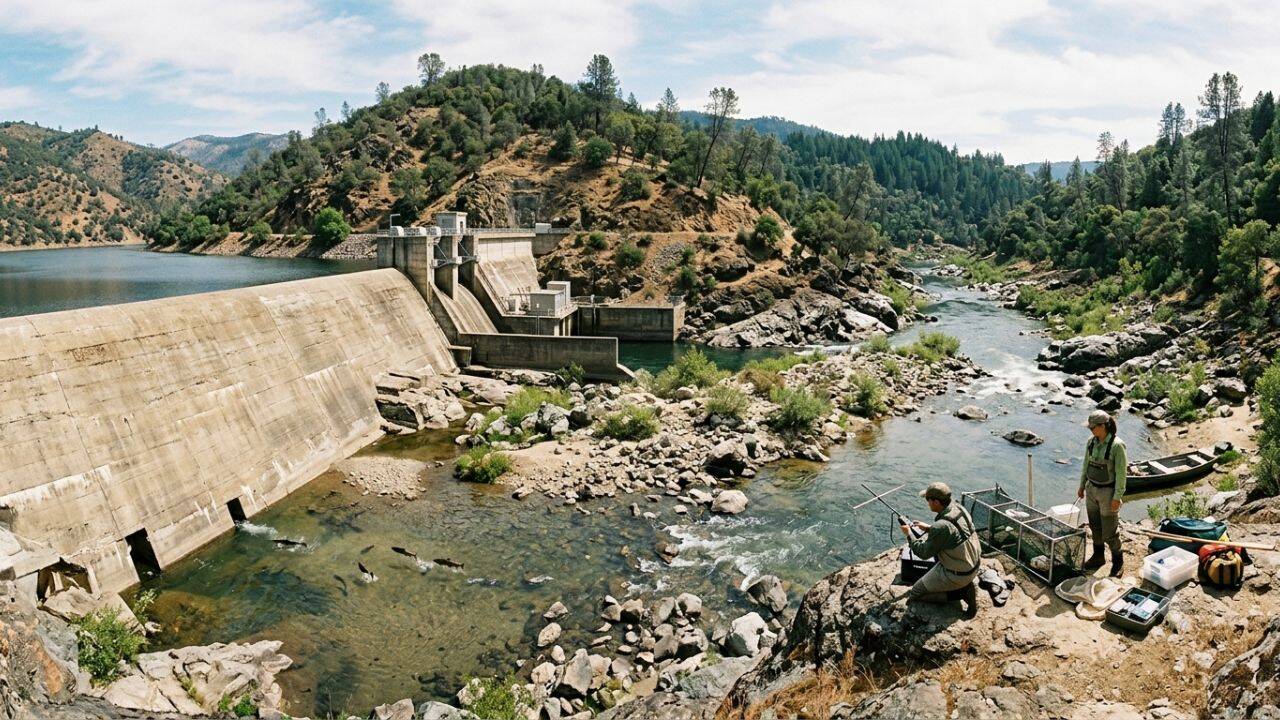
When engineers finished building Friant Dam across the San Joaquin River in 1942, they didn't think much about the fish. They wanted to turn California's dry Central Valley into an agricultural superpower. They succeeded. But that massive concrete wall choked off a legendary run of spring-run Chinook salmon that had thrived for millennia, completely drying out miles of riverbed and rewriting the ecology of the American West.
Today, bringing those fish back isn't just an environmental pipe dream. It's an ongoing, multi-billion-dollar battle between water rights, legal mandates, and stubborn biology. If you want to understand how human ambition broke a vital ecosystem—and what it takes to stitch it back together—you have to look at the hard choices happening on the ground right now. Meanwhile, you can read similar stories here: Why Europe Is Losing The Battle Against Modern Wildfires.
The Cost of Converting Desert into Farmland
Before the mid-20th century, the San Joaquin River carried cold, snowmelt-fed mountain water from the Sierra Nevada down to the Pacific. It sustained forests, Indigenous communities, and the southernmost population of Chinook salmon on the West Coast.
Then came the federal water projects. Friant Dam created Millerton Lake and diverted nearly all the river's flow into human-made canals. To explore the full picture, check out the detailed report by Reuters.
- The habitat vanished: Parts of the river below the dam turned into dry sandbars and stagnant, warm pools.
- The migration stopped: Adult salmon returning from the ocean found no water to swim upstream through.
- The ecosystem collapsed: Bears, eagles, and local food webs that relied on marine nutrients brought upstream by the fish lost a foundational pillar.
By the late 1940s, the upper river's iconic salmon run was effectively wiped out. Farms boomed, towns grew, and the river paid the price.
The Lawsuit That Started a Thirty-Year War
Ecosystems don't fight back, but lawyers do. In 1988, environmental groups led by the Natural Resources Defense Council filed a landmark lawsuit against the federal government and irrigation contractors. They pointed to a forgotten 1941 California fish and game code requiring dam operators to keep enough water flowing downstream to maintain fish populations in "good condition."
The legal battle dragged on for nearly twenty years. Finally, in 2006, a historic settlement brought environmentalists, federal agencies, and agricultural water districts to the same table.
Congress passed the San Joaquin River Restoration Settlement Act in 2009. The mission was radical: restore year-round flows and bring back self-sustaining populations of Chinook salmon without cutting off Central Valley farmers entirely.
Can You Remake a River?
Fixing a broken river is way harder than breaking it. Scientists and water managers face a brutal balancing act. You can't just open the floodgates and hope for the best.
Reintroducing spring-run Chinook salmon requires active management, modern fish ladders, and specialized habitat restoration along miles of the mainstem river. NOAA Fisheries classified these reintroduced fish as an experimental population to protect local landowners from excessive legal liability if normal water and land operations crossed paths with endangered species.
Biologists track every single cohort. They monitor juvenile movements, measure water temperatures during brutal California summers, and evaluate whether hatchery-raised fish can hack it in the wild.
It's messy work. Water users worry about losing precious irrigation supply during dry years, while conservationists push for more aggressive flows. Every cubic foot of water released from Friant Dam is a tug-of-war between agricultural survival and ecological recovery.
What the Experiment Tells Us About the Future
The San Joaquin restoration project proves that reversing mid-century engineering mistakes takes generations. You can build a concrete dam in a few years, but rebuilding an extinct run of fish takes decades of monitoring, political compromise, and adaptive science.
When you look at similar efforts across the West—like the massive dam removals on the Klamath River—the lesson is clear. We are entering an era where society is finally willing to count the real ecological costs of past convenience.
The salmon are trickling back into the San Joaquin, but the job is far from finished. The real test is whether people and wildlife can share the same water before the next drought hits.