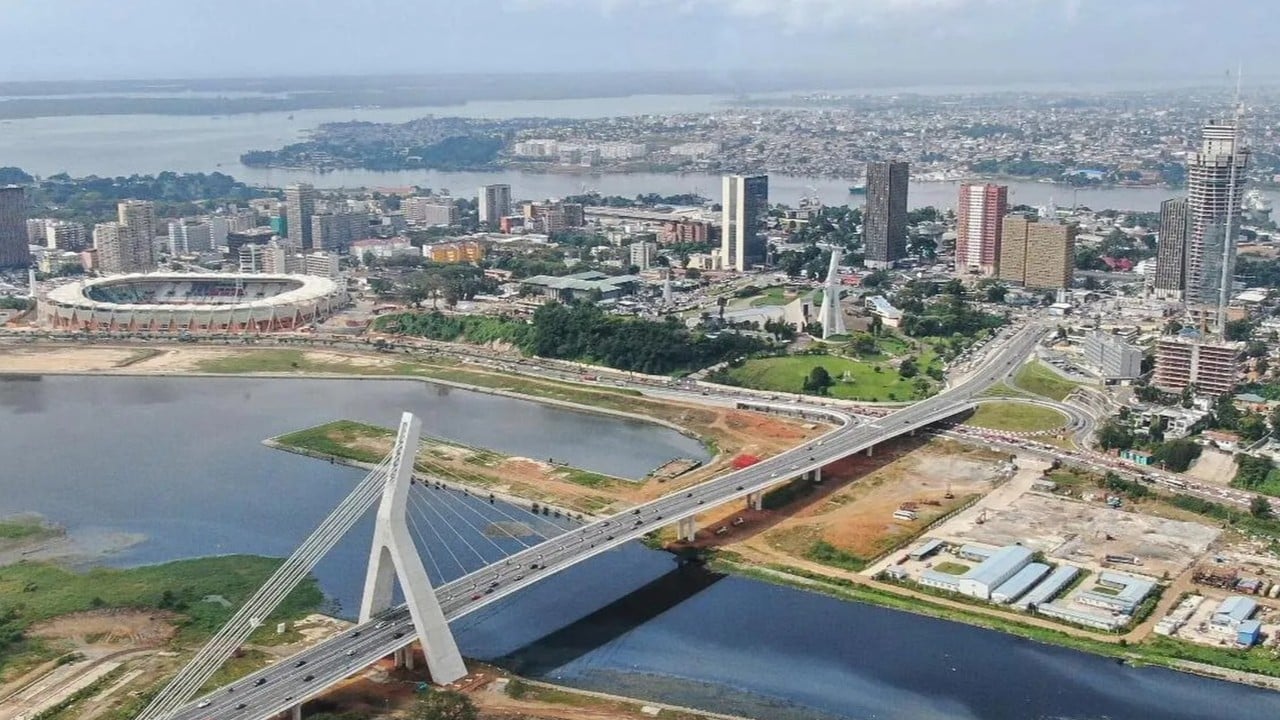
You can't drive through Abidjan without seeing what Beijing built. Look up in the commercial capital of Ivory Coast and you'll see the Alassane Ouattara Bridge, a massive structure linking the wealthy eastern district of Cocody to the high-rise business hub of Plateau. Head over to the water and you'll spot the expanded container terminal at the Port of Abidjan. Walk toward the edge of town and there is the Olympic Stadium, a structure that fundamentally reshaped the city's skyline.
For over a decade, China's presence in West Africa was defined by these mega structural builds. Giant state-owned firms arrived, poured massive amounts of concrete, packed up their equipment, and moved on to the next bidding process.
But that era is quietly ending.
The strategy has shifted from short-term construction contracts to deep economic investment. Beijing isn't just sending construction crews anymore. Instead, Chinese companies are building factories, launching pharmaceutical hubs, and setting up agricultural processing plants inside Ivory Coast. They aren't just building the grid; they're moving into the economic ecosystem as permanent fixtures.
Moving From Builders to Partners
For years, the playbook was simple. A country needed a road, a port, or a dam. China's Exim Bank provided a loan, and a Chinese state firm handled the construction. Look at the $572 million Soubré Hydroelectric Power Station completed in 2017. Sinohydro handled the build, China Exim Bank funded 85% of it, and the project instantly added 275 megawatts to the national grid.
It was an efficient model, but it didn't leave deep roots.
The change happening now is driven by practical business. Souleymane Diarrassouba, the Ivorian planning and development minister, pointed out that fifteen years ago, Chinese entities only showed up when a specific construction tender was on the table. Today, things look different. Operators are setting up long-term commercial enterprises that employ local workers and process local goods.
A prime example is a new $209 million tourism and commercial complex backed by Chinese investors. This isn't a piece of state infrastructure built on credit; it's a commercial venture intended to generate profit over decades. Last month, China Road and Bridge Corporation advanced plans to deepen industrial parks in the country, targeting sectors like manufacturing and processing rather than basic transport routes.
Breaking the Old Monopolies
This shift matters because Ivory Coast is trying hard to diversify its international partnerships. Historically, French corporations dominated the local corporate environment, a direct inheritance from the colonial period. By stepping up as direct investors and factory owners, Chinese firms are breaking up that old monopoly.
It's a smart move for the Ivorian government, which wants to avoid relying entirely on one global power. By welcoming Chinese manufacturing alongside French retail and banking, Abidjan gains more options.
But don't mistake this for charity. Chinese manufacturers face rising labor costs and tightening industrial constraints at home. Moving production lines to West Africa makes economic sense. It places production closer to fast-growing regional markets and avoids the heavy tariffs slapped on goods shipped directly from mainland China.
What this means for local jobs
When a foreign firm builds a bridge, the employment boost is temporary. Once the concrete cures, the construction workers are laid off. A processing plant or a pharmaceutical factory is different. It requires a permanent workforce, ongoing training, and local supply chains.
That's the real goal for Ivory Coast. The country doesn't just need more pavement; it needs industrial capacity to process its own raw materials, like cocoa and cashew nuts, before they get shipped overseas.
The Risks and What to Do Next
If you're tracking international trade or looking to invest in West African logistics, you need to change how you analyze Chinese influence in the region. Stop looking only at sovereign debt tracking tools and mega-project announcements. The real action is happening in industrial zone registrations and private equity setups.
There are real challenges with this transition. Local businesses face tough competition from well-funded Chinese firms moving into manufacturing. There are also valid concerns about whether these new factories will stick to environmental standards or prioritize local hiring for upper-management roles.
To navigate this changing environment, keep these steps in mind:
- Track the industrial zones: Watch the development of the San Pedro and Abidjan industrial parks instead of just monitoring transport tenders. That's where the real capital is flowing.
- Look at the value-add: Check whether new projects are simply extracting raw materials or actually processing them locally. True partnership shows up in the processing power.
- Monitor the regulatory shifts: Watch how the Ivorian government updates its labor and investment laws to handle private foreign entities rather than state-backed builders.