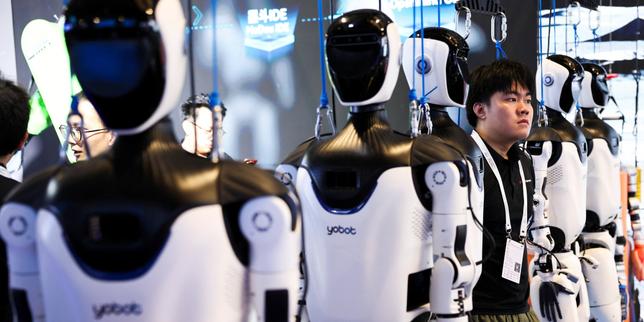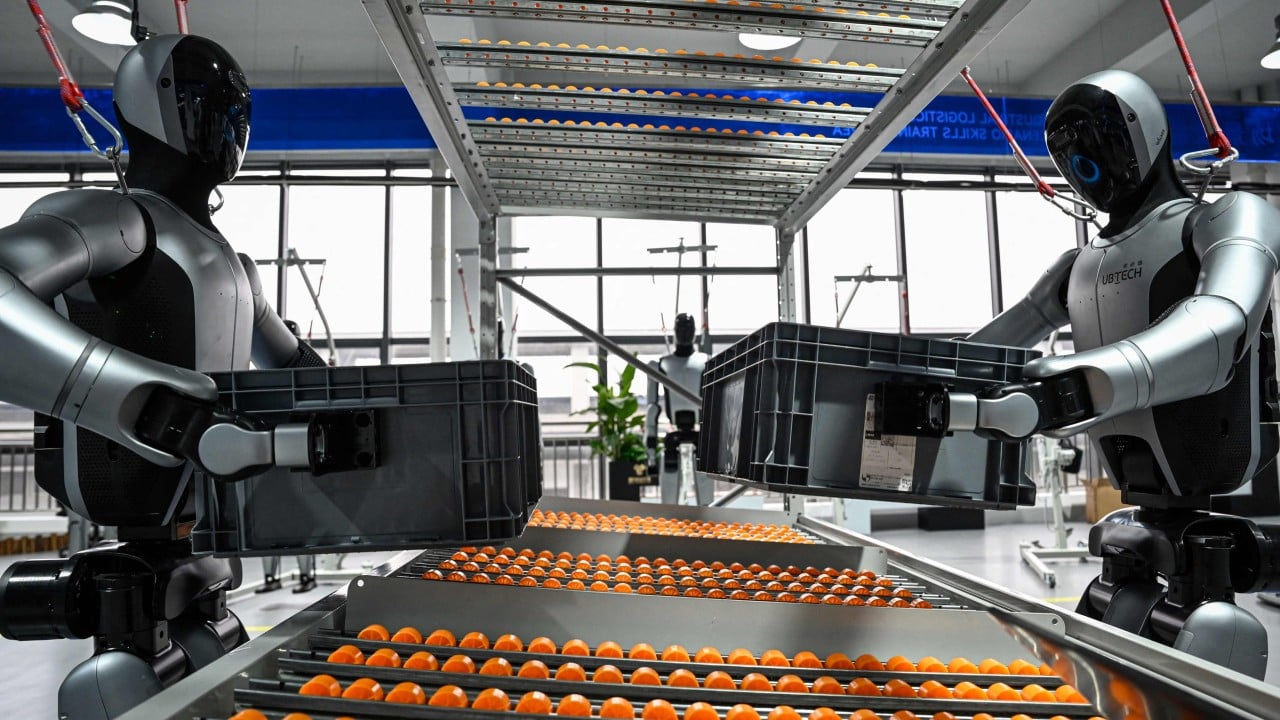
Walk into a modern assembly workshop in Hangzhou or Shenzhen today and you'll spot something strange. Bipedal mechanical workers are standing shoulder-to-shoulder with human operators, testing battery cells, tightening chassis bolts, and moving material bins. A recent global industry analysis revealed that six out of the world’s top ten most innovative humanoid robot start-ups are now based in China. If you've been paying attention to hardware supply chains, this shouldn't come as a massive shock.
Western media loves to frame this as an overnight surprise, but it's actually the result of relentless vertical integration and heavy state-backed manufacturing muscle. China accounts for more than half of all developed humanoid robot models globally, and local firms are churning out physical units at a scale that US competitors are struggling to match. Let's look past the slick promotional videos and break down why this shift happened so fast.
The Manufacturing Ecosystem Advantage
Building a walking robot isn't just about writing clever neural networks. You need precision gearboxes, high-torque actuators, lightweight carbon-fiber frames, and high-density battery packs. Most Western start-ups spend months sourcing these components from various international suppliers, dealing with customs delays and bloated prototype costs.
Chinese engineering firms operate differently. Companies like Unitree Robotics and AgiBot sit right inside dense hardware clusters in Zhejiang and Guangdong. Need a custom actuator redesigned and milled? You can drive across town, talk to the machinist directly, and have a new revision by tomorrow morning. That local component synergy shatters iteration cycles. While a Silicon Valley team might iterate their hardware twice a year, a Shenzhen team iterates every three weeks.
Real-World Factory Deployments
The biggest trap in robotics is building a machine that looks great on a flat laboratory floor but falls apart on an uneven concrete factory floor. Chinese startups aren't waiting for perfection. They are dropping early prototypes straight onto active production lines owned by industrial giants like BYD and CATL.
When units crash, break a joint, or lose tracking, telemetry data streams instantly back to the engineering team. This fast feedback loop allows software updates to roll out overnight. By treating factory floors as living testing grounds rather than pristine showrooms, these startups accumulate real-world operational hours at an astronomical rate.
Pricing Pressure and Commercial Scaling
Let's talk about unit economics because this is where the market gap widens into a canyon. Early American humanoid projects targeted luxury price points, building exquisite research platforms that cost upwards of six figures per machine. That approach works for defense grants and university labs, but it doesn't scale to commercial mass production.
Unitree introduced consumer and light industrial bipedal models priced aggressively below traditional market expectations, forcing a dramatic compression in global hardware costs. When you can buy a functional development platform for the price of a compact car, adoption barriers vanish. Automotive plants, logistics warehouses, and electronics manufacturers are snapping them up to offset rising labor shortages.
What the Rest of the World Misses
If you think this is purely about copying foreign designs, you're missing the bigger picture. Copying only gets you to yesterday's finish line. Chinese robotics firms have outpaced legacy players in motion control, balance recovery algorithms, and local edge-computing integration.
Governments outside of Asia are now scrambling to draft emergency protective measures, weighing import restrictions and supply chain bans to shield domestic industries. But tariffs won't fix a broken hardware ecosystem. Until local Western manufacturing supply chains achieve the same density, speed, and cost efficiency found in eastern tech hubs, the gap will keep growing.
Stop looking at humanoid robots as a distant sci-fi novelty. They're already clocking shifts on assembly lines, and the industrial standard is being written in China.