Traditional oncology is broken. For decades, doctors treated tumors like weeds, blasting them with chemotherapy and radiation in hopes of killing the bad cells before the patient gave up. It is a blunt instrument. Every single cancer is unique because every person's DNA is unique. That is why a drug that saves your neighbor might do absolutely nothing for you.
The real fix is personalized medicine. Specifically, custom-made mRNA vaccines designed for your specific tumor. Until recently, building these vaccines took months, a luxury most terminal patients simply don't have.
That is why the news out of Beijing is worth your attention. A local biotech firm called Likang Life Sciences just broke ground on China's first AI-powered cancer vaccine production line. Located in the Beijing Economic and Technological Development Zone, this 110 million yuan ($16.1 million) facility aims to solve the biggest bottleneck in modern oncology: speed. By using artificial intelligence, they can compress the design phase of a custom vaccine down to a single day.
This isn't a vague future concept. The factory is scheduled to finish construction by October. If it works as promised, it could change how we manufacture personalized therapies for millions of people.
The Reality of Personalized Cancer Vaccines
To understand why an AI-powered factory matters, you have to understand how a personalized tumor vaccine actually works. This is not a preventative shot like the flu vaccine. You don't get it to stop yourself from catching cancer. It is a therapeutic treatment given to people who already have the disease.
Every tumor contains thousands of genetic mutations. Some of these mutations produce abnormal proteins on the surface of the cancer cells. Scientists call these targets neoantigens. If you can train a patient's immune system to recognize these specific neoantigens, their own T-cells will hunt down and destroy the tumor.
The process sounds straightforward, but the execution is incredibly tedious.
- First, surgeons take a biopsy of the patient's tumor along with a healthy blood sample.
- Second, geneticists sequence the DNA and RNA of both samples to find the mutations.
- Third, someone has to predict which of those thousands of mutations will actually trigger a strong immune response.
That third step is where the entire system usually grinds to a halt. Humans cannot calculate the binding affinity of thousands of mutant peptides against a patient's specific immune system architecture within a useful timeframe. It takes weeks of manual laboratory testing.
Likang's flagship vaccine, known as LK101, uses machine learning algorithms to do this heavy lifting. The AI scans the genetic sequencing data, filters out the background noise, and selects the optimal genetic targets. It does this in 24 hours. Once the targets are chosen, the data is sent to the manufacturing floor to create a custom mRNA strand tailored exclusively to that single human being.
Inside the Yizhuang Production Line
Manufacturing custom medicine is a logistical nightmare. Traditional pharmaceutical plants are built for economies of scale. They use massive vats to mix millions of identical doses of aspirin, insulin, or traditional vaccines. The goal is uniformity.
A personalized cancer vaccine facility requires the exact opposite approach. The factory must be built to handle a batch size of exactly one. One patient. One batch.
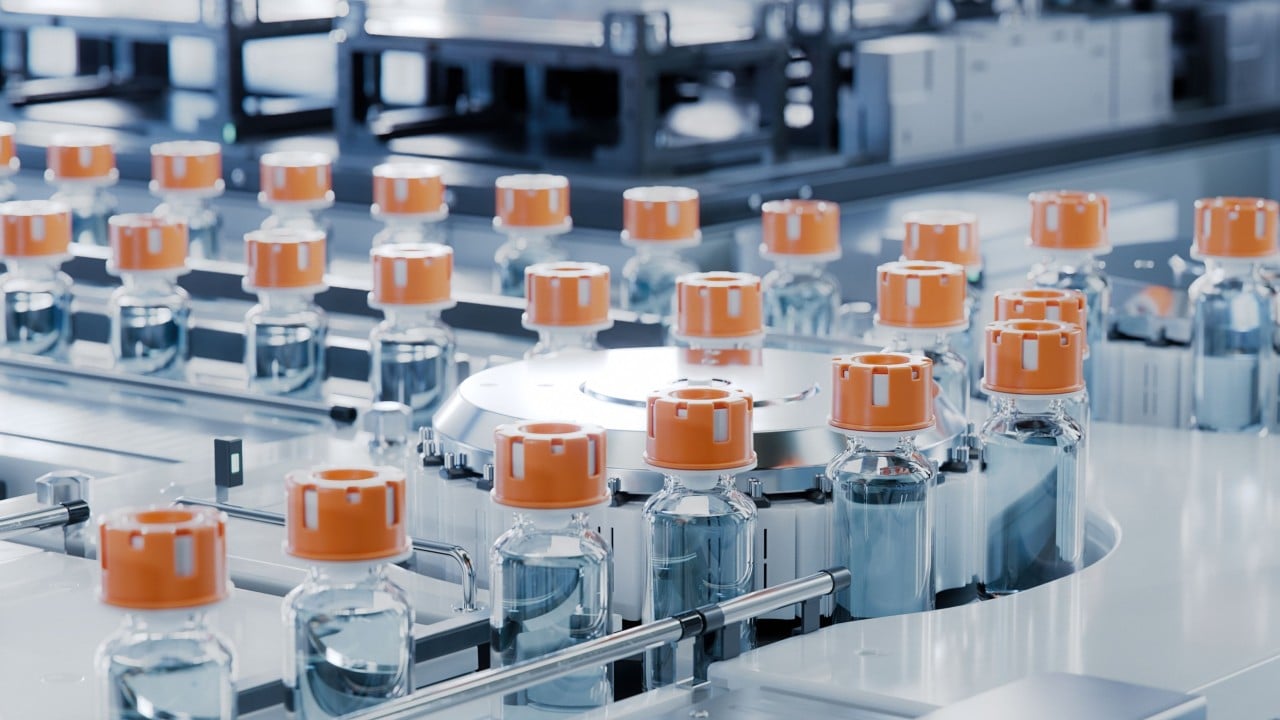
Likang's new facility in Beijing is designed to handle this micro-scale production efficiently. The 110 million yuan investment covers both advanced cell therapy research laboratories and the automated machinery needed to synthesize small, ultra-pure batches of patient-specific mRNA.
Automation is the key here. In a standard cleanroom, switching production from one drug to another requires days of decontamination and resetting. Likang's automated production line uses closed, modular systems. This setup prevents cross-contamination between different patients' vaccines while allowing the machinery to jump from one custom formulation to the next without shutting down the entire floor.
Bank of America recently estimated that the global AI healthcare market could top $1 trillion by 2035. Alec Stranahan, a biotechnology analyst at the bank, pointed out that the immediate value of AI in this space comes from automating manual workflows and improving diagnostic accuracy. The Beijing plant is a physical manifestation of that thesis. It replaces manual lab coats with software algorithms and automated synthesis rigs.
Why the US FDA Approval Changes the Stakes
It is easy to look at domestic biotech announcements with a degree of skepticism. Plenty of companies claim to have proprietary algorithms that solve major medical mysteries. However, Likang has a crucial credential that sets it apart from typical tech hype.
In February 2025, the United States Food and Drug Administration approved Likang's Investigational New Drug application for the LK101 injection. This made it the very first tumor neoantigen mRNA vaccine from China to clear the US FDA regulatory hurdle for clinical trials.
Securing an IND from the US FDA is notoriously difficult. It requires rigorous preclinical safety data, proof of stable manufacturing standards, and a clear scientific rationale. The fact that American regulators cleared the vaccine for human trials suggests that the underlying science is credible.
This international recognition puts immense pressure on the manufacturing side. You cannot run large-scale international clinical trials if your production method relies on a handful of scientists manually mixing vials in a university lab. You need a dedicated, automated facility that can churn out consistent, high-quality, individualized doses day after day. That is exactly what this new Beijing plant is built to do.
The Hurdles Nobody Wants to Talk About
Despite the optimism, we need to look at the challenges clearly. Building a factory is the easy part. Making the treatments affordable and universally accessible is another story entirely.
First, let's look at the financial reality. Setting up an individualized production line costs a fortune. While 110 million yuan is a solid investment for a regional manufacturing center, the per-dose cost of personalized mRNA therapies remains sky-high. When Western pharmaceutical giants like Moderna and Merck test their own personalized cancer vaccines, estimates for a full course of treatment often reach into the hundreds of thousands of dollars. Even with China's lower manufacturing overhead, LK101 will not be cheap.
Second, there is the issue of tissue collection. For the AI to design the vaccine, it needs a pristine, high-quality tumor biopsy. If the biopsy sample is too small, degraded, or contaminated, the genetic sequencing data will be flawed. The AI will output useless targets. This means the vaccine's success depends heavily on the skill of the local surgeons and pathologists who harvest the initial tumor tissue.
Finally, we have to consider the biological limits of mRNA. Cancer is notoriously smart. Tumors mutate constantly to evade detection. While a custom vaccine might train the immune system to wipe out 95% of a tumor, the remaining 5% could mutate again, rendering the original vaccine obsolete. Doctors will likely have to combine these vaccines with other treatments, like checkpoint inhibitors, to keep the cancer from bouncing back.
What Happens Next
If you are tracking the intersection of health and technology, the timeline to watch is short.
Likang expects to finish the Beijing facility by October. Once the physical structure is complete, the company will have to go through extensive validation runs to prove to the National Medical Products Administration in China that the automated line can safely produce vaccines without contamination.
If you are a patient or an investor, do not expect these vaccines to land at your local hospital immediately. The technology is still moving through clinical trials. What this facility actually represents is the infrastructure needed to make large-scale trials possible in the first place. It moves personalized medicine out of the academic lab and onto the industrial stage.
The next logical step for the industry is standardization. Keep an eye on how regulators handle the approval of software-driven manufacturing. When the factory's output changes with every single patient, regulators have to approve the underlying AI algorithm and manufacturing process rather than the final chemical composition of the drug itself. How China and the US handle this regulatory shift will dictate how fast these treatments actually reach the public.