Beijing is testing Manila's boundaries again, and this time they are using wood, flotation devices, and antennas.
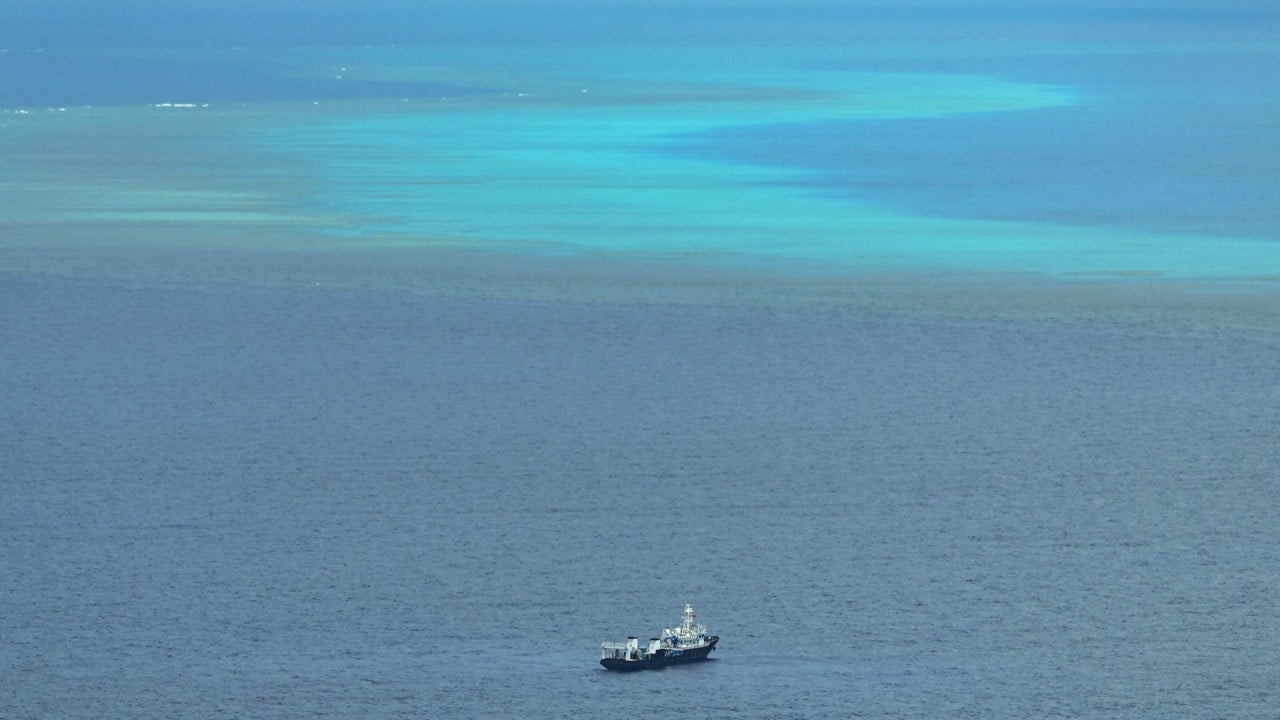
When Philippine military planes flew over the turquoise waters of Scarborough Shoal recently, they didn't just see the usual deployment of gray hulls from the China Coast Guard. Instead, aerial reconnaissance and satellite imagery captured something far more insidious at the southeast entrance of the atoll: a crude, six-by-six meter floating platform manned by Chinese personnel and topped with a prominent antenna.
By June 2026, that single object multiplied into an array of six distinct foreign installations inside the lagoon, including buoys, cylindrical objects, and a second antenna bolted onto a nearby rock.
Manila immediately lodged a formal diplomatic protest, with Department of Foreign Affairs maritime spokesperson Rogelio Villanueva Jr. labeling the structure "semi-permanent" and illegal. General Romeo Brawner Jr., Chief of Staff of the Armed Forces of the Philippines, made the military's stance blunt: "We will not allow an incident before to happen again, where a small structure was built and later on, it grew into an artificial island."
This is not just another minor maritime scuffle. It is a carefully orchestrated creeping occupation, and if you want to understand where the next major conflict in the Pacific might erupt, you need to look closely at what China is doing right now in the middle of this isolated lagoon.
The Playbook Manila Fears Most
The anxiety ripping through the Philippine defense establishment stems from deep institutional memory. Top brass and maritime experts like Jay Batongbacal from the University of the Philippines point out that this setup looks exactly like the early phases of Mischief Reef in the 1990s.
Back then, Beijing claimed it was merely building temporary fisherman shelters on wooden stilts. Today, Mischief Reef is a fully militarized, missile-protected artificial island featuring a 3,000-meter runway capable of hosting fighter jets.
The strategy is simple but highly effective:
- Deploy small, seemingly harmless "civilian" or "scientific" structures.
- Staff them with maritime militia or research personnel.
- Establish a continuous presence that gradually normalizes the occupation.
- Upgrade the structures incrementally until they become permanent concrete installations.
If China repeats the Mischief Reef playbook at Scarborough Shoal—locally called Bajo de Masinloc—the strategic balance of the region breaks completely.
Why Scarborough Shoal is the Ultimate Prize
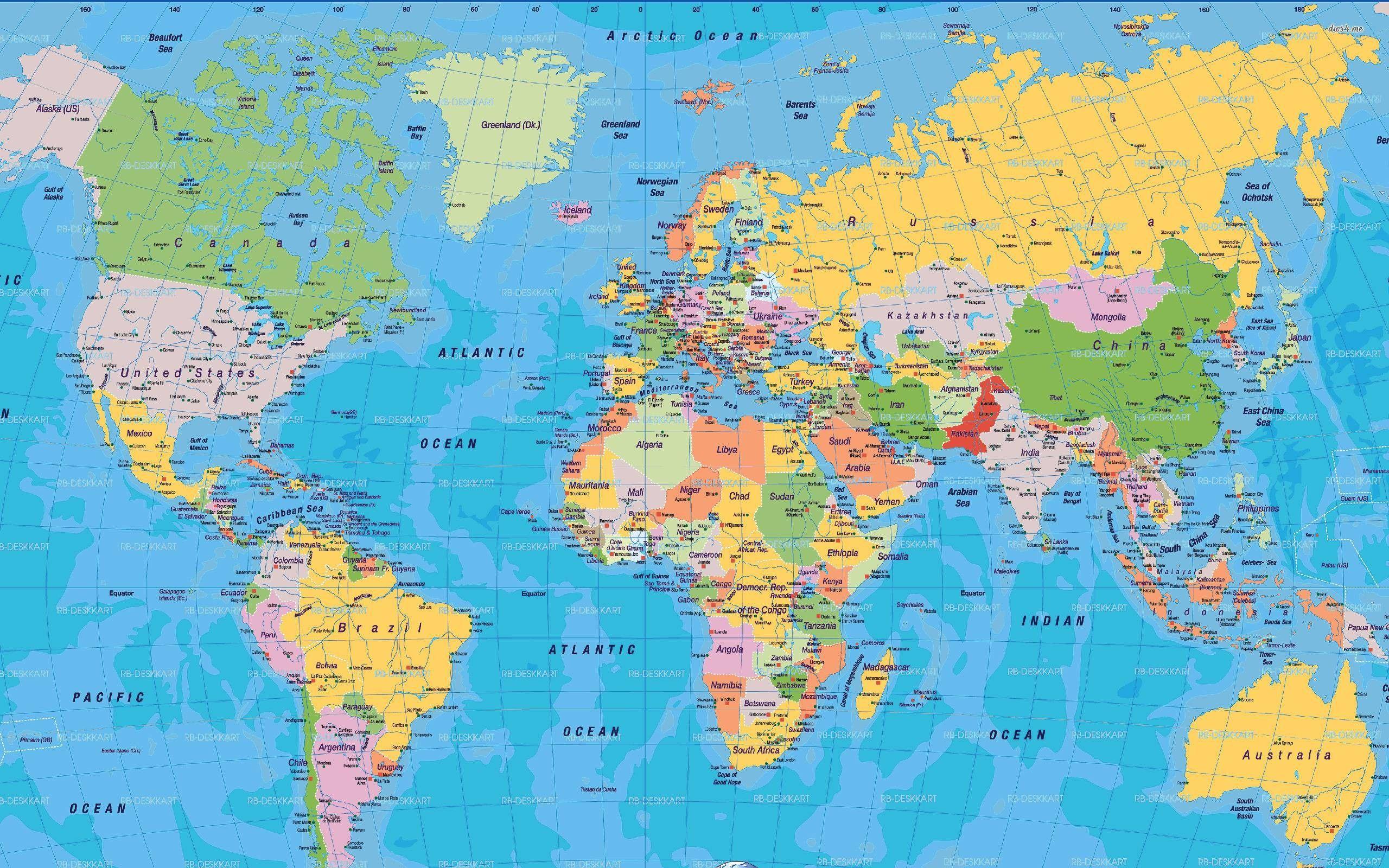
To understand why a tiny 20-foot wooden raft matters so much, look at a map. Scarborough Shoal sits just 124 miles (200 kilometers) off the western coast of Luzon, the main island of the Philippines. Conversely, it is roughly 543 miles (874 kilometers) away from China’s nearest landmass, Hainan Island.
[Mainland China] ------------------- 543 miles -------------------> [Scarborough Shoal] <-- 124 miles -- [Luzon, Philippines]
Because of this geometry, an island base here gives the Chinese military a radar and missile window looking straight into Subic Bay and Clark Freeport Zone—former American military bases where US forces are rotating back in under the Enhanced Defense Cooperation Agreement (EDCA).
Chinese Foreign Ministry spokesman Lin Jian dismissed Manila's protests, asserting "indisputable sovereignty" and claiming the platform is dedicated to lawful marine scientific research. But the Philippine military isn't buying the science defense. The Armed Forces of the Philippines openly warned that the oceanographic data China is gathering through these platforms has direct military applications, particularly for mapping submarine pathways and refining anti-submarine warfare tactics.
Breaking the Code of Conduct Illusion
This latest escalation completely exposes the emptiness of regional diplomacy. For years, the Association of Southeast Asian Nations (ASEAN) has dragged out negotiations with Beijing to establish a legally binding Code of Conduct for the South China Sea.
Manila's patience has officially run out. During a Nikkei forum in Tokyo, Philippine Foreign Affairs Secretary Ma. Theresa Lazaro took a direct swipe at the process, stating bluntly that it would be far better to have no code of conduct at all than to agree to a "bad" one that does not respect international laws like the 1982 UN Convention on the Law of the Sea (UNCLOS).
The Philippines already holds the legal high ground. In 2016, the Permanent Court of Arbitration in The Hague definitively ruled that China’s sweeping historical claims had no legal basis and that its blockade of Scarborough Shoal violated international law. Beijing simply ignored the verdict.
What Happens Next
The Marcos administration is shifting from diplomatic complaints to active defense partnerships. During a June 2026 bilateral meeting in Manila, German President Frank-Walter Steinmeier committed to supplying the Philippine Coast Guard with advanced reconnaissance drones and promised continued joint military exercises.
The immediate next steps for regional security analysts and defense watchers hinge on three critical variables:
- The Threshold of Force: General Brawner has committed to sending navy hulls to inspect and monitor the area. The critical test will be whether the Philippine Coast Guard attempts to physically dismantle the buoys and floating platforms, mimicking how they cut Chinese floating barriers outside the shoal last year.
- The US Treaty Trigger: Washington has explicitly stated that the US-Philippines Mutual Defense Treaty covers armed attacks on Philippine public vessels and aircraft anywhere in the South China Sea. If a physical confrontation over these platforms turns violent, it could immediately pull American forces into the fray.
- The Expansion of EDCA: Expect Manila to accelerate the construction of American-accessible military sites on the western coast of Luzon, directly facing Scarborough, to act as a visual and strategic counterweight to Beijing’s creeping installations.
The era of passive monitoring is over. Manila realizes that every week a Chinese antenna remains inside the Scarborough lagoon is a week closer to seeing concrete mixers arrive.
For a deeper look into the ground reality of these maritime confrontations and how local fishermen are caught in the crossfire of this geopolitical standoff, check out this detailed video report on Manila Protests Over Chinese Floating Structure at Scarborough Shoal. This broadcast outlines the physical dimensions of the structures and provides critical footage from the tracking groups monitoring the lagoon.