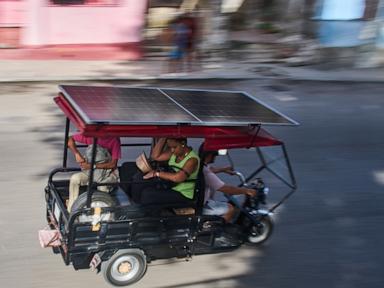
Havana's iconic 1950s Chevrolets and Fords are vanishing from the streets. If you walk through Cuba's capital today, you won't smell clouds of heavy diesel exhaust or hear the rumble of old V8 engines nearly as much. Instead, you'll hear a quiet, steady hum.
Hundreds of thousands of Cubans have pivoted to small, Chinese-made electric tricycles to survive. Don't forget to check out our previous post on this related article.
This isn't a trendy environmental statement. It's survival. Cuba is paralyzed by a brutal, five-year economic crisis, compounded by crushing U.S. sanctions that have starved the island of fuel. In early 2026, the energy crisis tightened further. Following threats of U.S. tariffs on countries supplying oil to the island, Cuba's fuel imports plummeted, leaving a massive deficit. The state grid is essentially collapsing, with blackouts routinely shattering daily life for 20 hours or more at a time.
That creates a massive paradox. You can buy an electric vehicle to escape the lack of gasoline, but how do you charge it when the wall outlets are completely dead? If you want more about the background here, The Washington Post provides an excellent summary.
Local drivers figured out the answer by looking up. They are bolting massive solar panels directly onto the roofs of their three-wheelers, bypassing the failing national grid entirely.
The Logistics of Off-Grid Survival
If you think this is a corporate-backed green energy rollout, think again. This is a purely grassroots movement. On the southern outskirts of Havana, in the Arroyo Naranjo district, a 21-year-old entrepreneur named Yadán Pablo Espinosa is running a makeshift workshop with his father, three brothers, and a friend. They are single-handedly turning these tricycles into rolling solar charging stations.
Espinosa's team builds custom iron frames that serve a dual purpose: they act as a weather awning to shade the driver from the blistering Cuban sun, and they provide a rigid mount for a massive photovoltaic panel. They typically use Chinese panels rated between 550 and 650 watts.
The electrical engineering here is clever but straightforward. The team wires the solar panels into an MPPT charge controller. When the tricycle is actively moving through traffic, the system routes power directly to the electric motor, supplementing the battery and reducing the immediate drain. The moment the driver pulls over to wait for a passenger or unload cargo, the controller automatically switches modes, sending a steady stream of juice directly into the battery pack.
The weight of one of these panels is around 75 pounds. For a rugged utility vehicle built to haul 1,500 pounds—and sometimes up to a full ton of cargo—that extra weight is practically nothing.
The math on the street makes total sense. On a standard battery charge, a driver might get 49 to 55 miles of range. By adding a 600-watt panel to the roof, that range stretches up to 90 or 93 miles. That's nearly double the working capacity, completely free from the electrical grid. Even on heavily overcast days when the system only pulls a couple of amps, it keeps the vehicle alive. For a local driver, those extra miles mean the difference between earning a living and going home empty-handed.
The Brutal Economics of Havana Transportation
Let's talk about the actual cost of doing business in Cuba right now. Buying one of these electric tricycles from Chinese brands like Zonsen or Jinpeng isn't cheap. They cost anywhere between $2,000 and $4,000.
In a country where state workers earn an average monthly salary of about $10, and private-sector employees pull in around $40, those vehicle prices look impossible. To adapt, families are pooling resources. People are selling off their decades-old gasoline cars just to get their hands on a functional three-wheeler. Others rely on relatives living in places like Panama or Miami to purchase the tricycles abroad and ship them to the island. Small-business owners are reinvesting every cent of their profits into these machines because they know it's the only way to keep their operations moving.
Once you have the tricycle, getting the solar upgrade costs another $500. It's a massive upfront hit, but local mechanics and engineers note that the investment pays for itself almost instantly.
The reality for everyday commuters is incredibly tough. Public buses have mostly disappeared due to the diesel shortage. A single ride on a solar-equipped passenger tricycle can cost a commuter around 500 Cuban pesos—just under $1. If you work a regular state job, spending that kind of money just to get to work four days a week eats up a massive chunk of your income. But your only alternative is walking miles in the stifling heat with heavy bags of groceries.
Moving Past Policy Promises
While the Cuban government signs trade agreements to assemble local electric brands like Vedca or announces long-term plans for massive state-run solar farms, the grid remains wildly unreliable. The Ministry of Energy and Mines estimates that the island gets excellent natural solar radiation, yet the official grid infrastructure is generating less power today than it did a decade ago.
This mismatch highlights a major shift in how people view basic infrastructure. In the past, clean energy was discussed as a luxury or a distant state policy goal. Today, it's a decentralized lifeline. It's being pushed forward not by bureaucrats, but by independent mechanics, family workshops, and small-scale entrepreneurs who can't afford to wait for the power grid to turn back on.
These modified three-wheelers are now handling the heavy lifting for entire neighborhoods. They haul fresh produce to vegetable stands, move commercial freight, transport dialysis patients to local hospitals, and even collect garbage in neighborhoods where municipal trucks have run out of fuel. They are keeping the basic functions of society from grinding to a halt.
If you're looking to understand how decentralized energy works under extreme stress, look at the streets of Havana. The future of independent, off-grid mobility isn't happening in high-tech corporate labs—it's being built on three wheels with iron frames and improvised wiring.


