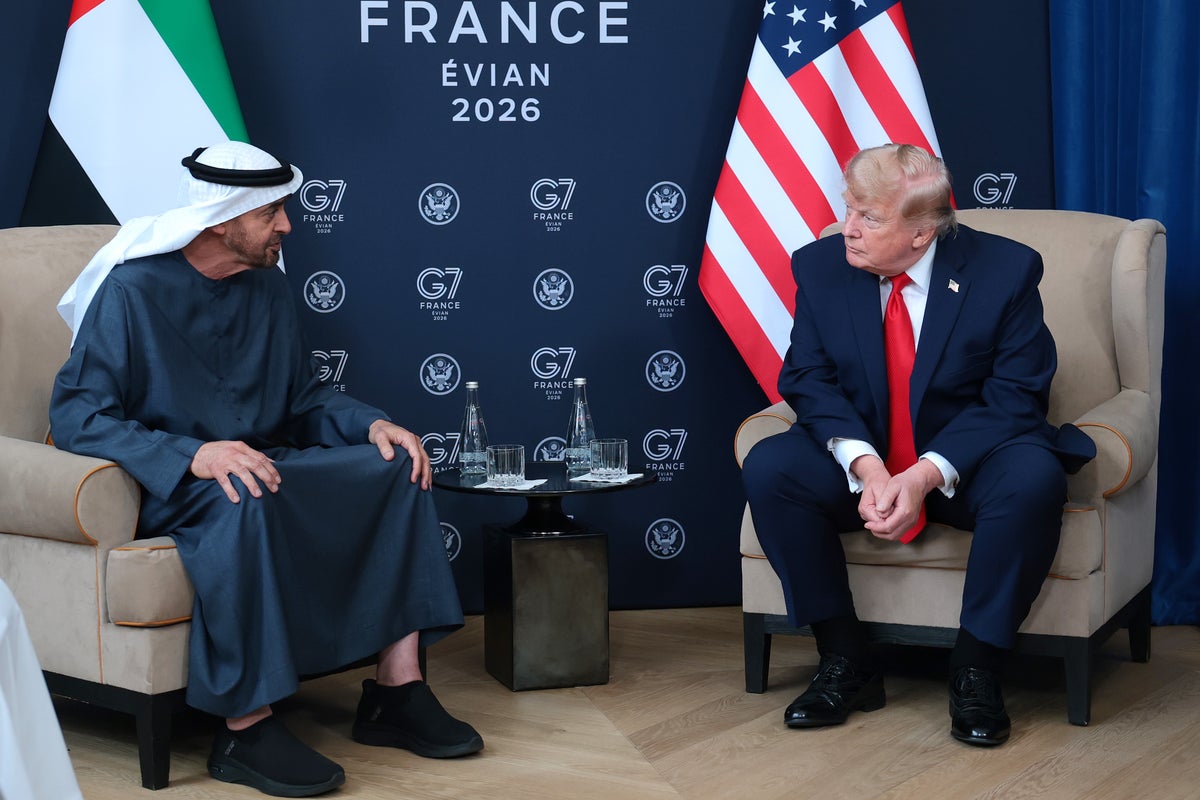
The United States is handing over some of its most guarded technological crown jewels to a foreign power with deeply worrying ties to China. That is the harsh reality of the Trump administration's decision to strip away export controls on advanced artificial intelligence chips and military hardware for the United Arab Emirates.
Officially, the White House says this is a reward. They claim Abu Dhabi earned these high-tech systems by standing shoulder-to-shoulder with Washington in its conflict against Iran, specifically supporting "Operation Epic Fury". But in the halls of Congress, a far more cynical explanation is taking root. Many lawmakers are pointing directly to a massive, half-billion-dollar financial transaction between a powerful Emirati royal and the Trump family's personal business ventures.
Is this a strategic alliance to dominate the future of computing? Or is it a textbook example of foreign influence buying American foreign policy? The answer is likely a mixture of both, and the consequences for global security are immense.
Why the UAE Got a Golden Ticket
To understand why this is happening now, you have to look at what the Commerce Department actually did. In a quiet but monumental policy shift, the agency designated the UAE as eligible for license-free exports, re-exports, and in-country transfers of advanced technology.
This is not just about a few extra computers. We are talking about:
- Millions of previously restricted AI chips, including Nvidia’s H200s and advanced Blackwell-class processors.
- Unmanned military drones and surveillance systems.
- Dual-use items used in oil, gas, and nuclear power production.
- Commercial satellites and military-grade spacecraft components.
Previously, the U.S. government blocked these shipments. Under previous policies, sending high-end processors to the Gulf came with a "presumption of denial". The logic was simple: these chips are so powerful that they can be used to simulate nuclear tests, design advanced biological weapons, and run massive military surveillance networks.
Now? The floodgates are wide open.
The $500 Million Elephant in the Room
You cannot talk about this policy shift without talking about cryptocurrency.
Just days before President Trump’s second inauguration in January 2025, a massive transaction went down. Sheikh Tahnoon bin Zayed Al Nahyan, the UAE’s national security adviser and head of its primary state-backed AI firm, G42, bought a 49 percent stake in World Liberty Financial. For those unfamiliar, World Liberty Financial is a crypto venture launched and controlled by the Trump family.
Sheikh Tahnoon’s investment firm wired an immediate $187 million in upfront payments directly to the platform, part of an overall $500 million package. Another $31 million went to the family of Steve Witkoff, who Trump subsequently named as his Middle East envoy.
The timing is incredibly suspect. Within months of this half-billion-dollar deal, the Trump administration cleared the way for the UAE to buy the exact technology it had been begging Washington for.
Democrats on Capitol Hill are calling it corruption in plain sight. Senator Elizabeth Warren pointed out that the deal netted the Trump family an estimated $263 million windfall. Senator Chris Murphy went even further on the Senate floor, calling the administration's actions an unprecedented betrayal of national security for private gain.
The White House and the Emirati government both deny any connection between the crypto investment and the policy change. They say it's all about geopolitical alignment. But to anyone watching from the outside, the optics are atrocious.
The China Leak Danger
Even if you ignore the financial conflicts of interest, the national security concerns are terrifying.
The UAE has spent years trying to play both sides of the fence. They want American weapons and chips, but they also maintain deep, lucrative ties with Beijing. China is the UAE's largest trading partner.
More specifically, G42—the very company chaired by Sheikh Tahnoon that is getting license-free access to these chips—has a checkered history. U.S. intelligence agencies previously flagged G42 for its extensive work with Chinese tech giant Huawei. Intelligence reports even suggested that G42 had provided technology to China that the People’s Liberation Army used to extend the range of military missile systems. G42 denied those claims, but the suspicion remained.
By allowing G42 to build massive data centers stocked with Nvidia’s Blackwell chips, we are effectively setting up a giant computing hub on China’s doorstep.
National security experts are warning that these data centers will have backdoors. It is incredibly difficult to police who is actually logging into a cloud network once the chips are sitting in servers in Abu Dhabi. Chinese engineers and state-backed hackers could easily rent computing power from these Emirati centers to train their own military AI models.
We are basically outsourcing our tech leadership to a country that refuses to fully sever its ties with our primary global competitor.
The Defense of the Deal
To be fair, there is an alternative viewpoint. Some policy experts argue that this move was a necessary evil.
Building massive AI data centers inside the United States has become incredibly difficult. Our power grids are struggling to keep up with the immense energy demands of modern AI factories. There is constant local pushback over water usage and environmental impacts.
Because of this, some think the U.S. had to find a foreign partner with unlimited capital and cheap energy to build this global infrastructure. The UAE has both in abundance.
Proponents also argue that keeping the UAE close prevents them from fully falling into China's orbit. If we refuse to sell them chips, they will just buy whatever China is producing or build closer partnerships with Chinese tech firms. By supplying them with American hardware, we supposedly maintain some level of control over their technological growth.
Whether that control is real or an illusion remains to be seen. Given G42’s history, many believe we are playing a losing hand.
What Happens Now
This decision is already made, but the battle over its implementation is just beginning. If you want to monitor how this unfolds or protect your own interests in the tech sector, here are the steps to watch:
- Monitor Congressional Committee Actions: Bipartisan coalitions in both the House and the Senate are pushing for formal investigations. Watch the House Foreign Affairs Committee and the Senate Banking Committee. They have the power to subpoena documents related to the World Liberty Financial deal and force administration officials to testify.
- Watch G42's Corporate Restructuring: To appease U.S. critics, G42 has promised to divest from Chinese hardware and partners. Keep a close eye on whether they actually follow through, or if they continue to quietly run dual operations.
- Track Export Disclosures: The Department of Commerce is required to report certain high-value tech transfers to Congress. Industry analysts should monitor these disclosures to see the true volume of Nvidia and AMD chips heading to the Gulf.
This isn't just a political squabble. It's a fundamental rewrite of how America protects its intellectual property and handles international diplomacy. When national security and private business transactions become this intertwined, everyone loses clarity on where the country's true interests lie.


