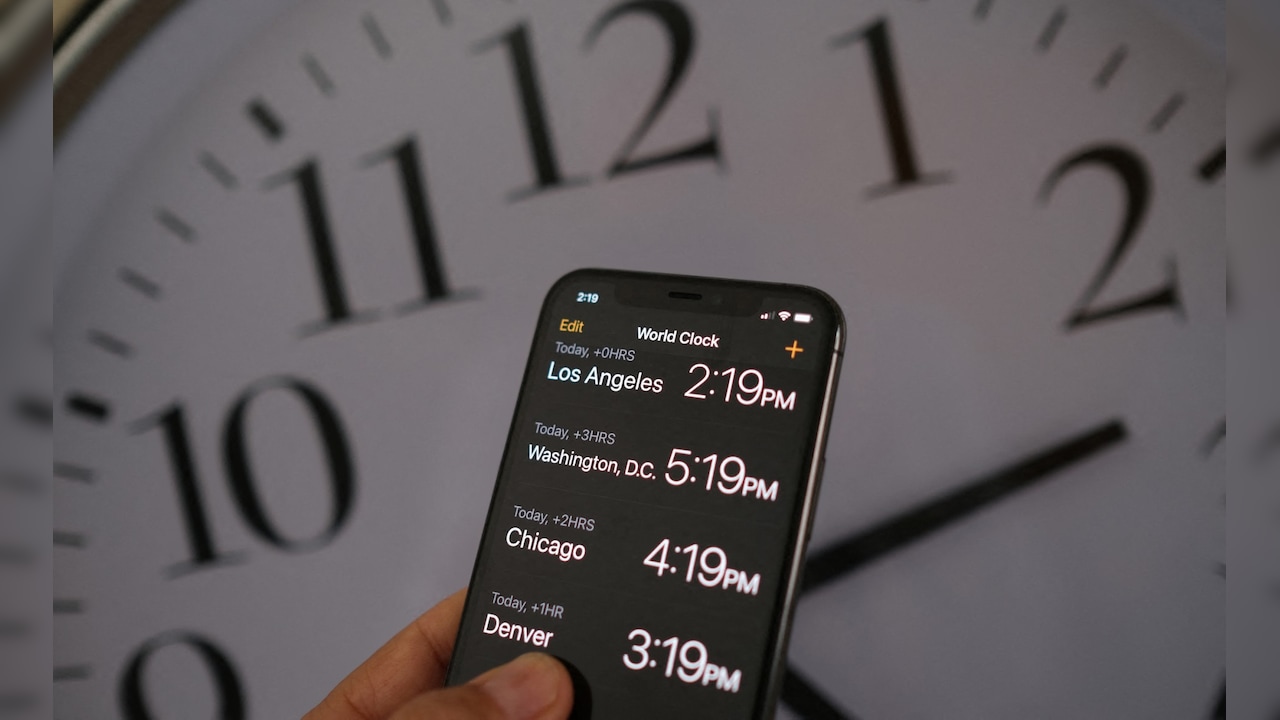
The US House of Representatives just voted overwhelmingly to permanently alter how you experience time. By a lopsided 308-117 margin, lawmakers approved the Sunshine Protection Act, a daylight saving time bill designed to end the twice-a-year ritual of shifting our clocks. The bill has high-profile backers, including President Donald Trump, and is sailing forward on a wave of popular frustration.
Let's be honest. Nobody likes changing their clocks.
The biannual "spring forward" and "fall back" routine feels like a pointless chore that leaves everyone grumpy, exhausted, and showing up late for meetings. But the solution the House just passed is not the biological victory supporters claim. In fact, making daylight saving time permanent is a terrible idea that flies in the face of human biology, historical precedent, and basic geography.
If this daylight saving time bill passes the Senate and becomes law, we aren't "saving" daylight. We are just stealing it from the morning and dumping it into the evening, with disastrous consequences for our health and safety.
The Big Lie of Saving Daylight
Let's clear up a major misconception right away. No act of Congress can create more sunshine.
The total amount of daylight we get in a day is determined by the tilt of the Earth and our orbit around the sun. That is simple astrophysics. When Congress passes a bill to make daylight saving time permanent, they are not lengthening the day. They are merely changing the numbers on your alarm clock.
If you live in the northern half of the country, winter days are short. Period. Under the current system of standard time in the winter, the sun rises at a reasonable hour, say 7:30 a.m., and sets early, around 4:45 p.m. Under permanent daylight saving time, that same winter day will feature a sunset at 5:45 p.m.—but the sunrise will be pushed to a brutal 8:30 a.m.
You don't get extra daylight during your awake hours. You just trade a dark afternoon commute for a pitch-black morning commute.
We Already Tried This and It Was a Disaster
Many people supporting this daylight saving time bill act like we are entering uncharted, progressive territory. We aren't. We tried this exact experiment once before, and the public hated it so much that Congress had to scramble to undo it.
Go back to the winter of 1973. Facing a massive national energy crisis caused by the OPEC oil embargo, President Richard Nixon signed a law to establish year-round daylight saving time for a two-year trial. The logic was the same as it is now: save energy by keeping the sun out later in the evening.
Initially, the public loved the idea. In December 1973, national polls showed a massive 79% approval rating for permanent daylight saving time.
Then, January 1974 arrived.
- Pitch-black mornings: Millions of children were forced to walk to school or wait for buses in complete, icy darkness. Some parents sent their kids to school carrying flashlights.
- Tragic accidents: In Florida alone, eight school children were killed in traffic accidents during the dark morning hours shortly after the bill took effect.
- Delayed schools: School districts across the country had to delay their start times until the sun finally came up, completely disrupting parents' work schedules.
By February 1974, public approval had plummeted from 79% down to 42%. The energy savings were also virtually nonexistent; the Department of Transportation found that any afternoon savings were offset by the need to heat and light homes earlier in the dark mornings.
Before the second winter of the experiment could even begin, President Gerald Ford signed a bill in October 1974 to repeal the law and return to the old system. We ran the experiment. It failed. Yet, here we are again, ignoring history.
Your Circadian Rhythm Does Not Care About Congress
The push for permanent daylight saving time is led by business lobbies, golf course owners, and tourism groups who want more evening light to drive consumer spending. But your biological clock doesn't care about retail sales or the hospitality sector.
The human brain is wired to respond to the natural light-dark cycle of the Earth. This is called your circadian rhythm. For millions of years, humans have relied on morning sunlight to wake up and evening darkness to trigger the release of melatonin, the hormone that helps us sleep.
The American Academy of Sleep Medicine (AASM) is incredibly clear on this: permanent standard time is far healthier than permanent daylight saving time.
When we remain on daylight saving time year-round, we are essentially forcing our bodies into a state of permanent jet lag. By keeping the evening light active later, we delay our biological sleep signals. We go to bed later, but our alarm clocks still ring at the same early time for work and school.
The health consequences of this chronic sleep deprivation are well-documented:
- Metabolic issues: Studies show that circadian misalignment increases the risk of obesity, diabetes, and cardiovascular diseases.
- Mental health: Lack of morning light is a major trigger for Seasonal Affective Disorder (SAD) and depression. In fact, adolescent depression rates spiked during Russia’s brief, failed experiment with permanent daylight saving time.
- Cardiovascular events: While the immediate "spring forward" weekend is famous for causing a spike in heart attacks and strokes, the chronic misalignment of permanent daylight saving time sustains a higher cardiovascular burden year-round.
By locking the clock on daylight saving time, we are choosing economic convenience over human health.
The West-Side Trap of Time Zones
If you think an 8:30 a.m. winter sunrise sounds bad, it actually gets much worse depending on where you live.
Time zones in the United States are massive. If you live on the eastern edge of a time zone (like Boston), the sun rises and sets relatively early. If you live on the western edge of that same time zone (like Grand Rapids, Michigan), the sun already rises much later.
Under permanent daylight saving time, the geographical disparity becomes comical—and dangerous.
In the dead of winter, residents in Seattle wouldn't see the sun rise until nearly 9:00 a.m. In Grand Rapids, the sun wouldn't peak over the horizon until 9:15 a.m. And if you live in Williston, North Dakota, you would be waiting in the dark for sunrise until almost 9:45 a.m.
Imagine waking up, showering, eating breakfast, driving to work, and sitting through your first two hours of meetings before the sun even starts to rise. It's unnatural, demotivating, and incredibly hard on school-aged children who have to walk to school in the pitch black of morning.
What We Should Do Instead
We don't have to keep switching our clocks twice a year. Almost everyone agrees that the twice-yearly disruption is annoying and bad for public safety.
The solution, however, is not permanent daylight saving time. The solution is permanent standard time.
Standard time is the system that aligns closest to the natural movement of the sun. Under standard time, noon is actually when the sun is highest in the sky. It provides the morning light our brains need to wake up and the evening darkness our bodies need to wind down.
If you want to protect your health and the safety of your family, here is what you need to do right now.
- Contact your Senators: The bill has passed the House, but it still has to clear the Senate. Write or call your state's senators and demand that they reject permanent daylight saving time in favor of permanent standard time.
- Prioritize morning light: While the politicians argue, take control of your own circadian rhythm. Get outside for 10 to 15 minutes of direct sunlight as early in the morning as possible to reset your body clock.
- Invest in blackout curtains: If we are forced into permanent daylight saving time, summer evenings will stay bright incredibly late. Blackout curtains will help you simulate early darkness so your body can produce melatonin naturally.
- Adjust your kids' sleep schedules early: If the transition occurs, don't wait until the day of the time change to adjust. Shift bedtime by 15-minute increments over the course of a week to ease the transition on their developing brains.