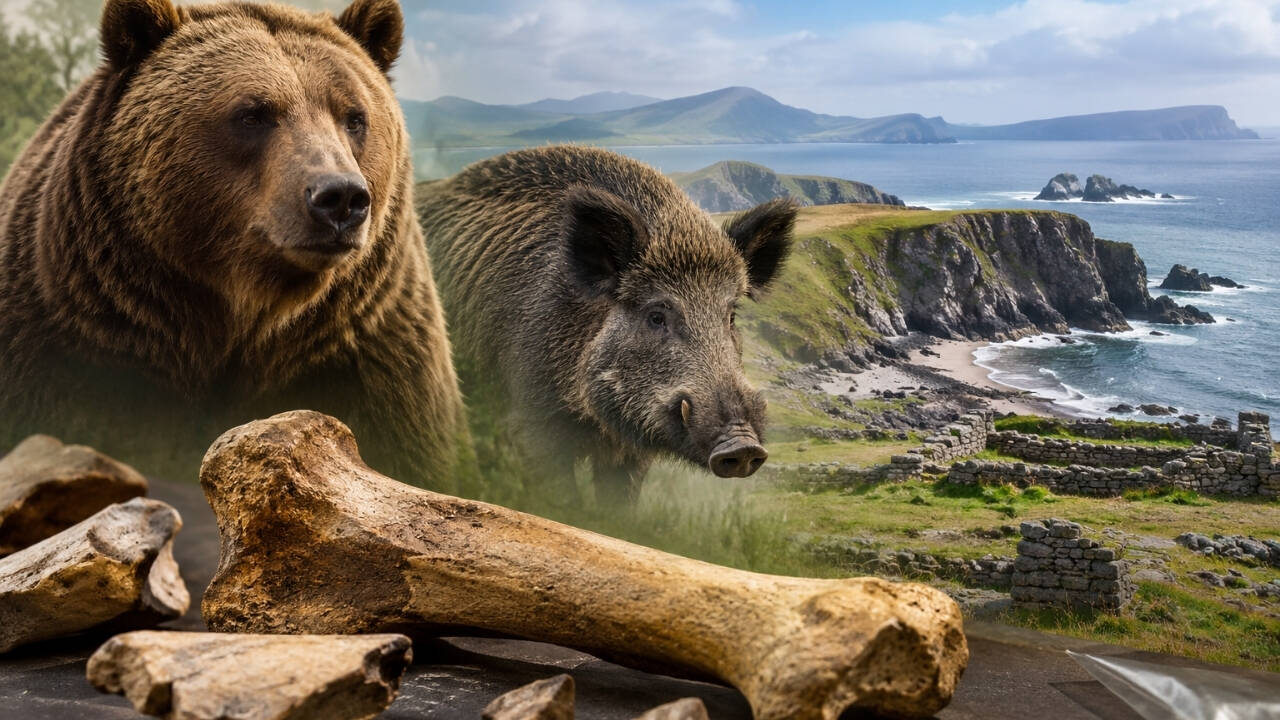
For over thirty years, a handful of bone fragments pulled from a windy bay in County Kerry sat at the absolute center of Irish archaeology. Discovered at Ferriter’s Cove on the Dingle Peninsula between 1983 and 1995, these remnants were affectionately and formally dubbed the "Kerry cow" bones. Radiocarbon dating placed them between 4450 and 4270 B.C.E., right at the tail end of the Late Mesolithic period. For generations of researchers, they served as undeniable proof that indigenous hunter-gatherers on the island were trading with Europe's early Neolithic farming communities long before agriculture officially took root.
There is just one major issue with that neat historical narrative. It is entirely false.
Recent biomolecular testing led by University College Dublin researcher Dr. Martin Moucheron has completely upended this timeline. Those famous bovine fragments aren't from an early domestic cow at all. They belong to a bear and a wild boar.
How a Three-Decade Archaeological Error Happened
Archaeology is messy. When bones are fragmented, weathered, and buried for thousands of years, visual identification can easily amount to an educated guess. Back in the late twentieth century, the tools available to researchers simply could not look inside the molecular makeup of ancient tissue. The Ferriter's Cove assemblage looked enough like cattle remnants to fit a convenient theory, so the academic community ran with it.
To fix this historical blind spot, researchers sent original material stored at University College Cork to a specialized laboratory run by the French National Centre for Scientific Research in Lille. There, scientists used a cutting-edge proteomic method known as ZooMS—zooarchaeology by mass spectrometry.
Instead of relying on the superficial shape of a broken bone, ZooMS reads the specific proteins preserved within ancient bone collagen. It acts as a molecular barcode. When the results came back, the illusion of the early Irish cow vanished instantly. The proteins belonged squarely to wild fauna rather than domesticated livestock.
Rewriting the Timeline of Early Irish Agriculture
The removal of the "Kerry cow" from the historical record blows a massive hole in our understanding of the Mesolithic-Neolithic transition. Without these bones, zero archaeological evidence remains to suggest that domestic animals or European farming practices touched Ireland before 4000 B.C.E.
The timeline shifts dramatically. Instead of a messy, overlapping transition where mobile foragers rubbed shoulders with continental farmers early on, the data now points to a sharper, more isolated hunter-gatherer existence until agriculture arrived on its own terms later. For at least four millennia, these coastal populations lived on the island, leaving behind complex behaviors that scientists are only now beginning to accurately untangle.
The Mystery of the Prehistoric Irish Bear
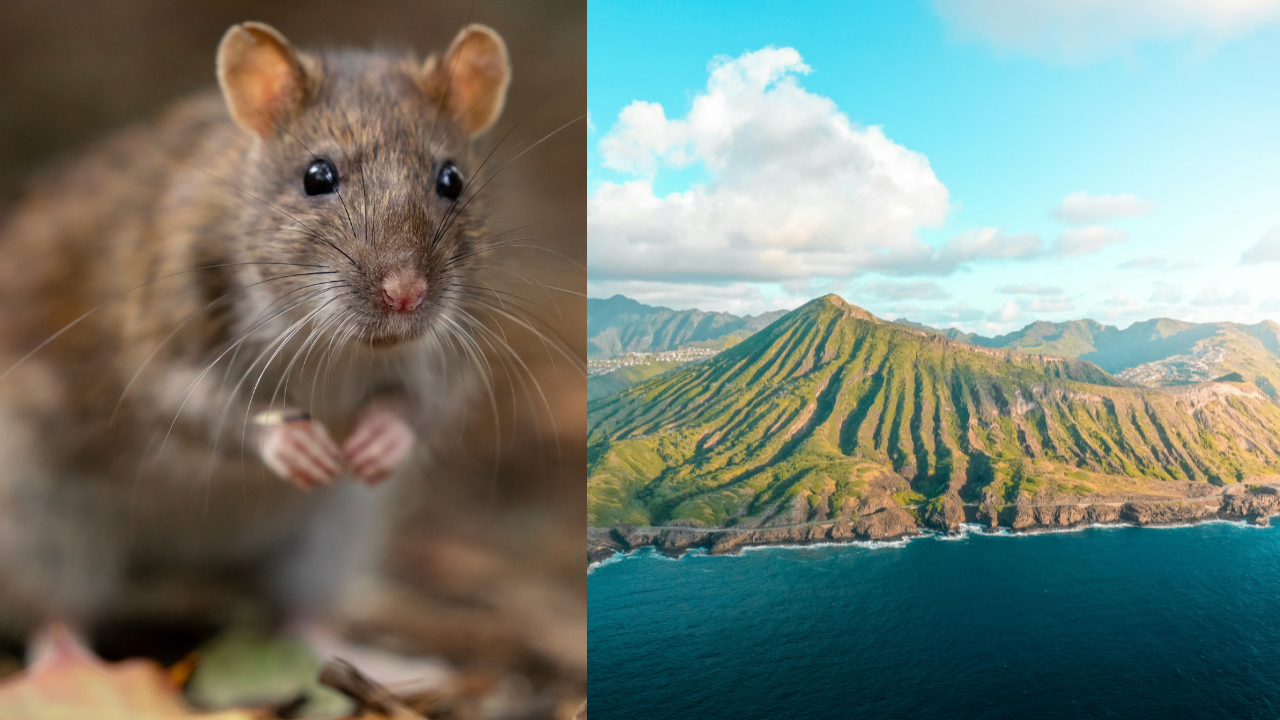
The plot thickens beyond agricultural history. One of the bone fragments definitively belongs to a bear, sparking a brand-new scientific investigation. Researchers are currently working to isolate whether the remains came from a brown bear or a polar bear.
That question sounds wild, but ancient wildlife genetics frequently throw curveballs. Brown bears once roamed across Ireland freely before going extinct during the Bronze Age. However, genetic studies elsewhere have shown fascinating links and hybridization patterns between ancient brown and polar bears during shifting climate periods. Pinpointing the exact species of the Ferriter's Cove bear could rewrite Ireland’s ecological history just as much as its human history.
What This Teaches Us About Museum Collections
This whole ordeal offers a sharp reminder for anyone working in or following historical sciences. We don't always need to fund expensive new digs to make groundbreaking discoveries.
Thousands of boxes sit quietly in university basements and museum archives across the globe, filled with artifacts tagged under assumptions made decades ago. By taking legacy collections and throwing modern analytical chemistry at them, science can correct massive baseline errors overnight.
If you are tracking archaeological research or studying ancient history, keep a close eye on institutional re-evaluations. The next big historical breakthrough isn't necessarily waiting under the dirt. It is sitting on a shelf, waiting for someone smart enough to test it right.