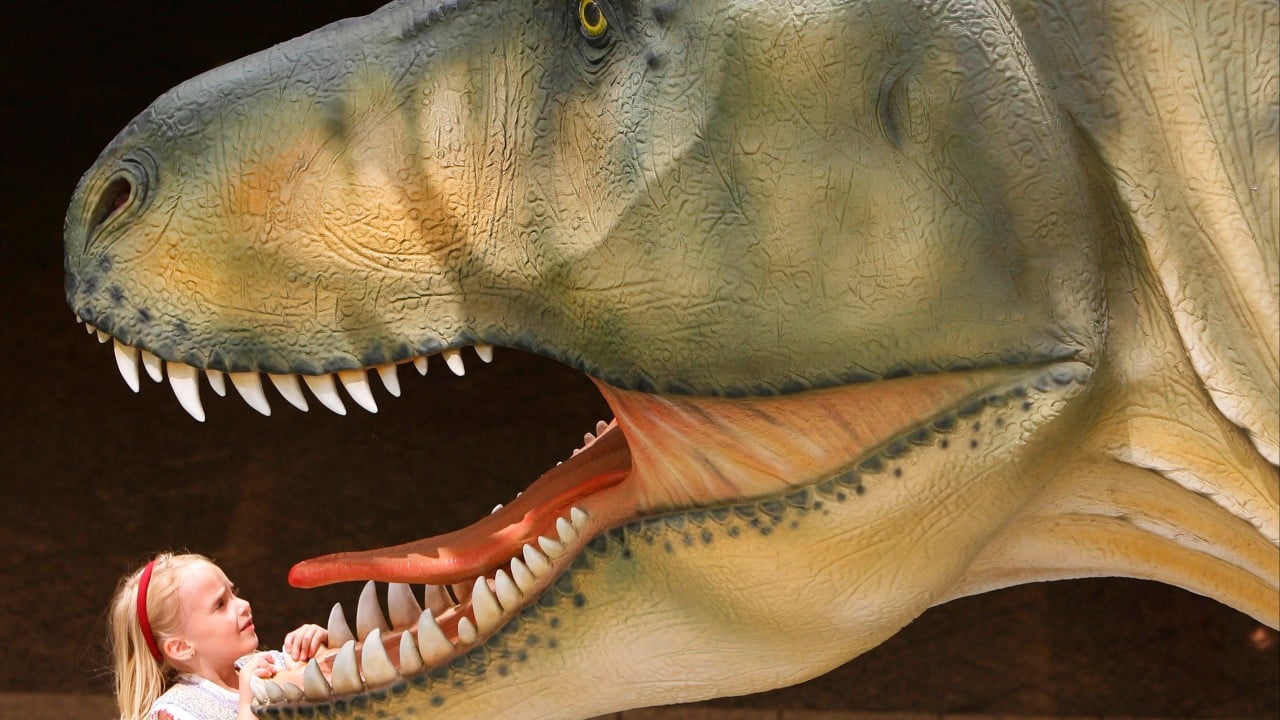
For decades, pop culture painted the Tyrannosaurus rex as either a sluggish, cold-blooded lizard sunning itself on a rock or a terrifying monster obeying no biological rules. Paleontologists have argued for generations about whether the king of the tyrant lizards generated its own body heat or relied entirely on the environment. Now, a recent study published in Science Advances changes how we view dinosaur physiology for good.
Researchers at the University of California, Los Angeles (UCLA) figured out how to take an accurate internal temperature of a T. rex using fossilized teeth. The result? It ran at roughly 37 degrees Celsius, or 97 degrees Fahrenheit. That sits right in line with human body temperature. It is a massive clue that settles a decades-long debate about dinosaur metabolism.
Breaking Down the Chemistry of Ancient Teeth
Taking the temperature of an animal that went extinct 66 million years ago sounds like science fiction. You cannot just stick a thermometer into a fossilized jawbone. Instead, a team led by UCLA geobiologist Robert Eagle and isotope geochemist Aradhna Tripati turned to chemistry.
They looked inside tooth enamel, specifically examining rare isotopes of carbon and oxygen that bind together. These chemical bonds behave predictably based on temperature. Cooler environments cause more bonds to form, while warmer environments result in fewer bonds.
Using a dental drill, the researchers extracted minuscule amounts of enamel from fossil teeth—including samples from a 34-foot T. rex nicknamed Thomas, originating from the Hell Creek formation in Montana. They dissolved the powder in phosphoric acid and measured the resulting carbon dioxide gas with a mass spectrometer.
To make sure the minerals had not been altered by millions of years of geological heat and pressure, they also analyzed ancient crocodilian fossils found in the same region. The crocodilians registered at a cooler 30 degrees Celsius (86 degrees Fahrenheit), proving that the method was capturing true biological signals rather than a geological fluke.
What a Human-Like Temperature Means for Hunting
A body temperature of 97 degrees Fahrenheit places the T. rex in an interesting biological sweet spot. Modern, cold-blooded reptiles generally run around 28 to 30 degrees Celsius (82 to 86 degrees Fahrenheit). Meanwhile, modern birds—the direct descendants of dinosaurs—run much hotter, typically between 40 and 43 degrees Celsius (104 to 109 degrees Fahrenheit).
The T. rex sat comfortably right between them. This internal warmth points directly to endothermy—meaning it produced its own heat internally rather than depending strictly on the sun.
Having an internal thermostat completely changes how the animal lived day-to-day. Cold-blooded animals are at the mercy of the weather. When it gets cold, they slow down. A warm-blooded T. rex could maintain a high energy level, stalk prey aggressively, and move with steady endurance regardless of whether the sun was shining.
Surviving the Arctic and Conquering North America
This physiological advantage explains a major geographical mystery. T. rex fossils are found across a massive territory in North America, stretching all the way up into regions like modern-day Alaska.
During the late Cretaceous period, the planet was warmer overall, but northern latitudes still experienced seasonal cold snaps and periods of limited light. A purely cold-blooded giant reptile would have struggled to survive freezing winters or dark months in the north. By running at 97 degrees, the T. rex could shrug off chilly climates that would have killed off competing predators.
Of course, burning that much internal energy came with a steep cost. Warm-blooded animals need massive amounts of calories to stay fueled. This means the king of the dinosaurs was locked into a relentless cycle of hunting and feeding to maintain its internal furnace.
Where Paleontology Goes From Here
For years, trying to get funding or access to rare fossils for this kind of work was an uphill battle. Museums protect their specimens fiercely, and earlier techniques required destroying large chunks of teeth.
The breakthrough came because the UCLA team refined the process down to just a few milligrams of material. Curators could finally say yes without risking prized museum pieces.
Researchers are already eyeing the next steps. They want to apply this same tooth enamel technique to other prehistoric giants, from three-horned Triceratops to long-necked sauropods and early mammals. Unlocking the thermal profiles of these creatures will paint a clearer picture of ancient ecosystems, showing how different species shared landscapes, managed resources, and survived massive environmental shifts.
The T. rex was never just a giant lizard. It was a high-powered, warm-blooded engine built to dominate its world.