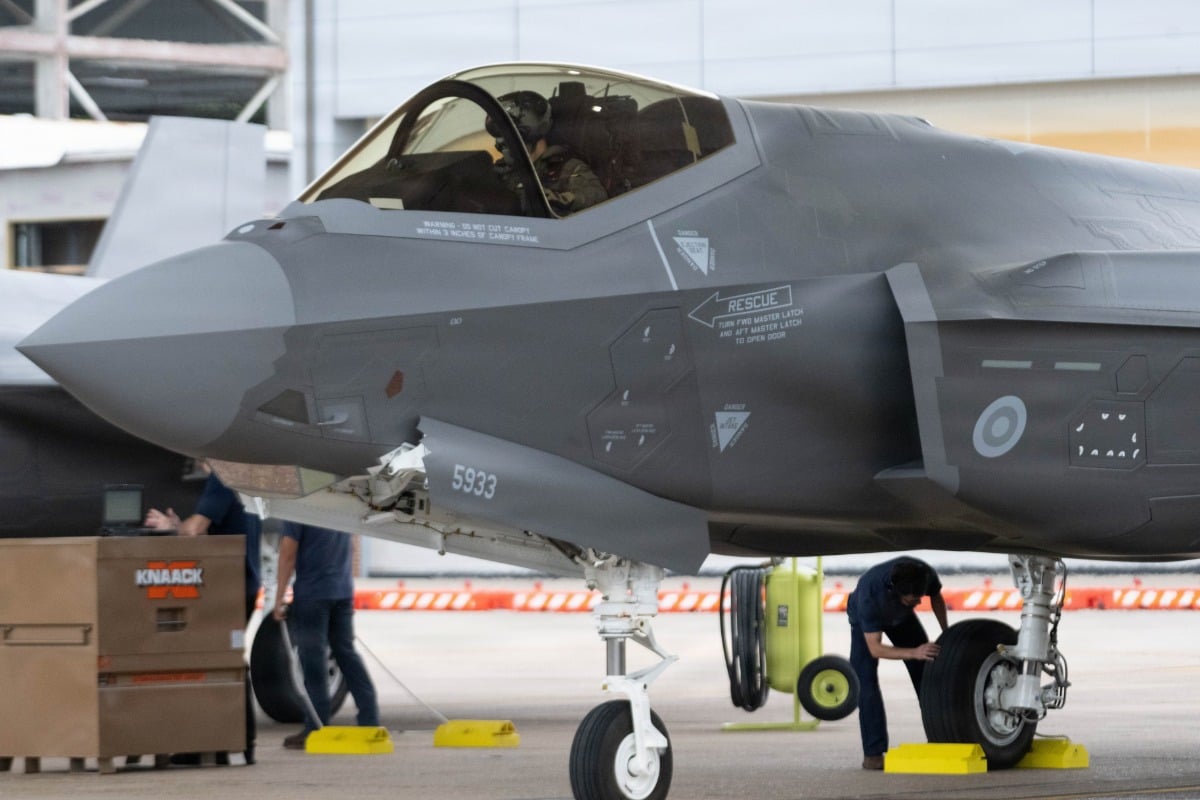
When Finland decided to replace its aging F/A-18 Hornets with 64 F-35A stealth fighters back in 2021, most people viewed it as a standard procurement deal. A nation bordering Russia securing its skies. But there's a massive piece of this puzzle that standard news coverage completely glances over. This isn't just about Helsinki buying American military tech. It's about American military tech relying directly on Finnish manufacturing to keep the global F-35 program alive.
If you think Finland is just an end-user, you're missing the real story. Finnish defense heavyweight Patria just kicked off manufacturing structural components, forward fuselages, and landing gear doors right out of its upgraded facilities in Halli, Jämsä. They aren't just building these for their own fleet. They are building them for the global market.
The Stealth Export Machine
Let's clear up a common misconception. Most international buyers of the F-35 receive their jets from final assembly lines in Fort Worth, Texas, or regional hubs in Italy and Japan. But the parts that make up those jets come from a tightly integrated global web.
Under a massive framework agreement that runs all the way through 2042, Patria will assemble 400 forward fuselages and landing gear door sets. Every single one of those forward fuselages built in Jämsä gets packed up and shipped straight to Lockheed Martin's main assembly line in Fort Worth. Patria is actually the first partner outside the United States trusted to build forward fuselages for the aircraft.
Think about that scale. Finland only ordered 64 planes for itself. Yet, they're building the front third of 400 aircraft. That means hundreds of F-35s flown by the US military, NATO allies, and global partners over the next two decades will fly with a nose made in Finland.
It Is All About Security of Supply
Why would Lockheed Martin hand over such a critical piece of the manufacturing process to a Nordic country of 5.5 million people? It comes down to a hard-nosed strategic concept called "security of supply."
When the Finnish Ministry of Defense negotiated the fighter deal, they mandated that industrial cooperation must equal at least 30% of the total contract value. They didn't want to just write a check to Washington and wait for replacement parts to arrive via transatlantic shipping during a crisis. They demanded deep technical capability inside their own borders.
This strategy goes far beyond sheet metal and carbon fiber. Over in Linnavuori, Nokia, Patria completed a highly secure facility dedicated entirely to the assembly and maintenance of the Pratt & Whitney F135 engines that power the stealth jet. The first Finnish-assembled engines are scheduled to roll off the line later this year.
Once the initial assembly phase wraps up around 2030, this facility shifts entirely into a regional powerhouse for maintenance, repair, overhaul, and upgrades (MRO&U). If a conflict breaks out in northern Europe, Finland won't be relying on a long logistical tail stretching back to North America to keep its engines roaring. They can pull an engine apart, fix it, and test it right in Nokia.
What This Means for the Nordic Economy
The industrial ripple effect here is massive. The F-35 project is projected to generate roughly 4,500 direct and 1,500 indirect person-years of employment across Finland.
It also upgrades the country's technological baseline. Building fifth-generation stealth components requires absurdly tight tolerances, specialized material science, and data security protocols that have to pass strict Pentagon audits. By clearing these hurdles, Finnish suppliers are cementing their positions in high-value aerospace engineering for the next half-century. Lockheed Martin expects the component manufacturing to last over 20 years, while the lifecycle sustainment work will stretch well into the 2070s.
Finland’s first physical F-35A jets will land at the Lapland Air Command base in Rovaniemi at the end of 2026. But months before those jets even touch down on Finnish soil, the country’s factories are already shaping the very airframes that define western air power.
Next Steps for Defense Analysts and Industry Observers
If you are tracking how the global defense industrial base is shifting, keep your eyes on these specific markers over the next 12 to 18 months:
- Watch the Linnavuori Engine Deliveries: Monitor the rollout of the first completed F135 engines from the Nokia facility later this year to see how quickly the team hits operational cadence.
- Track the Supply Chain Integration: Observe the shipping log logistics from Jämsä to Fort Worth as forward fuselage production scales up to meet Lockheed's global assembly timeline.
- Evaluate NATO Interoperability: Look at how Finland’s domestic repair capabilities might eventually service the F-35 fleets of neighboring Nordic NATO allies like Norway and Denmark.