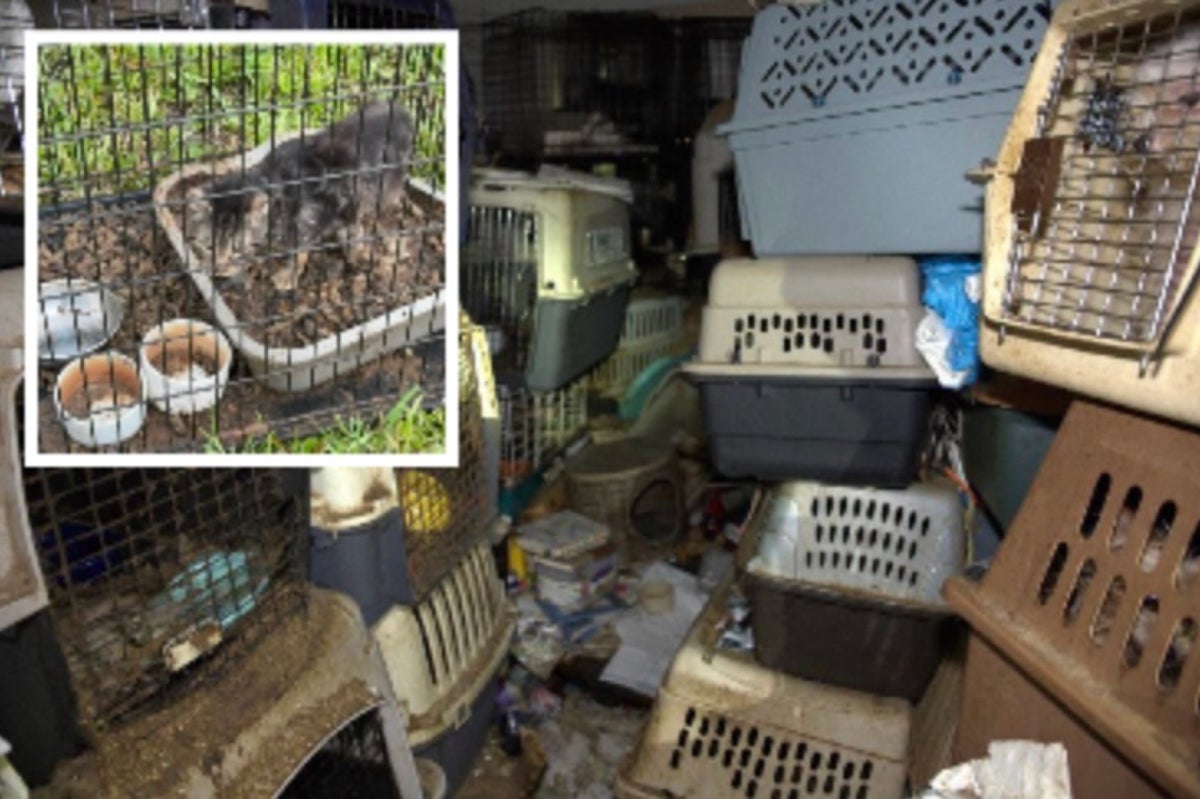
When Martin County deputies cracked open the door of a home on Southwest Meadowlark Circle in Stuart, Florida, they were hit with a wall of heat topping 110 degrees and a stench so intense that fire rescue had to bring in hazmat gear just to ventilate the building. Inside sat 80 cats and 12 dogs, trapped in stacked cages, surrounded by up to a foot of animal feces, with no working air conditioning or open windows in the brutal summer heat.
The homeowner wasn't an underground animal breeder or an illegal operation runner. She was Gail Giustino, a 77-year-old U.S. Postal Service worker who spent her daily mail routes collecting feral cats, thinking she was rescuing them from the streets.
This case made national headlines overnight. Most news reports treat it as a bizarre local crime story. But if you look deeper into how a postal worker managed to accumulate nearly a hundred animals in a residential neighborhood without intervention for years, you realize this isn't just a story about one woman. It's a stark demonstration of how severe animal hoarding operates right under our noses, how public systems fall short, and what happens when misguided empathy turns catastrophic.
Inside the Stuart Florida Mail Route Investigation
The situation came to light after reports surfaced alleging that a local mail carrier was picking up stray cats along her delivery route. Neighbors and locals suspected she was taking animals, prompting the Martin County Sheriff’s Office to investigate.
When investigators initially looked into the claims, they realized Giustino wasn't stealing family pets off front porches. Instead, she was capturing feral and stray cats she encountered while delivering mail across Martin County.
When animal control officers tried to inspect her home, Giustino refused to let them inside. Over a week, she dodged authorities, stalled inspections, and even dropped off roughly 15 animals at local shelters in an attempt to convince officers that her house was clear.
Because she refused to cooperate, Sheriff John Budensiek and his team took the criminal route. They obtained a search warrant and entered the property alongside Martin County Fire Rescue and Animal Services. What they found inside was described by Sheriff Budensiek as the worst case of animal hoarding he had ever witnessed in the county.
Despite living in extreme squalor, Giustino had not physically abandoned the animals to starve. She fed them and gave them water, and even attempted to treat them with over-the-counter flea sprays (though overuse of the chemicals injured at least one animal). However, keeping 92 animals confined in cages without ventilation, air conditioning, or outdoor access caused severe dehydration, stress-induced fur loss, and dental disease.
Giustino was arrested and charged with one count of animal cruelty and one count of confinement of animals without sufficient exercise, with bond set at $50,000.
The Fine Line Between Animal Rescuing and Hoarding
It's easy to look at a case like this and assume pure malice. That's usually the first mistake people make when reading headline news about animal cruelty.
Sheriff Budensiek made a crucial point during his media briefing when he stated that the department wasn't trying to demonize Giustino. "We truly believe that Gail thinks she's doing the right thing, but she's doing it the wrong way," he explained.
This distinction matters. In clinical terms, animal hoarding is recognized as a complex mental health condition, often linked to obsessive-compulsive disorders, severe trauma, or cognitive decline in older adults. Hoarders rarely see themselves as abusers. In their minds, they are saviors. Every feral cat picked up off the street is a life protected from traffic, predators, or starvation.
The tragic irony is that as the number of animals grows, the hoarder's ability to provide basic care collapses. Squalor sets in slowly. The individual becomes desensitized to ammonia fumes, feces, and filth, convincing themselves that living in a cage in a 110-degree room is still better than being outside.
What makes this case particularly troubling is that it wasn't the first warning sign. A decade prior, code enforcement and animal control had been involved at the same property, issuing up to 65 civil citations regarding housing conditions and animal care. Yet, ten years later, the situation escalated to 92 animals trapped in a hazmat environment.
Why did it take so long to step in? Because animal control laws and municipal codes face massive legal barriers when entering private property without consent. Without explicit evidence of severe abuse or a judge's search warrant, authorities are often legally hamstrung, forced to watch from the curb until a situation reaches absolute crisis levels.
How the Local Community Responded to the Crisis
When 92 sick, stressed, and dehydrated animals are pulled from a single residence in a single day, local shelter infrastructure gets pushed to the brink.
The seized animals were transferred immediately to the Humane Society of the Treasure Coast in Hobe Sound. The shelter team stayed up past midnight performing medical exams, administering emergency fluids, giving vaccinations, and setting up clean bedding for every single animal.
As of late July 2026, the animals remain under medical observation and care. Microchip scanning and property cross-checks have already allowed officials to identify and reunite five of the animals with their original owners, proving that at least some of the stray animals collected were missing pets.
Because this remains an active criminal case, the rescued cats and dogs cannot be immediately put up for adoption. The shelter is carrying the financial and logistical burden of housing, feeding, and treating nearly a hundred unexpected animals while legal proceedings move forward.
Warning Signs of Animal Hoarding in Your Neighborhood
Cases like the Stuart mail carrier rescue don't happen overnight. They build over years. Knowing how to spot the signs early can prevent hundreds of animals from suffering in silence.
Here are the red flags that usually indicate an animal hoarding situation in a residential neighborhood:
- Persistent, overwhelming odors of ammonia or decay coming from a residence, even when windows are closed.
- Windows covered entirely by blankets, foil, or heavy blinds, often with visible flies or condensation trapped inside.
- A steady accumulation of animal food bags, crates, or litter supplies being brought into a home, with zero animals ever seen outside.
- Individuals who constantly pick up strays or offer to take in unwanted pets but refuse to let anyone past their front door.
- Rapid deterioration of a home's exterior, including unkempt yards, overflowing trash, or structural neglect.
If you observe these warning signs, reporting them to local animal control or law enforcement isn't about getting someone in trouble. It's about getting help for both the animals and the person inside. In many jurisdictions, animal control can coordinate with adult protective services or mental health resources to address the root cause of the hoarding behavior.
Concrete Steps You Can Take Right Now
If this case frustrates you, don't just close the tab. Channel that energy into actions that directly support animal welfare in your own area.
First, support local shelters facing emergency influxes. Facilities like the Humane Society of the Treasure Coast rely heavily on public help during mass rescues. You can donate wet cat food, clean towels, or financial contributions directly to local shelters in your area to offset medical costs.
Second, apply to become an active foster parent. When animal control executes a large-scale seizure, shelters run out of physical space instantly. Foster volunteers who can temporarily house healthy shelter pets free up crucial cage space for incoming rescue animals that require quarantine and medical treatments.
Third, microchip and spay or neuter your pets. Five pets from the Stuart case were successfully identified only because they had microchips or distinct owner records. Registering your pet's chip ensures that if they ever wander off and get picked up, they can be traced back to you immediately.
Finally, if you suspect an animal hoarding situation in your community, document specific details—dates, odors, number of animals observed, and structural conditions—and contact your local animal services or sheriff's non-emergency line. Prompt, documented reports give authorities the legal standing they need to investigate before conditions become life-threatening.