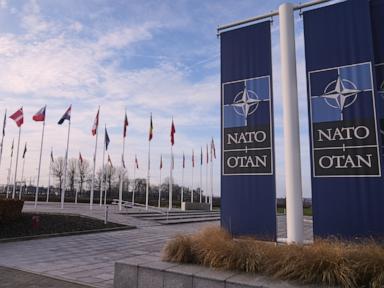
International alliances love talking about democratic values, but their actions on the ground often tell a completely different story. Right now, a massive press freedom crisis is boiling over in Turkey just days before the July 7-8 NATO summit in Ankara.
Independent Turkish journalists are being systematically locked out of covering the event. It's not a glitch or an administrative bottleneck. It's a deliberate blackballing of the country's remaining free press. If you think an international body like NATO would stand up for the journalists, you're dead wrong. They are hiding behind host-country protocols while independent reporters get left in the dark.
The Secret Emails Shutting Down Independent News
The rejection notices arrived quietly via email from NATO Accreditations, a branch operating under the alliance's Office of Strategic Communications. The wording was cold, brief, and completely lacking in justification.
"I regret to say that your request for media accreditation cannot be granted this time. I cannot discuss the reasons for this decision, which is final," the automated message read.
There is no appeal process. No human to call. No criteria provided. Experienced defense and security journalists are being treated like security threats. Duygu Güvenç, a seasoned Turkish reporter who has covered previous NATO summits in Lisbon, Chicago, Brussels, and Istanbul, was among those rejected. She won't be allowed to cover the summit happening in the very city where she lives.
The list of banned organizations reads like a directory of Turkey's remaining independent and opposition-leaning news sources.
- Cumhuriyet: One of the country's oldest and most respected secular newspapers.
- NOW TV & İlke TV: Broadcasters that refuse to follow the government's official script.
- Medyascope & T24: Digital-first independent outlets that have kept real journalism alive online.
- Halk TV, Sozcu TV, and ANKA News Agency: Mainstays of independent public interest reporting.
By shutting these outlets out, the summit will essentially be covered only by state-run media and corporate outlets owned by business groups close to President Recep Tayyip Erdoğan's administration.
NATO Passes the Buck to the Turkish Government
You might expect an alliance that explicitly states its commitment to individual liberty, democracy, and human rights to intervene. Instead, they are dodging responsibility.
NATO spokeswoman Allison Hart addressed the growing backlash on X, stating that for summits held outside its Brussels headquarters, the trans-Atlantic alliance relies entirely on the host country to assess and approve local journalists.
Essentially, NATO let the Turkish government hold the velvet rope.
The Turkish government's Communications Directorate has used press accreditation as a political weapon for years. They routinely deny, cancel, or indefinitely delay press cards for critical journalists. By handing the screening keys over to local authorities, the alliance allowed the Turkish government to curate its own press corps. It's a massive win for state censorship, and it happened with international complicity.
A Broader Pre-Summit Crackdown
The media blacklist isn't happening in a vacuum. It's part of a sweeping security and political sweep across Ankara as international leaders, including U.S. President Donald Trump, prepare to arrive.
Earlier this week, security forces launched massive raids, detaining more than 200 people. The Ankara chief prosecutor's office claimed these individuals had ties to extremist groups. However, human rights organizations and opposition parties on the ground report a vastly different reality. The sweep swept up academics, lawyers, an independent journalist, a local politician, and a prominent LGBTQ activist.
Human Rights Watch immediately rang the alarm bells. Benjamin Ward, the group's deputy director for Europe and Central Asia, pointed out that using broad anti-terrorism laws to silence peaceful critics right before a major summit flies directly in the face of everything the alliance claims to stand for.
The state's response? A firm insistence that everyone detained was connected to terrorist organizations. It's a familiar blanket justification that local authorities have used for a decade to crush dissent.
Why This Matters Far Beyond Turkey
This isn't just a localized dispute over press badges. It's a case study in how easily democratic standards are traded away for geopolitical convenience. Turkey currently ranks 163rd out of 180 countries in the 2026 World Press Freedom Index published by Reporters Without Borders (RSF). That is a drop from 159th place just the previous year. Media pluralism in the country is on life support.
When international bodies allow host nations to dictate who gets to ask questions at global events, they validate authoritarian tactics. The journalists who were denied entry aren't just missing a photo op. They are being stopped from asking tough questions about defense spending, regional security agreements, and internal human rights abuses.
Real Next Steps for International Observers
If you want to support press freedom during the summit, stop relying solely on the official press pool coverage. The mainstream feeds will be tightly controlled and sanitized.
- Follow the banned outlets directly: Check the digital feeds of T24, Medyascope, and Cumhuriyet during July 7-8. They will be reporting from outside the perimeter, offering the context the official press room won't give you.
- Amplify independent Turkish journalists on social media: Use your platform to share translated reports from independent security analysts like Levent Kemal, who have been vocal about these arbitrary bans.
- Demand accountability from international press corps members: If you follow journalists from western outlets who did get inside the room, push them to ask NATO officials directly about the host-country press ban during live press conferences.