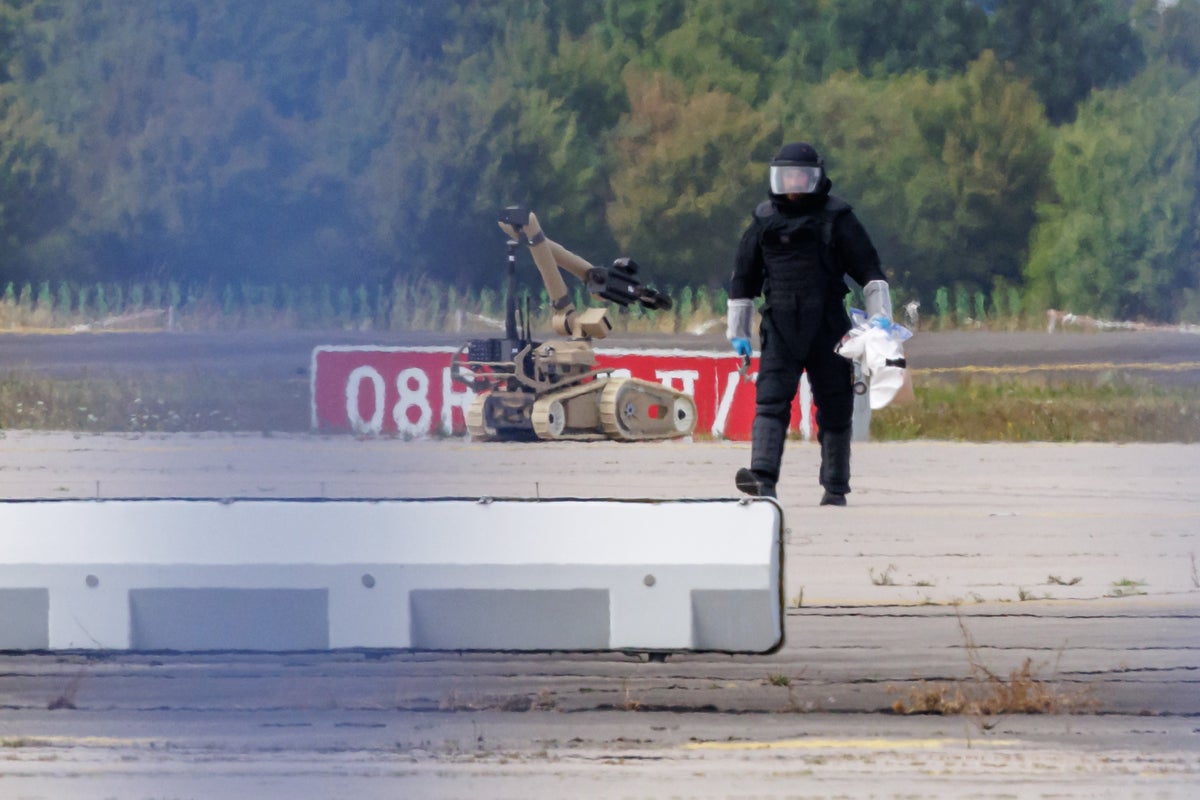
A modified drone packed with explosives sits on a tarmac next to a Ukrainian Antonov transport plane. Meanwhile, a cargo jet collides with an unidentified flying object in the night sky overhead. This isn't a scene from a spy thriller. It happened at Leipzig/Halle Airport in Germany, and it marks a dark turning point in how the war in Ukraine spills over into Western Europe.
German Interior Minister Alexander Dobrindt didn't mince words after emergency security meetings. He called it a new quality of danger. Past European airport incursions involved ghost drones snooping around infrastructure or causing minor panic. This one packed actual explosives and a detonator. When saboteurs start planting live ordnance near commercial and military logistics hubs, the comfortable distance between Western Europe and the front lines vanishes.
The Leipzig Security Breach
Leipzig/Halle Airport isn't just a regional travel hub handling millions of civilian passengers. It serves as a vital logistics artery for NATO military shipments and a primary overseas maintenance base for Ukraine's Antonov Airlines cargo fleet. Four Ukrainian cargo aircraft were parked on site during the security lockdown.
Federal police rushed a bomb disposal robot onto the southern runway just before midnight. They dismantled a live detonator from an improvised explosive device strapped to the unmanned aerial vehicle. Minutes prior, a DHL cargo flight aborting its landing approach struck a separate flying object—suspected to be a second drone—sustaining noticeable airframe damage before managing to divert safely to Hanover.
State counterterrorism and extremism prosecutors took over the case immediately. They aren't treating this as a prank by local gadget hobbyists. The hardware sophistication points straight to state-backed tradecraft.
Beyond Routine Espionage
For years, intelligence agencies across Europe tracked a steady uptick in hybrid provocations. Research from institutions like the International Institute of Strategic Studies shows dozens of suspicious drone flights over sensitive military installations and aviation hubs since 2024. Most of those previous operations focused purely on reconnaissance or psychological disruption. They wanted to force flight suspensions, chew up economic resources, and rattle public nerves.
Carrying high explosives changes the calculus completely. It shifts the threat profile from electronic nuisance to direct physical sabotage. Investigators note chilling parallels to an incident in July 2024, when an incendiary device smuggled inside a cargo package detonated right on the ground at this exact Leipzig logistics hub. Russian military intelligence operatives orchestrated that parcel bombing campaign across Europe.
When you look at the big picture, the pattern becomes obvious. Moscow's covert networks are willing to take massive risks with civilian infrastructure to choke off Western military supply chains flowing into Kyiv.
Who Was Behind the Controls
Ukrainian officials immediately pointed the finger at the Kremlin. Ambassador Oleksii Makeiev asked reporters the obvious question on everyone's mind: who else could it possibly be?
German authorities remain officially more cautious while forensics teams process the wreckage. Yet security officials speaking off the record admit that Russian state actors sit at the very top of their suspect list. The drone's payload didn't detonate fully because a crucial connection broke off during movement, saving the facility from catastrophic structural damage and potential mass casualties.
If that bomb had functioned properly, the shockwaves would have wrecked critical transport assets and killed ground personnel. It would have instantly forced every major European airport to upgrade security to wartime standards, grounding thousands of flights and costing billions.
Securing Europe's Open Borders
Open societies hate defending against asymmetric threats. European airports rely on sprawling perimeters, open logistics zones, and fast-moving commercial freight. You can't put an air defense battery or a Patriot missile system next to every civilian runway in the European Union.
Intelligence sharing and counter-sabotage units must adapt faster than the networks trying to infiltrate them. Stopping these attacks requires hunting down local proxy cells before they ever touch a drone controller.
Watch for tighter access controls around vital logistics centers like Leipzig, Cologne, and Frankfurt over the coming months. The era of treating European infrastructure as a safe sanctuary away from the battlefield is officially over.