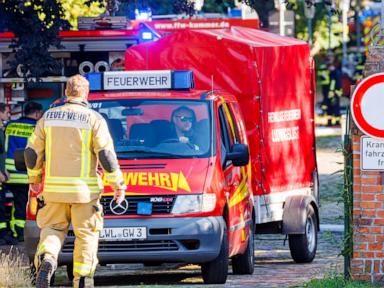
A quiet Thursday morning in a small town turned into an absolute nightmare. At around 4:30 AM on July 2, 2026, thick smoke started rolling through the corridors of the Helene-von-Bülow-Klinikum in Ludwigslust, Germany. Before most patients even realized what was happening, parts of the building were fully ablaze.
The fire started in a regular patient room. Within minutes, the flames climbed. They tore into the roof trusses directly above the hospital's radiology department. It took a massive deployment of over 100 emergency workers to get the situation under control. But for two people, it was already too late. Two patients died right there in the facility. Another 34 individuals suffered injuries, mostly from breathing in toxic smoke.
This isn't an isolated mishap. It's a flashing red warning light for medical facilities everywhere. When the only hospital in a town goes up in flames, the entire local healthcare system collapses instantly.
Inside the Ludwigslust Emergency
Let's look at the facts of what happened on the ground. Ludwigslust is a small town in Mecklenburg-Vorpommern, sitting about 25 miles south of Schwerin. Its local hospital, the Helene-von-Bülow-Klinikum, operates just 160 beds. It is small. It provides the only basic medical care for the immediate population.
When the fire broke out before dawn, 82 patients were sleeping inside the affected section. The timeline shows how fast things deteriorated. The fire department received the call at 4:28 AM. By the time first responders arrived, flames were visibly tearing through the roof structure.
The scene outside was pure chaos. Nurses and emergency crews frantically wheeled sick people out onto the wet grass. Some patients were still in their hospital gowns. Others sat shivering in wheelchairs wrapped in aluminum rescue blankets. Nurses pushed heavy hospital beds across uneven lawns just to clear the smoke zone.
The emergency room had to shut down completely. Think about that for a second. If you had a heart attack or a car accident in that district on Thursday morning, your local ER didn't exist anymore.
The Deadly Flaw in Roof Structures
Why did a fire in a single patient room spread to the roof so quickly? The answer lies in how these older European medical facilities are constructed. The fire started low but found an immediate pathway upward. Once it reached the roof trusses above the radiology wing, it found plenty of oxygen and space to run.
Roof spaces in older public buildings often lack proper modern fire blocking. These gaps allow smoke and heat to travel horizontally across an entire wing before the ground-floor alarms even register the full danger. The Rostock Police Headquarters launched a full investigation into the exact cause.
Right now, we don't know if it was an electrical short, a malfunctioning medical device, or patient negligence. But we do know the containment failed. Hospitals are supposed to be built with strict fire compartments. A fire in Room A should stay in Room A long enough for everyone to walk out safely. That didn't happen here.
A Dark Pattern of German Hospital Fires
If you think this is a rare tragedy, you aren't paying attention to the data. Germany has seen a string of devastating medical facility fires over the last couple of years.
Go back to January 2024. A horrific fire broke out at a hospital in Uelzen, another town in northern Germany. That blaze started on the third floor, spread to multiple patient rooms, and killed five people while injuring dozens of others. The structural damage there topped a million euros.
The similarities between Uelzen and Ludwigslust are terrifying. Both happened in the dead of night or early morning. Both involved rapid fire spread through patient wings. Both overwhelmed local staff who had to perform emergency evacuations while heavily outnumbered by patients.
We are looking at an systemic vulnerability. Many of these hospitals were built decades ago. They have undergone superficial renovations, but their core internal bones lack the advanced suppression systems required today.
The Realities of Evacuating the Vulnerable
Evacuating an office building is easy. Everyone stands up and walks down the stairs. Evacuating a hospital is a logistical horror story.
You aren't dealing with able-bodied adults. You are dealing with people hooked up to IV lines. Patients who just came out of major surgery. Individuals who can't walk without assistance. Some might be sedated or suffering from severe dementia, making them terrified and uncooperative during a crisis.
In Ludwigslust, staff members had to act as human shields against the smoke. They carried people out manually. This explains why 34 people ended up with smoke inhalation. The workers didn't run. They stayed to pull their patients out of beds.
If a hospital relies solely on the heroism of underpaid night-shift nurses to drag 82 patients out of a burning building, the safety protocol is broken. Relying on luck or heroism is a failed strategy.
What Needs to Change Right Now
We need to stop pretending that basic compliance with old building codes keeps people safe. It doesn't. If you run a healthcare facility or look after safety protocols, you need to audit your infrastructure immediately.
Automated sprinkler installations must become mandatory in every single patient room, no matter how old the building is. Many older European facilities resist retrofitting sprinklers because of the high cost and disruption to patient care. But look at the alternative. The cost of a human life cannot be balanced against plumbing expenses.
Fire drills must simulate worst-case scenarios. Don't run your safety drills at 2:00 PM on a Tuesday when the building is fully staffed. Run them at 4:00 AM. Simulate a situation where two nurses have to evacuate an entire 30-bed ward by themselves in total darkness. That's how you find the gaps in your survival plan.
Check your roof voids. If your facility has shared roof spaces or interconnected crawlspaces above specialized departments like radiology or oncology, install fire barriers now. Separate the structures so a localized room fire can't turn into an unstoppable roof inferno.
If you're a patient or have family in a long-term care facility, ask questions. Ask the administration about their night-shift staffing ratios. Ask when the last live evacuation drill took place. Your life depends on those answers.