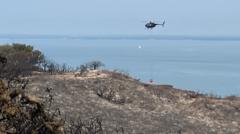
When a wildfire broke out across Headon Warren on the Isle of Wight, ground crews quickly found themselves fighting an uphill battle. More than 60 acres of protected heathland went up in smoke within hours, pushed along by dry gorse and steep coastal terrain that made manual firefighting nearly impossible. It didn't take long for officials to bring in specialized aerial support.
An MD Hughes 500 helicopter equipped with an underslung Bambi Bucket was flown in to scoop seawater directly from Totland Bay and drop thousands of gallons across inaccessible cliff edges. Watching a low-flying chopper douse smouldering terrain looks impressive, but it points to a much bigger challenge: island infrastructure isn't designed to handle modern, intense wildfires without pulling in external, high-cost resources.
The Brutal Reality of Coastal Terrain Wildfires
Firefighters from the Hampshire and Isle of Wight Fire and Rescue Service (HIWFRS) are well-trained, but steep, crumbling cliffs present unique hazards. Pumping water up hundreds of feet from the coast requires massive amounts of pressure, high-volume equipment, and precious time.
Ground teams were dragged into an exhausting routine:
- Dragging heavy hose lines through dense, thorny gorse under direct heat.
- Risking footings near unstable cliff edges where terrain drops sharply into the Solent.
- Dealing with shifting coastal winds that constantly redirect smoke and rekindle hidden hotspots.
Deploying an aerial water-drop changes the strategy completely. While ground crews pulled back to safe distances, the Hughes 500 maintained a rapid cycle of scooping salt water and dropping it straight onto hard-to-reach pockets of fire. It's fast, effective, and keeps firefighters off treacherous slopes.
Why Saltwater Drops Are a Double-Edged Sword
Dumping seawater on a wildfire solves the immediate crisis, but it leaves long-term damage behind. National Trust land like Headon Warren hosts fragile coastal ecosystems, rare insects, and acidic soil conditions that native heather depends on.
Saltwater dousing smothers flames instantly, yet it also deposits high levels of salinity into topsoil. Plants that survive the thermal shock often end up dying from salt burn later on. It's a deliberate, necessary trade-off: sacrifice a portion of soil health today to prevent 60 burning acres from turning into 300.
What You Need to Know About Wildfire Safety on Coastlines
If you live near heat-prone heathland or visit coastal reserves during dry spells, relying on emergency response isn't enough. You need simple, proactive habits to keep yourself and the local environment safe.
- Ditch open flames on reserves. A single discarded disposable BBQ or dropped cigarette can ignite dry gorse in seconds under hot, windy conditions.
- Keep roads clear for heavy transport. Narrow coastal lanes on the Isle of Wight quickly get blocked by parked visitor cars, delaying high-volume pumps and support vehicles.
- Report smoke early and precisely. Use apps like What3Words to give fire dispatchers an exact location on open heathland, shaving crucial minutes off response times.
Ground crews and aerial teams can suppress major fires when they break out, but stopping the spark in the first place saves millions in emergency logistics and preserves fragile ecosystems for decades.