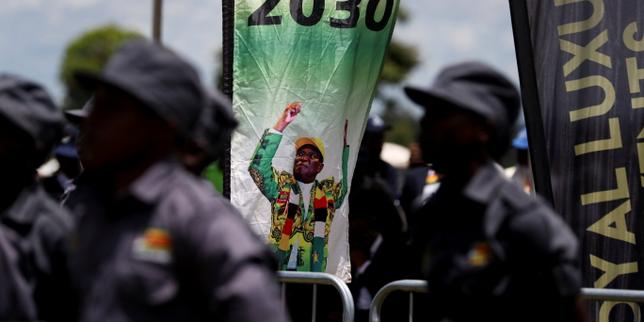
Walk through the streets of Harare and you might think you are looking at a country moving forward. There are new roads being paved. High-profile international summits fill up luxury hotels. The state television broadcasts endless loops of economic promises. The government calls it the Second Republic. They claim it is a complete break from the dark, heavy years of Robert Mugabe.
It is a lie.
If you look beneath the shiny surface, Zimbabwe remains trapped in the exact same authoritarian loop that defined it for nearly four decades. The faces at the top changed back in 2017 when the military stepped in, but the system itself did not change. Emmerson Mnangagwa promised a new dawn of freedom and open business. Instead, he simply perfected the machinery of repression. The democratic facade is thin, and it is fooling nobody who actually pays attention to the daily reality on the ground.
Understanding why Zimbabwe is stuck requires stripping away the official press releases. It means looking at how power is kept, how opposition is crushed, and how Mugabe's shadow still dictates the rules of survival.
The Iron Fist in a Velvet Glove
When Robert Mugabe was ousted, there was genuine hope. People celebrated in the streets alongside soldiers. That hope died quickly. The current leadership realized they could not rule exactly like Mugabe did in the 1980s or 2000s. The world had changed. Outright, bloody violence on a massive scale draws too much international heat.
So they shifted tactics. They traded the sledgehammer for the scalpel.
The strategy now relies on lawfare. The government uses the court system as a political weapon. Instead of just sending youth militias to beat up opposition supporters, they use the police to arrest activists on absurd, manufactured charges. They hold them without bail for months. Job Sikhala, a prominent opposition figure, spent nearly two years in a maximum-security prison before finally being released. His crime? Demanding justice for a murdered political activist.
This is not a democracy trying to find its footing. This is a highly calculated effort to drain the resources, energy, and will of anyone who dares to dissent. The courts do not offer justice anymore. They offer compliance.
When you look at the legislation passed over the last few years, the pattern becomes undeniable. Take the Patriotic Bill. It criminalizes any citizen who criticizes the government while speaking to foreign officials. Think about that for a second. If an activist talks to a foreign journalist or diplomat about human rights abuses, they can technically face the death penalty or lose their citizenship. It is a terrifying law designed to shut mouths and stop information from leaving the borders. Mugabe would have loved it.
Crushing the Opposition from the Inside Out
The regime did not just stop at weaponizing the courts. They went after the opposition infrastructure itself.
The Citizens Coalition for Change emerged as a real threat to the ruling ZANU-PF party. They had momentum. They had the youth. But the state found a bizarre, highly effective way to dismantle them. A little-known politician claimed he was the interim secretary-general of the opposition party, a position that did not even exist in their structure. He started recalling elected opposition MPs and councillors.
The state-controlled parliament and the courts backed him up immediately.
It was a brilliant, sinister move. Suddenly, the actual leaders of the opposition were stripped of their elected positions. Voters who waited in line for hours to elect their representatives watched their votes get canceled by a bureaucratic pen stroke. Nelson Chamisa, the charismatic leader of the opposition, eventually walked away from his own party. He openly stated that the movement had been hijacked by the state.
You cannot have a functioning democracy when the ruling party decides who gets to lead the opposition. It turns the entire electoral process into a bad theater production. The elections held recently were just an exercise in ticking boxes for international observers. The outcome was decided long before anyone marked a ballot.
The Reality of the ZiG and Economic Despair
You cannot separate Zimbabwe's political repression from its economic collapse. They feed into each other. The government needs absolute control because they cannot fix the economy, and an angry, starving population is a dangerous population.
We saw the introduction of the new currency, the Zimbabwe Gold. The government marketed it as the ultimate solution to the hyperinflation that has plagued the nation for twenty years. They backed it with gold reserves. They promised stability.
But you cannot build trust in a currency when nobody trusts the government issuing it.
The value of the currency on the black market tells the real story. Traders in downtown Harare still prefer US dollars. The state reacted the only way it knows how. They sent police to arrest informal currency traders. They forced supermarkets to use fixed exchange rates. They tried to threaten the market into submission.
It failed because economics does not care about military threats. The economic suffering is real, and it affects the youth most of all. Millions of educated young Zimbabweans have left the country. They are working in South Africa, the United Kingdom, or anywhere else that offers a stable paycheck. The brain drain is massive. The people left behind rely on remittances from family abroad just to buy basic groceries. This economic desperation keeps people quiet. When you are spending twelve hours a day trying to find clean water and enough food to feed your kids, you do not have the time or energy to protest in the streets.
Why the International Community Keeps Getting It Wrong
Western diplomats and regional neighbors often fall into the trap of praising superficial reforms. They want Zimbabwe to succeed so badly that they celebrate the bare minimum. They look at a new infrastructure project or a polite speech at a global forum and declare that progress is being made.
This naivety hurts real people.
The Southern African Development Community has historically been useless at holding ZANU-PF accountable. There is a toxic solidarity among liberation movements in the region. The leaders of South Africa, Namibia, and Mozambique view ZANU-PF as brothers in arms who fought against colonialism. Because of that history, they look the other way when elections are stolen or activists disappear.
Even when regional observers issued a surprisingly critical report during the last election cycle, the follow-up was nonexistent. Statements were made, hands were shaken, and everything went back to normal. The ruling elite knows that as long as they maintain a veneer of stability, the international community will eventually tire of sanctions and push for re-engagement.
Breaking the Cycle
The current trajectory is unsustainable. You cannot run a country on fear, fake currency, and legal intimidation forever. The older generation that remembers the liberation war is fading. The majority of Zimbabweans today were born after 1980. They do not care about the credentials of the 1970s bush war. They want jobs. They want internet freedom. They want a government that does not arrest them for a tweet.
Change will not come from a managed transition inside ZANU-PF. It will not come from foreign governments offering polite suggestions. It will only come when the cost of maintaining the illusion becomes too high for the regime itself.
If you want to understand the true state of Zimbabwe, ignore the official government accounts. Look instead at the empty seats in parliament where elected leaders should be sitting. Look at the citizens waiting in line outside banks. Look at the activists sitting in cells without trial. That is the real legacy of Robert Mugabe, and it is alive and well.
To challenge this reality, the focus must shift toward protecting local civic spaces, documenting human rights abuses meticulously, and forcing regional bodies to acknowledge the ongoing crisis instead of accepting cosmetic political fixes.