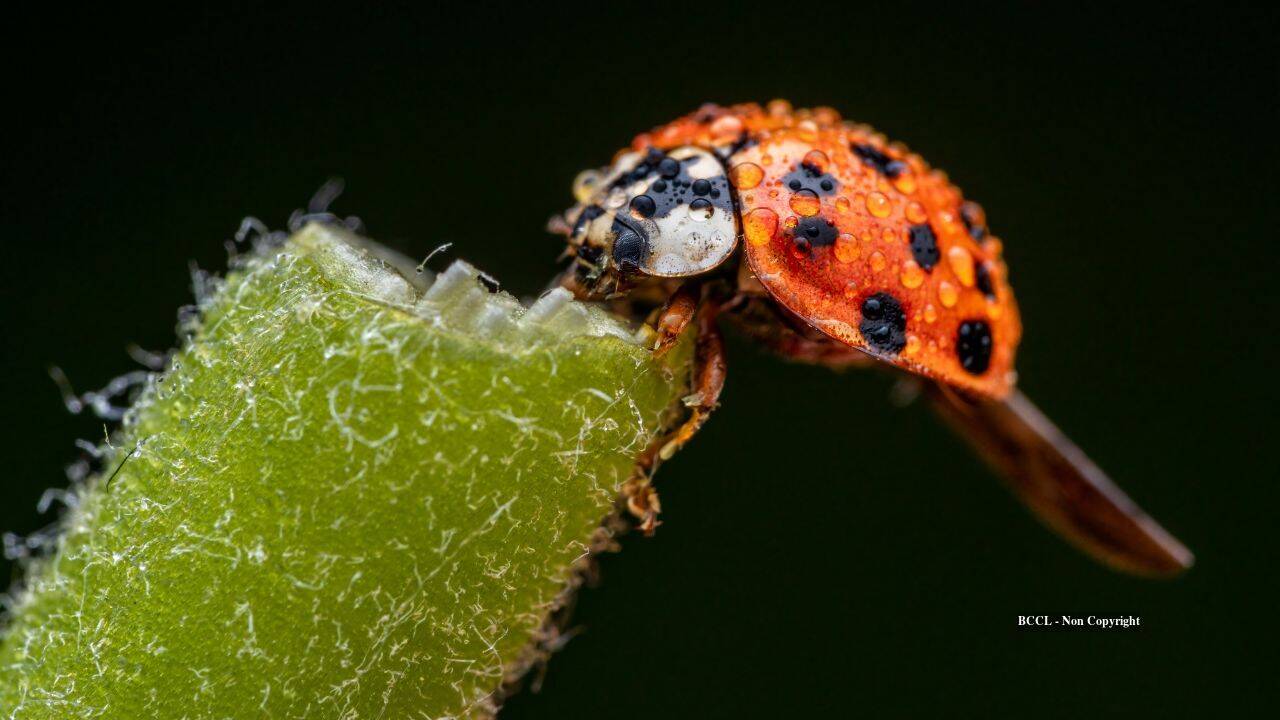
You think you know ladybugs. Red shells, black polka dots, harmless little garden helpers that children sing nursery rhymes to. But if you live in North America, the bugs swarming your windows every autumn likely aren't native at all. They're Harmonia axyridis, the multicolored Asian lady beetle, and their presence is the direct result of a century-old government experiment that went sideways.
Back in 1916, federal agricultural officials looked at surging aphid and scale insect populations wrecking US crops and decided to bring in reinforcements. Instead of relying purely on chemical sprays, they imported natural predators from Asia. It sounded like an easy win. Nature would balance nature.
Except ecosystems don't work like spreadsheets.
The Good Intentions Behind a Century-Old Release
Biological control was supposed to be the clean, modern answer to agricultural pests. Aphids suck the life out of plants, and scale insects decimate fruit trees. Native ladybirds were doing their best, but agricultural researchers wanted higher efficiency in orchards and field crops.
Federal, state, and private entomologists systematically released Harmonia axyridis at multiple locations across the United States over several decades. For a while, the strategy seemed to work. In specific settings like pecan orchards and ornamental nurseries, the beetles tore through aphid populations. Farmers saw fewer pests and temporarily cut back on chemical treatments.
The problem wasn't that the beetles failed to eat aphids. The problem was that they were too good at surviving, multiplying, and outcompeting everything else in their path.
How an Improbable Invasion Took Root
For decades after those early 1916 releases, scientists thought the introduced beetles hadn't actually established permanent wild populations. Then came 1988.
Researchers suddenly documented massive numbers of multicolored Asian lady beetles near the port of New Orleans, Louisiana—hundreds of miles away from many of the original release sites. Entomologists at the USDA Agricultural Research Service soon realized that planned intentional releases weren't the only entry vector. Accidental arrivals via imported nursery stock at busy ports like Delaware and South Carolina had also slipped through the cracks.
Once they gained a foothold, the beetles spread across North America with terrifying speed.
Their biological traits gave them an unfair edge. While native ladybirds might specialize in specific habitats or prey, Harmonia axyridis is a generalist. They survive in row crops, forests, orchards, and urban backyards. They reproduce fast, moving from egg to adult in just 15 to 25 days depending on temperature.
When Helpful Predators Became Ecological Bullies
When an introduced species lacks its native predators and parasites, population numbers explode. That's exactly what happened with the Asian lady beetle.
They didn't just share space with native ladybirds; they actively displaced them. Harmonia axyridis is larger, more aggressive, and reproduces faster than many native North American species. When aphid supplies run low, these beetles don't just starve—they eat the eggs and larvae of native ladybird species.
Worse yet, the beetles carry robust chemical defences. When threatened or crushed, they secrete a foul-smelling, yellow fluid from their leg joints through a process called reflex bleeding. This defensive mechanism leaves many birds and small mammals refusing to eat them, leaving the invaders virtually unchecked by local wildlife. Researchers have looked into natural parasites like Phalacrotophora flies to slow them down, but managing an established continental invasion is nearly impossible.
The Autumn Invasion Inside Your Living Room
If you've ever spent a crisp October afternoon wondering why thousands of beetles are clustering on the sunny side of your house, you're experiencing the other side of the Harmonia axyridis legacy.
As temperatures drop in autumn, these insects seek overwintering sites. They are naturally drawn to bright, light-colored structures—white, grey, and yellow homes act like giant beacons. They squeeze through tiny cracks in window frames, siding, and foundations, packing themselves into wall voids by the thousands.
They don't chew wood like termites or ruin clothes like moths, but they make terrible housemates. On warm winter days, indoor heating tricks them into thinking spring has arrived. They emerge into living spaces, crawling sluggishly across walls and ceilings. If you swat or vacuum them carelessly, that yellow reflex fluid stains paint, wallpaper, and fabrics with an unpleasant, lingering odor.
What We Learned the Hard Way
The story of the Asian lady beetle stands as a textbook warning in conservation biology. Introducing a foreign species to solve a localized agricultural problem can easily trigger decades of unintended consequences.
Today, Harmonia axyridis remains a dual-edged sword. They still help suppress aphids in specific commercial crops, saving farmers money on pesticides. But that utility comes with a steep ecological price tag: native biodiversity losses and millions of homeowners scraping insects off their siding every autumn.
If you want to keep them out of your house this fall, don't wait until they arrive. Seal exterior cracks and gaps with caulk before the first hard freeze, and keep a vacuum handy for the ones that manage to sneak past your defenses.