A quiet morning in Biddeford, Maine, shattered into chaos when federal agents opened fire on a white sedan. A 26-year-old Colombian father lay dying on the pavement, bleeding from the head, crying out to horrified onlookers, "I tried to stop". He wasn't even the man the government was looking for.
This isn't an isolated procedural hiccup. It's a fatal consequence of aggressive enforcement blind spots. When Immigration and Customs Enforcement (ICE) agents executed a surveillance operation on July 13, 2026, they claimed they were hunting a different individual with a final order of removal. Instead, their bullets took the life of a young man legally authorized to work in the United States, leaving a wife on her knees in the street and a young daughter holding a pink backpack, wondering why her father is never coming home. If you liked this article, you should look at: this related article.
The Department of Homeland Security claims the driver "weaponized" his vehicle. Eyewitnesses paint a far more terrifying picture of plainclothes agents corralling a confused motorist who was actively trying to comply. The fallout from this tragedy exposes deep flaws in immigration enforcement tactics, zero-body-cam policies, and the terrifying reality of "wrong target" encounters.
What Happened on Pool Street
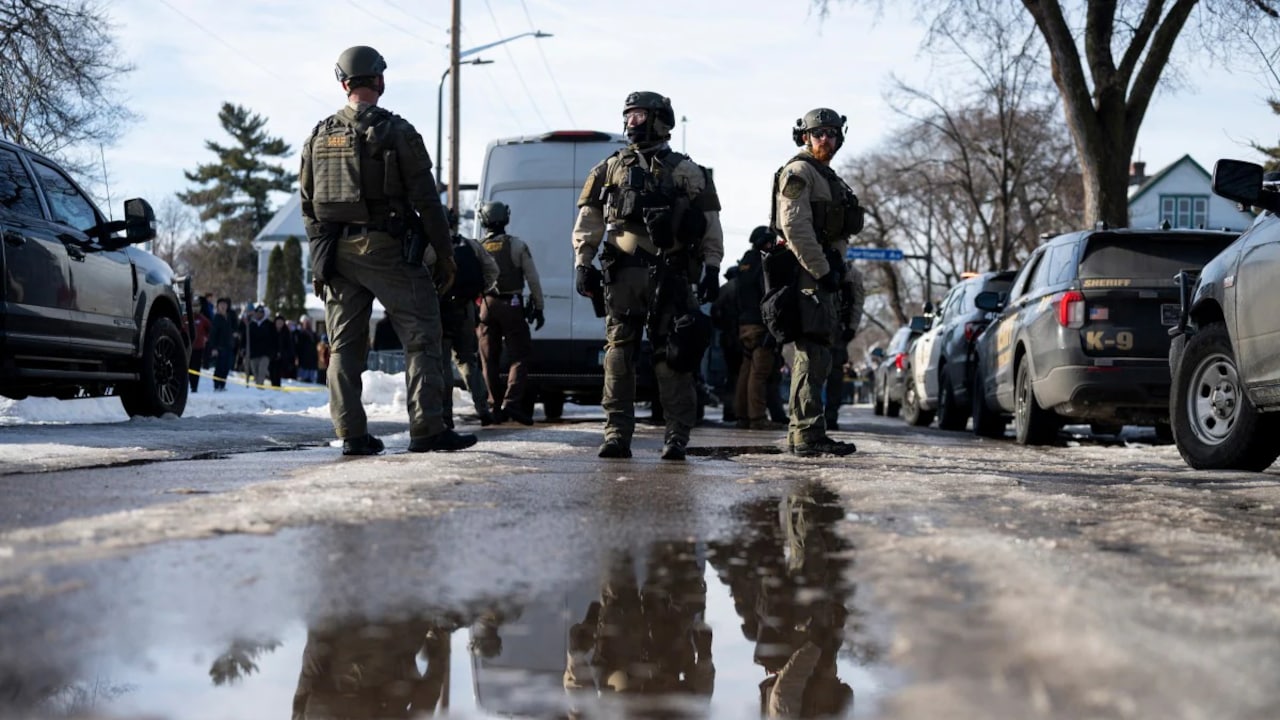
The incident began around 7:20 a.m. at the intersection of Pool and Hill streets in Biddeford, a coastal city of about 23,000 people southwest of Portland. According to statements later walk-backed by federal officials, ICE's Enforcement and Removal Operations (ERO) directorate was conducting surveillance on a local home. When a white sedan pulled away, agents attempted a tactical stop. For another perspective on this development, check out the latest coverage from The New York Times.
What happened next is a matter of intense dispute. DHS Secretary Markwayne Mullin told lawmakers that the driver attempted to flee and used the vehicle as a weapon. But local resident Daniel Boucher, who witnessed the aftermath from his third-floor window, heard multiple gunshots and saw an SUV ramming the victim's car to stop it from rolling down the street. Boucher clearly heard the bleeding driver state he tried to stop. Another neighbor, Em Akerley, described seeing plainclothes men in tactical vests running down the street after abandoning unmarked vehicles.
Security footage from a nearby laundromat captured the chilling sight of the sedan rolling helplessly into the intersection after the windshield was riddled with bullet holes.
The Wrong Target Pattern
The most damning detail of the Biddeford shooting is that the victim was entirely innocent of the warrant in question. Senator Angus King and Representative Chellie Pingree both confirmed that top immigration officials admitted the deceased man was not the person they were looking to deport.
Advocacy groups including the Maine Immigrants' Rights Coalition and Presente! Maine quickly confirmed the man's identity as a 26-year-old Colombian national. He wasn't undocumented; he had a valid Social Security number and work authorization.
This tragedy mimics a horrific blueprint seen across the country just days prior. On July 7, 2026, ICE agents in Houston fatally shot Lorenzo Salgado Araujo during a traffic stop. Just like the Maine incident, DHS later admitted Salgado was not the target of the operation; he merely "resembled" the man they wanted. In both cases, agents alleged the drivers used their vehicles as weapons, a claim repeatedly disputed by passengers and civilian witnesses.
The Dark Reality of Zero Accountability
How do federal agents execute high-stakes operations in local neighborhoods without basic accountability tools? Senator Angus King expressed deep concern over a glaring issue: the ICE agents involved were not wearing body-worn cameras.
Without video evidence, communities are forced to rely on the word of federal agents who have a clear incentive to protect themselves after a botched operation. This lack of transparency has ignited massive protests across Maine, with groups like Biddeford Saco for Racial Justice rallying at Mechanics Park to demand a completely transparent federal investigation.
The Maine State Police, the state Attorney General’s office, and the DHS Inspector General are currently running parallel investigations. But for an immigrant community already terrified by recent high-profile immigration sweeps—like the DHS operation code-named “Catch of the Day” that targeted Maine earlier this year—trust in the system has completely evaporated.
Urgent Safety Steps for Encounters with Plainclothes Agents
If you find yourself or your family surrounded by unmarked vehicles or plainclothes individuals claiming to be federal law enforcement, knowing how to react can save your life.
- Keep your hands visible: Instantly place both hands on top of the steering wheel. Do not reach into your pockets, glove compartment, or center console for any reason unless explicitly told to do so.
- Do not make sudden movements: If your vehicle is rolling or if you are confused, press the brake firmly. Avoid putting the car in reverse or turning the wheels sharply, as agents routinely interpret vehicle movement as an attempt to assault them.
- State compliance out loud: Clearly and calmly state, "I am stopping," or "I am complying."
- Demand identification safely: Keep your windows rolled up slightly if you feel unsafe, and ask to see badges or official credentials through the glass.
- Document everything immediately: If you are a passenger or a bystander, pull out your phone and record video from a safe distance. Civilian footage is currently the only reason the public knows the truth about the discrepancies in the Biddeford shooting.