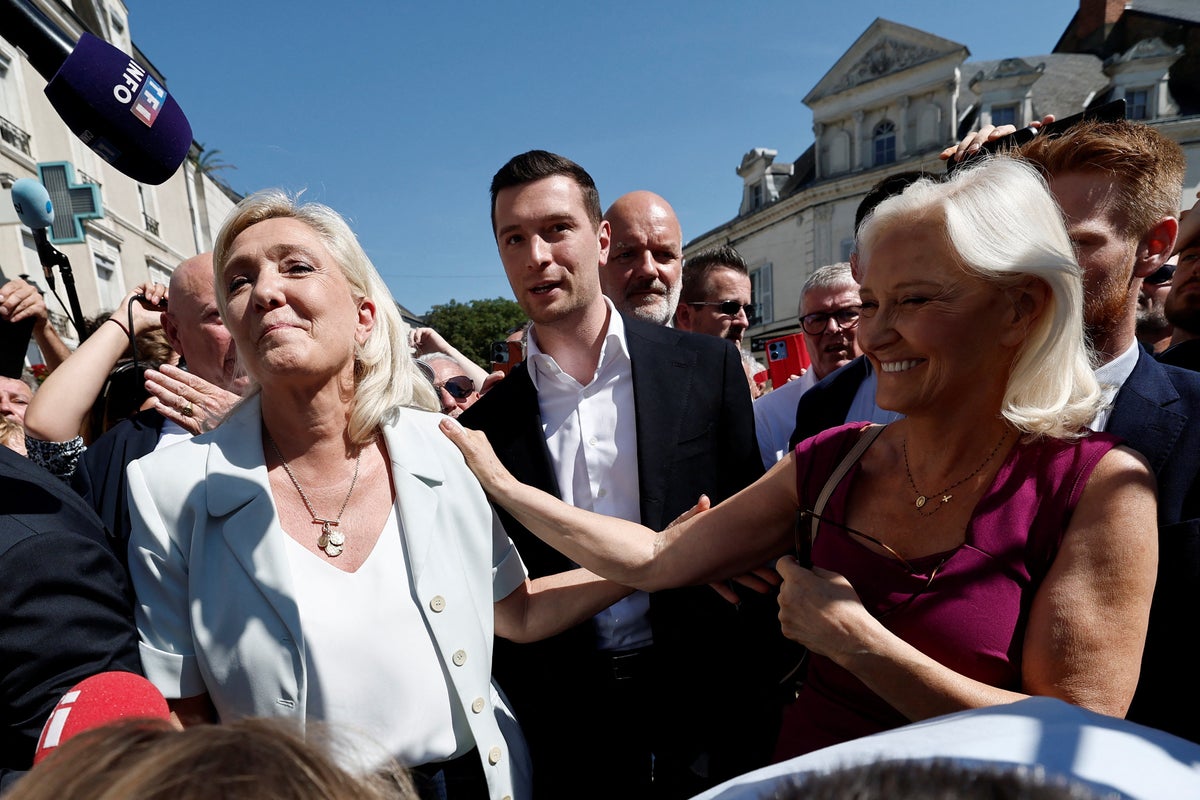
Marine Le Pen just pulled off the ultimate political escape room trick. After a Paris appeals court upheld her conviction for embezzling millions in European Parliament funds, it looked like her 2027 presidential ambitions were dead, or at least deeply humiliated. The headline takeaway was jarring: she could technically run, but she would have to do it while wearing a court-ordered electronic ankle tag.
A far-right icon under house arrest, asking voters for the keys to the Élysée Palace, seemed impossible. Yet, hours after the verdict, Le Pen went on TF1 television to drop a bombshell. "Tonight, I am a candidate in the presidential election," she announced, looking entirely unbothered. "I will campaign without an electronic ankle bracelet."
She isn't defying the law; she's exploiting its machinery. By immediately lodging an appeal with the Court of Cassation, France’s highest court, Le Pen triggered an automatic suspension of the appeals court's sentence. The ankle monitor is on hold. The house arrest is frozen. For now, the National Rally (RN) figurehead is completely free to roam the campaign trail. It's a high-stakes legal gamble that completely changes the dynamic of the upcoming French election.
The Legal Math That Saved Her Candidacy
To understand how Le Pen survived a massive European Parliament fake-jobs scam conviction, you have to look at how the appeals court completely restructured her sentence. In March 2025, a lower court hit her with a devastating five-year ban from public office, effective immediately. That was a political death sentence for the 2027 election.
The Paris Court of Appeal took a dramatically different approach. The judges openly admitted they had to balance the punishment against "the voter's freedom of choice," arguing that democracy required letting the electorate decide. Here is how they remade the penalties:
- The Office Ban: The court cut her five-year disqualification to 45 months, suspending 30 of them. Because the remaining 15 months were backdated to the March 2025 ruling, she has already served the time. The ban is gone.
- The Prison Term: Her original four-year prison sentence was trimmed to three years. Two years are suspended, leaving one year to be served under house arrest with an electronic tag.
- The Financial Penalty: The court maintained a €100,000 fine for her role in siphoning €2.8 million to pay domestic party staff using EU money.
By shrinking the office ban but keeping the ankle tag, the court created a bizarre legal paradox. They cleared her path to run, but handed her a logistical nightmare.
Why the Highest Court Holds the Clock
The Court of Cassation doesn't retry cases. It doesn't look at new evidence or re-evaluate whether Le Pen actually used EU funds to pay her personal bodyguard and secretary. It only reviews whether the lower courts applied the law correctly.
Usually, this process takes anywhere from 12 to 18 months. Because the appeal suspends the sentence, Le Pen enters the campaign season unburdened by an electronic bracelet.
However, the clock is her biggest enemy. The high court explicitly noted it could fast-track the ruling before the first round of the presidential vote in April 2027. If the Court of Cassation rejects her appeal right before the election, the suspension lifts instantly. Le Pen could find herself fitted with a tracking device in the middle of a critical campaign push, forcing her to negotiate permitted hours of movement with a sentence-enforcement judge just to attend her own rallies.
The Jordan Bardella Backup Strategy
Le Pen has spent over a decade attempting to "de-demonize" the National Rally, pivoting it away from the toxic legacy of her father, Jean-Marie Le Pen. Running for president while convicted of systemic fraud is bad enough; doing it with a blinking tracker on her leg risks shattering that polished, mainstream image.
This legal drama puts immense focus on Jordan Bardella, the 30-year-old RN party president. If the high court rules against Le Pen prematurely, or if the political optics of the embezzlement conviction become too heavy a liability, the party has an instant alternative.
"Tonight, I am a candidate... I will not change my mind." — Marine Le Pen on TF1
Despite rumors of friction, Le Pen and Bardella have presented a unified front, presenting themselves as a joint ticket: Le Pen for the presidency, Bardella for prime minister. This arrangement insulates the party. If Le Pen is forced to step aside due to a sudden legal collapse, Bardella stands ready to assume the top spot without fracturing the far-right voter base.
A Familiar Playbook
If Le Pen's legal strategy feels familiar, that's because it mimics the exact playbook used by former French President Nicolas Sarkozy. Convicted in his own corruption cases, Sarkozy appealed to the Court of Cassation, successfully delaying his electronic monitoring for months before the conviction was ultimately upheld and he wore the device last year.
Le Pen's political rivals on the left are already using the verdict to attack her credibility. Manon Aubry of France Unbowed publicly branded the RN a "party of thieves and liars," while Socialist leader Olivier Faure demanded she step down, stating that presidential candidates must be exemplary.
Yet, for Le Pen’s core supporters, the conviction does little to dent her armor. Similar to Donald Trump’s legal battles in the United States, Le Pen has successfully framed her trials as a highly politicized "witch hunt" orchestrated by an entrenched establishment terrified of her rise. With current polling suggesting she easily commands around 35% of the first-round vote, the legal drama appears to be galvanizing her base rather than fracturing it.
What Happens Next
The entire timeline of the French presidential race now hinges on judicial speed. The immediate step for Le Pen's legal team is filing the detailed grounds of their appeal to the Court of Cassation, aiming to stretch the legal review past the spring 2027 election dates.
For observers and voters tracking this race, the crucial variable to watch is the Court of Cassation's calendar. If the high court decides to fast-track its review, it could trigger a massive political shockwave early next year. For now, Le Pen remains fully operational, hitting the campaign trail entirely untethered.