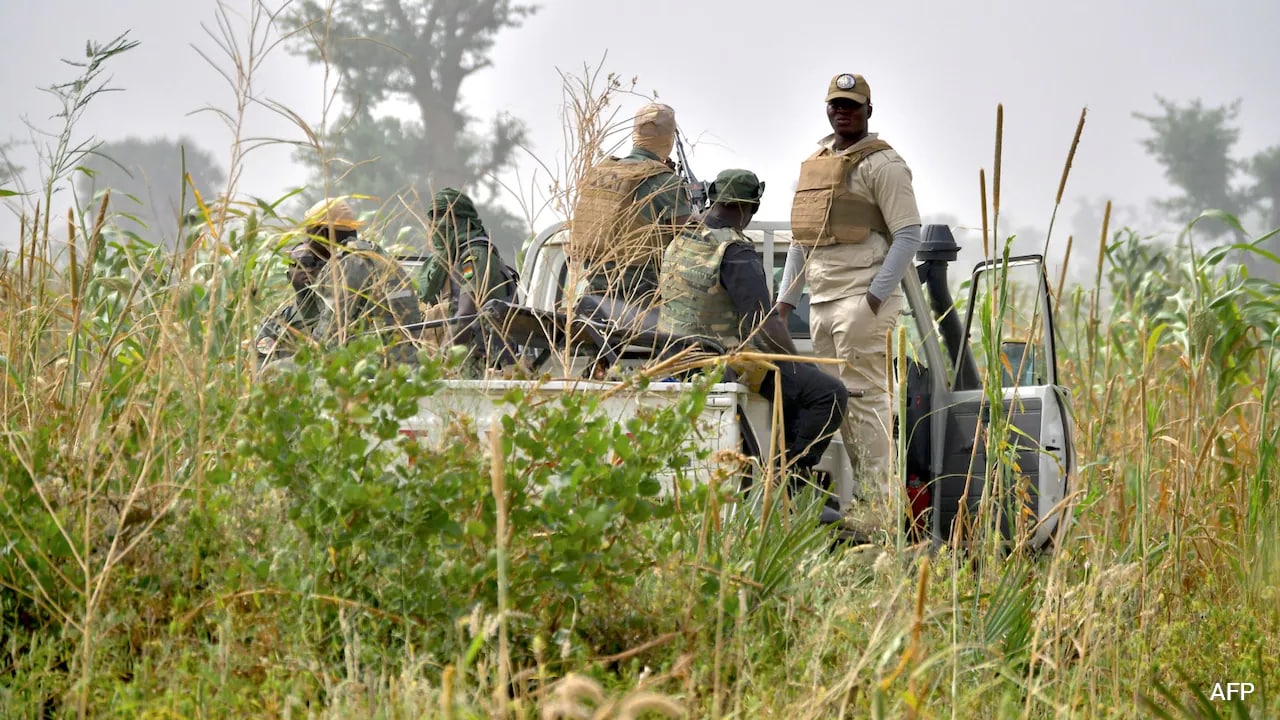
Armed gangs across northwestern Nigeria have built an economy on human lives. Mass abductions aren't isolated incidents anymore. They are a systematic, highly profitable business model operating where government presence barely exists.
When a bandit group recently raided 11 villages across Zamfara state's Maru local government area, seizing over 40 residents, it made brief international headlines. Local residents identified the mastermind as bandit kingpin Kachalla Sa'idu, whose forces struck communities like Tashar Mayanchi, Gwargawo, Jidda, and Garagi over a single weekend. Yet for the people living in rural Zamfara, Kaduna, and Niger states, these raids aren't breaking news. They're daily reality. For another perspective, consider: this related article.
Understanding why these armed groups operate with such impunity requires looking past basic news updates. The crisis has evolved into a self-sustaining financial network that reshapes local economies and exposes deep systemic vulnerabilities.
The Financial Engine Driving Bandit Operations
Money drives this crisis. What started years ago as localized disputes between nomadic herders and settled farmers over land and water has morphed into organized crime. Related analysis on this matter has been published by The New York Times.
Gangs known locally as bandits realized around 2019 that kidnapping yielded far higher returns than cattle rustling or illegal mining alone. Data from risk consultancy SBM Intelligence shows millions of dollars in ransom payments flow to these groups annually. In rural areas where average daily earnings sit below two dollars, a single kidnapping operation can secure tens of thousands of dollars.
- Ransom Demands: Gangs target anyone from wealthy businessmen to entire rural villages.
- Protection Taxes: Communities often pay recurring monthly levies to avoid being raided.
- Resource Extortion: Bandits seize farmland, forcing local agricultural workers to farm for them or pay heavy fees to access their own crops.
This economic incentive structure makes stopping the violence incredibly difficult. When illegal activity becomes more lucrative than any legal enterprise in a region, criminal networks expand rapidly.
Security Vacuum in Rural Communities
Why can't local law enforcement stop 40 people from being marched off into the forest? The answer comes down to geography and police deployment numbers.
Nigeria's police force is heavily centralized and understaffed for a country of over 200 million people. A significant portion of police personnel is stationed in major urban centers like Lagos and Abuja, or assigned to guard high-profile individuals and government buildings.
That leaves vast swathes of the rural northwest effectively unpoliced.
The Terrain Advantage
The physical landscape in states like Zamfara, Katsina, and Sokoto favors the kidnappers. Dense forest reserves, such as the infamous Rugu Forest, stretch across state lines and extend toward international borders. Armed groups set up permanent camps inside these dense woods, using them as staging grounds and hideouts.
Security forces face huge logistical hurdles when trying to enter these regions:
- Poor Infrastructure: Few paved roads lead into rural hinterlands, making heavy military vehicles easy targets for ambushes.
- Communication Blackouts: Weak cellular coverage makes it hard for rural villages to call for help when raids begin.
- Local Intelligence Gaps: Bandits enforce strict silence through brutal retaliation against anyone suspected of cooperating with the military.
Negotiation versus Military Force
Federal and state governments have flipped between two main strategies to tackle the banditry crisis, with neither yielding lasting stability.
The Failure of Peace Pacts
Several state governors previously attempted to negotiate peace deals with prominent bandit leaders. These agreements offered amnesty, cash payments, and development support in exchange for weapons surrenders.
In practice, these amnesties almost always collapsed. Gang leaders used peace talks to regroup, rearm, and buy time. When promised payouts ran out or competing factional leaders felt left out, the violence resumed with greater intensity. In several cases, peaceful community members attempting to negotiate directly with bandit families were taken captive themselves during peace talks.
The Limits of Offensive Air Warfare
When negotiations failed, authorities turned to military offensives, relying heavily on airstrikes and joint ground operations. While these campaigns have killed hundreds of group members and destroyed camps, they rarely dismantle the leadership structure completely.
When troops clear one forest area, bandits simply disperse into smaller cells, cross state lines, and regroup in another unguarded territory. The military lacks the foot-soldier numbers required to hold cleared territories indefinitely, allowing criminal groups to return the moment troops withdraw.
What Needs to Change to Break the Cycle
Stopping mass abductions in Nigeria requires moving beyond reactive military raids. Fixing a crisis of this scale demands fundamental structural reforms.
First, state-level policing needs to replace the current centralized police structure. Local law enforcement officers who know the terrain, speak local dialects, and live within the communities they protect are far more effective at gathering intelligence than units deployed from distant headquarters.
Second, tracking financial flows must take priority. Ransom payments often move through informal financial networks, phone transfers, and local intermediaries. Cutting off the ability of gang leaders to launder and spend their ransom profits reduces the economic incentive for future abductions.
Finally, economic investment in rural northern communities is essential. As long as young men in remote villages face severe poverty, unemployment, and lack of education, criminal gangs will find a steady stream of willing recruits.
For the families of those taken in Zamfara and across the region, peace won't come from public statements or promises of security outfits. It requires actual boots on the ground, intelligence-led operations, and an aggressive crackdown on the economic systems keeping these gangs alive.