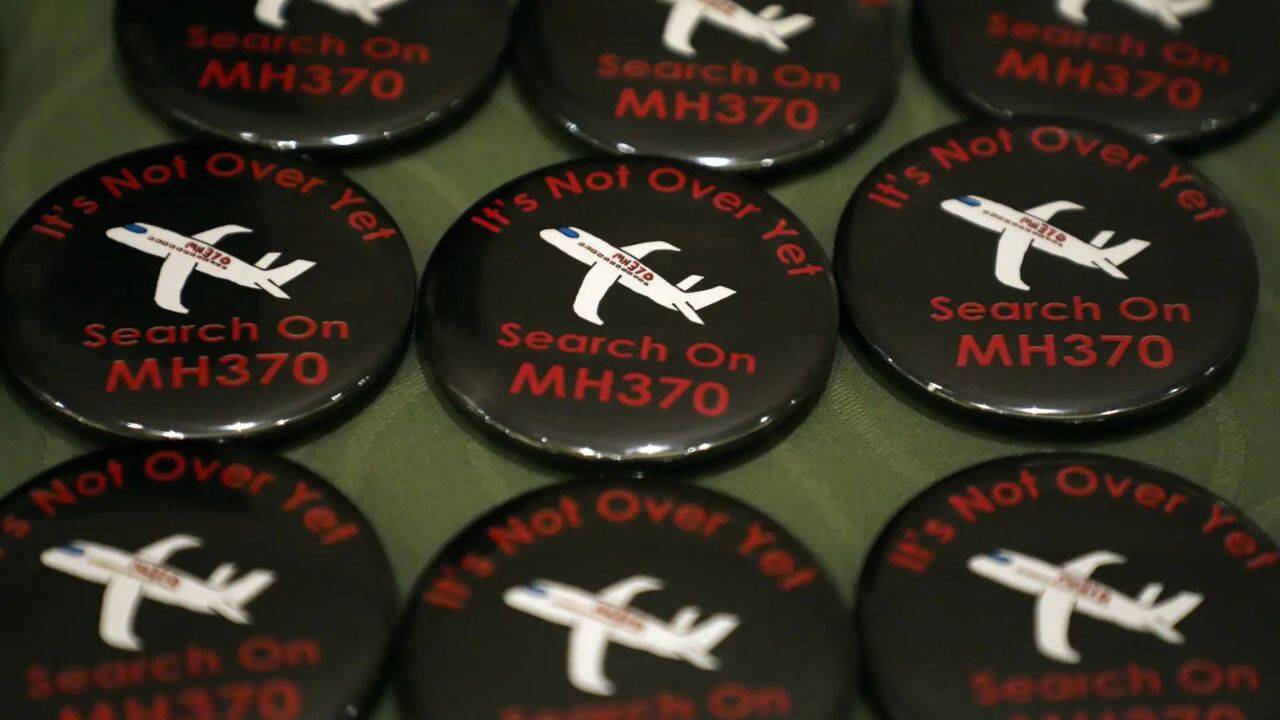
Twelve years. That's how long it's been since Malaysia Airlines Flight MH370 vanished into the night. Think about everything that changed in your life since 2014. Meanwhile, a massive Boeing 777 along with 239 people remains completely lost, swallowed by the crushing depths of the southern Indian Ocean.
The Malaysian government just made a major announcement. They approved a 12-month extension on their contract with deep-sea exploration firm Ocean Infinity. The hunt will continue until June 30, 2027. Transport Minister Anthony Loke confirmed the deal keeps the same strict conditions as before. It's a "no find, no fee" arrangement. If Ocean Infinity locates the wreckage, they get $70 million. If they find nothing, Malaysia pays zero.
This isn't just about politics or saving face. For the families left behind, this decision means everything. It's about a desperate, agonizing need for answers.
The Remaining Pieces of the Grid
Ocean Infinity started its latest push earlier this year. They targeted a specific 15,000-square-kilometer zone off the coast of Western Australia. Bad weather quickly forced a pause. Rough seas in the southern Indian Ocean aren't just inconvenient; they're deadly. The crews managed to cover roughly half of the area before operations hit a wall.
Right now, exactly 7,428.54 square kilometers remain unexplored. This extended contract gives the marine robotics team a clear window to finish what they started.
Don't expect the ships to head out tomorrow. Ocean Infinity has other commercial obligations to juggle. Their primary search vessels are booked for other jobs over the next few months. Because of this, the physical search will pause between November 2026 and April 2027. The crew will redeploy their high-tech assets back to the MH370 site when the southern winter passes and calmer sea conditions return.
What Makes This Search Zone Different
Previous searches cost hundreds of millions of dollars and covered vast swaths of empty ocean floor. The early efforts relied on broader satellite data estimates. This current zone is highly refined. Oceanographers and independent analysts spent years re-analyzing the original Inmarsat satellite data, mixing it with complex ocean drift models based on the actual debris that washed up on African beaches.
The team isn't just dropping random sonar over the side of a boat. They're deploying the Armada fleet. These are advanced robotic vessels that operate autonomous underwater vehicles (AUVs). These drones dive miles beneath the surface, scanning the rugged seabed with extreme precision. They glide just above the ocean floor, dealing with underwater mountains and trenches that would crush an ordinary submarine.
The Financial Reality of the Hunt
Let's talk about the money. A $70 million bounty sounds like a massive gamble for a private company. In reality, Ocean Infinity runs a highly calculated operation. By using autonomous tech, they cut down on the massive crew costs that sank the profitability of older maritime search companies.
- The Malaysian government risks nothing upfront.
- Ocean Infinity shoulders all operational expenses during the active search months.
- The payout only triggers if they locate the main debris field or the flight recorders.
This business model changes how we look at deep-sea exploration. It takes the political risk out of the equation for Malaysia. The government can rightfully claim they're doing everything possible for the next of kin without facing public backlash over burning tax dollars on a seemingly impossible task.
Why Previous Efforts Failed
The initial multinational search was a logistical mess. Dozens of countries threw ships and planes into the mix, but everyone was working off fragmented data. The first phase focused on the South China Sea before military radar data revealed the plane had doubled back, crossed the Malay Peninsula, and headed south.
By the time the search shifted to the southern Indian Ocean, weeks had passed. Surface debris had drifted thousands of miles or sunk. The official search was called off in January 2017 after burning through roughly $150 million. Ocean Infinity stepped in for their first private attempt in 2018, which also turned up empty.
The issue wasn't the equipment. The issue was the map. If your starting coordinates are wrong by even a few miles in the open ocean, you might as well be looking on a different planet.
The Technical Reality vs The Conspiracy Theories
When an aircraft disappears without a trace, the internet fills the void with wild theories. We've heard everything from remote hacking and military shoot-downs to bizarre suggestions of secret landings on remote islands.
The hard physical data tells a much more clinical story.
The Inmarsat Handshakes
The primary evidence tracking the plane's final hours comes from a series of automated satellite pings. Even though the main transponder and communications systems were turned off, a terminal on the plane kept trying to connect with an Inmarsat satellite.
These seven "handshakes" allowed analysts to calculate circles on the earth's surface. The plane had to be somewhere along those arcs. The final handshake indicated the aircraft was rapidly descending, likely out of fuel, plunging into the ocean at a terrifying speed.
The Flying Debris
We don't just have satellite math; we have physical proof. Over thirty pieces of aircraft debris have been recovered from the beaches of Madagascar, Reunion Island, and the East African coast.
Marine scientists tracked the path of these pieces using reverse drift analysis. They looked at how barnacles grew on the wreckage and how ocean currents move in the southern hemisphere. Every single piece points back to the same remote stretch of the Indian Ocean. Three specific fragments, including a large wing flap, were positively identified as belonging directly to MH370. This completely dismantles any theory that the plane landed safely somewhere else.
The Unresolved Human Cost
It's easy to get lost in the engineering specs and the satellite tracking data. But we can't forget the human element. There were 239 people on that plane. Most were Chinese citizens returning home, alongside couples on vacation, young professionals, and the flight crew.
For twelve years, their families have lived in a horrific kind of limbo. They haven't had funerals. They haven't been able to bury their loved ones. Every time a new search is announced, old wounds rip open. Every time a search ends empty, the grief resets.
Transport Minister Anthony Loke was explicit about this. The government knows the emotional weight this carries. This contract extension is a direct message to those families that the world hasn't simply moved on and forgotten their relatives.
What Happens If They Find It
Locating the wreckage is only step one. If Ocean Infinity spots the debris field in the remaining 7,428 square kilometers, a massive legal and technical battle begins.
First, recovery teams will have to retrieve the black boxes. After more than a decade underwater, the data units will be fragile. The casing will be corroded by saltwater and subject to immense deep-sea pressure. Specialized labs will need to extract the memory chips without destroying them.
Second, an international team will have to piece together the final moments. The 2018 official report suggested the plane's controls were deliberately manipulated. An experienced pilot likely took the aircraft off course. Finding the wreckage could finally settle the debate over whether this was a catastrophic mechanical failure or a deliberate act by someone in the cockpit.
The Practical Next Steps
Don't expect any breaking news updates for the next few months. The timeline is locked in by nature and logistics.
- Ocean Infinity will continue its commercial work through the middle of 2026.
- The search vessels will prepare for deployment as the southern hemisphere shifts toward its summer season.
- Active scanning of the remaining 7,428.54 square kilometers will resume between November 2026 and April 2027.
- If the wreckage is found, the $70 million contract triggers immediately, and the focus shifts to recovery.
The clock is ticking on this new timeline. We are entering what could be the definitive final chapter of the search. If this refined zone yields nothing, the search area assumptions will have to be completely rewritten from scratch. Until then, the world waits for the ocean floor to finally yield its secrets.