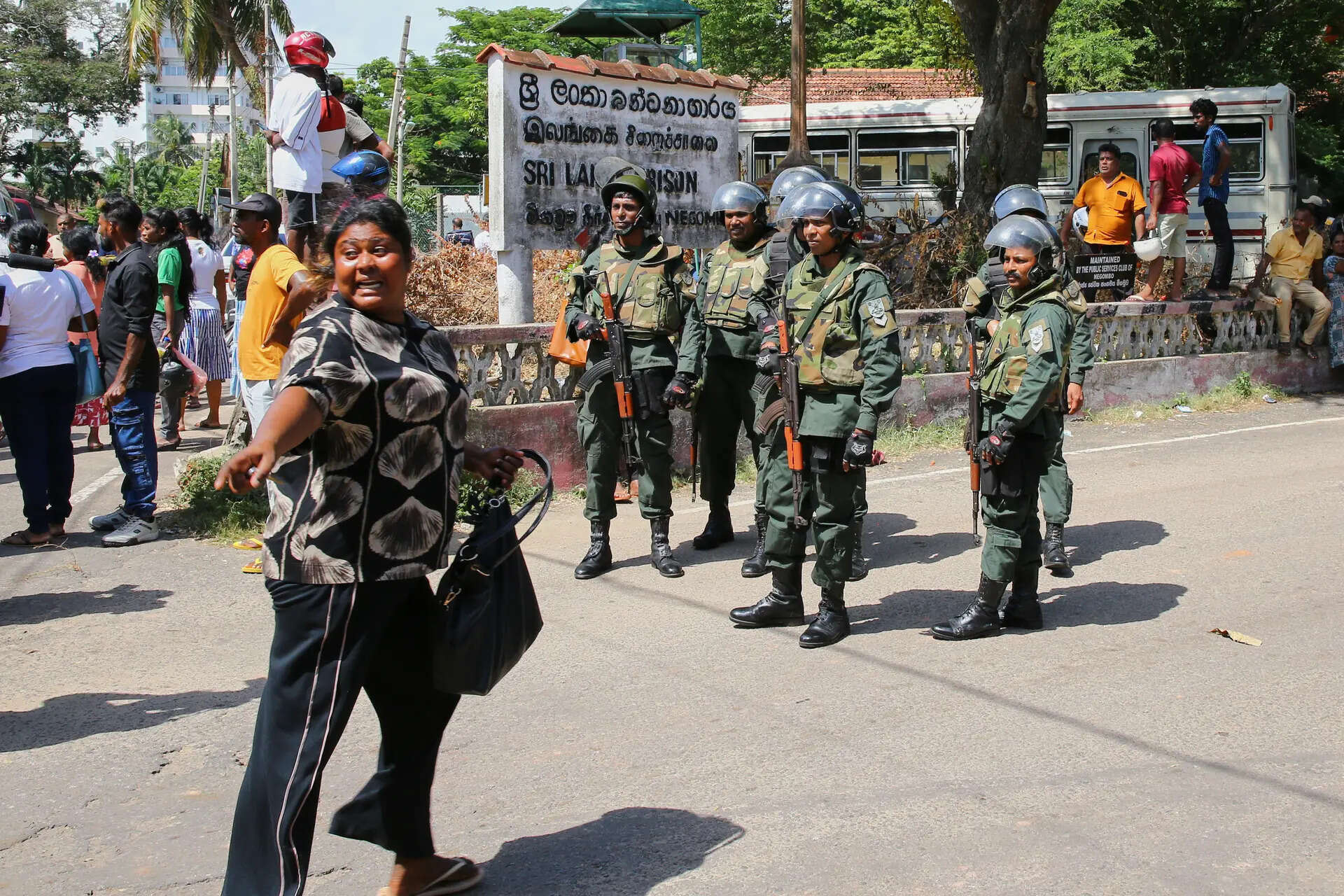
Sri Lanka's prison system just hit a breaking point. Over the weekend, Negombo Prison, located about 35 kilometers north of Colombo, turned into a war zone. When the smoke cleared, 26 people were dead and more than 100 lay injured. The casualties include 19 inmates and seven prison officials who were caught in the crossfire.
This isn't just another localized brawl. It's the deadliest prison riot the country has seen in years, exposing a dangerous cocktail of overcrowding, understaffing, and a deeply entrenched prison underworld. If you want to understand why our correctional facilities are failing so spectacularly, you have to look past the surface-level chaos of the Negombo tragedy.
Inside the Negombo Prison Bloodbath
The violence didn't happen all at once. Tensions started bubbling on Sunday evening, July 5, 2026, when a fight broke out between long-term convicts and temporary detainees. By Monday morning, during breakfast service, the situation completely devolved.
Two rival prison drug gangs clashed openly. One faction allegedly backed drug trafficking operations running straight out of the cells, while the other group opposed them. As the fighting grew chaotic, inmates managed to overpower guards and seize prison firearms.
When guards tried to step in, the prisoners turned on them. The sheer scale of the violence forced the government to place the military on standby and deploy the Police Special Task Force along with specialized riot control units. The Air Force even sent a helicopter and surveillance drones to monitor the facility from above.
Meanwhile, panic spread to the adjoining women's section. Terrified female inmates climbed onto the roof demanding to be let out before a section of the structure collapsed, causing further injuries.
According to Dr. Pushpa Gamlath, the director of Negombo Hospital, victims arrived with a horrific mix of gunshot wounds, deep cuts, and severe trauma. The local hospital was so overwhelmed that 18 of the most critically injured patients had to be rushed to the Colombo National Hospital.
The Core Systemic Failures Driving the Crisis
You can't blame this disaster entirely on gang rivalries. The state shares a massive chunk of the responsibility. Sri Lanka's Justice Minister, Harshana Nanayakkara, explicitly took the blame for the institutional failure.
"This is an institution under my purview; hence, I take responsibility," Nanayakkara stated to reporters. "Human beings have died, and there is a deep shock regarding that. This is something that should never have occurred."
But words don't fix a broken infrastructure. To truly understand why Negombo exploded, we have to look at the structural reality of Sri Lankan jails.
- Four Times the Legal Limit: Official statistics show that Sri Lankan prisons are holding roughly 41,250 inmates. The actual total design capacity for the country's penal system is around 10,000. When you cram four times the intended population into concrete rooms, violence isn't a possibility; it's a certainty. Negombo itself was packed with 1,800 inmates when the riot started.
- The Guard-to-Inmate Deficit: Seven guards lost their lives trying to restore order. Why? Because guards are heavily outnumbered, underpaid, and poorly equipped to deal with organized prison syndicates that often wield more authority inside the walls than the state does.
- Narcotics Subculture: Prisons are supposed to cut off criminals from their networks. Instead, they've become heavily guarded hubs for drug distribution. When cell blocks double as corporate offices for cartel regional managers, disputes over territory get settled with makeshift shivs and stolen rifles.
We've seen this movie before. Back in December 2020, during the height of pandemic anxieties, a massive riot at the Mahara prison killed 11 inmates and injured over a hundred others. The government responded by releasing thousands of low-level offenders to ease overcrowding. It was a temporary band-aid on a gaping chest wound. The underlying rot was never cleared out, and the Negombo riot is the direct result of that legislative laziness.
Real Steps Toward Fixing a Broken Prison System
Fixing this nightmare requires moving past political apologies and investigative panels. The government announced a three-member team led by a retired Supreme Court justice to probe the incident. That's fine for accountability, but it won't fix tomorrow's riots. Here is what actually needs to happen immediately.
Fast-Track Judicial Reform to End Remand Overcrowding
A massive percentage of the 41,000 people sitting in Sri Lankan jails haven't actually been convicted of a crime. They're temporary detainees waiting months, sometimes years, for a trial date because the courts are backed up. Decriminalizing minor drug offenses and implementing mandatory bail for non-violent suspects would instantly drain the dangerous population surplus in facilities like Negombo.
Aggressive Upgrades to Guard Security and Intelligence
Prison guards shouldn't be sacrificial lambs. The Department of Prisons needs to deploy better internal intelligence to track gang allegiances before they explode into open warfare. Guards need better defensive equipment, body cameras, and rigorous crisis-de-escalation training so they aren't immediately overwhelmed when a breakfast line turns hostile.
Total Isolation of Drug Network Leaders
You can't mix high-profile cartel figures with casual offenders. The state needs to isolate convicted drug kingpins in high-security, communication-blocked facilities. Leaving them in general population units allows them to recruit foot soldiers, run illicit economies, and orchestrate the exact type of factional warfare that just cost 26 people their lives.