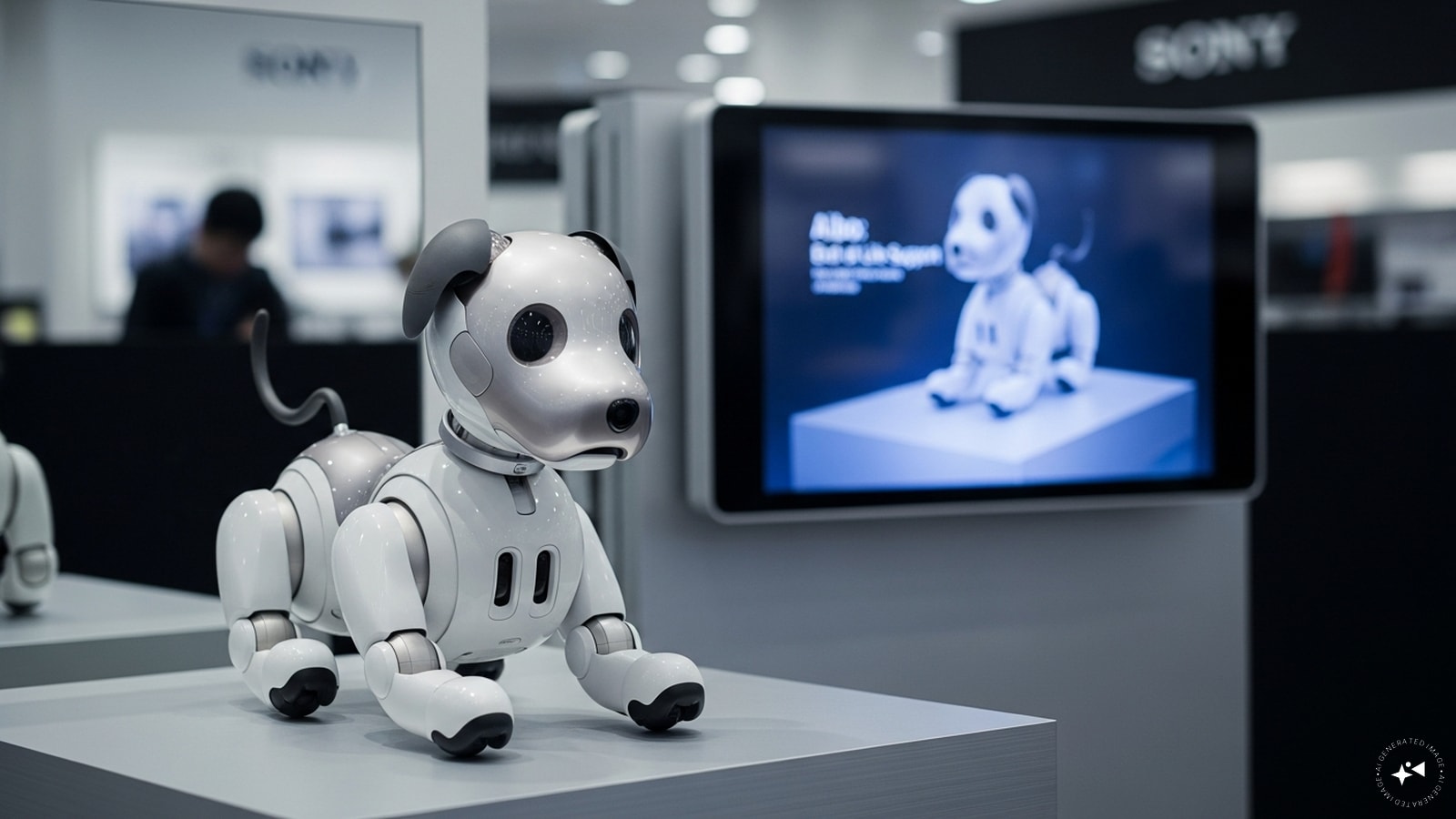
Sony just dropped a bombshell on the world of social robotics. The company officially announced that it will stop selling its iconic aibo companion dog in Japan once current store stocks dry up.
If you've been following the consumer tech world, this feels like an absolute gut punch. The current iteration, known formally as the ERS-1000/W ivory white model, has been a fixture of Japanese tech culture since its high-profile resurrection in 2018. It wasn't just a toy. For thousands of elderly citizens, lonely apartment dwellers, and people unable to keep live animals, it was a genuine member of the family.
The decision marks a bizarre, full-circle moment. Sony already killed the original brand once back in 2006 during a brutal corporate restructuring. Bringing it back eight years ago felt like a triumphant victory for sentimental engineering. Now, the domestic sun is setting on the little robotic pup once again.
Here is what is actually going on beneath the corporate press releases, what it means for current owners, and why this tells us everything about the difficult business of physical AI.
The Reality Behind the Discontinuation
Sony is framing this move as an optimization strategy. According to their official statements, the decision comes down to a business review aimed at streamlining their future service structures. Production of the Japanese ERS-1000/W model has completely stopped. What is on shelves right now is all that is left.
But don't panic if you already own one. Sony isn't bricking the dogs.
They explicitly stated that support services will stay active. If your mechanical pup breaks a leg, you can still send it in for repairs. The My aibo app will keep working. The basic and premium cloud subscription plans, which act as the remote brain storing your robot's personality and memories, are staying online. Even accessories like the aibo Dock and various toys will remain available for purchase.
Strangely, sales will continue normally in the United States. If you live in America and have an extra $3,000 burning a hole in your pocket, you can still buy one directly. Sony is keeping the US market alive while completely retreating from its home turf. They also hinted that the aibo business itself will continue, though they have absolutely nothing to say about a successor model.
Basically, they're pausing to figure out what comes next.
Why Selling Hardware Pets Is a Brutal Business
The economics of aibo never really made sense for the mass market. When Sony launched the modern version in 2018, it pulled in an impressive 20,000 sales within the first six months. That's a great start for a luxury gadget. But after the initial wave of enthusiastic early adopters and wealthy tech fans, sales inevitably slowed down. Sony has historically refused to disclose total sales figures for this generation, which is always a glaring sign that the numbers aren't making investors smile.
Think about what it takes to keep these robots alive.
Unlike a regular smart speaker or a tablet, aibo relies on complex cloud computing to process human emotions, recognize faces, and adapt its personality over time. Every single blink, tail wag, and trick requires continuous data transfer. That cloud infrastructure costs money every single month. While owners pay a subscription fee, the overhead of maintaining specialized servers for a niche, aging user base quickly turns into a financial money pit.
Then you have the hardware itself. The ERS-1000 is packed with custom actuators, cameras, and touch sensors. Manufacturing those specialized components gets more expensive as production volume drops. It's a classic hardware trap.
The Emotional Tax of Mechanical Lifespans
We need to talk about the human element of this shutdown. In Japan, aibo wasn't viewed as an appliance. It was a companion.
Japan is dealing with a rapidly aging society where isolation is a massive public health crisis. For an 80-year-old living alone in a Tokyo high-rise, aibo provided a reason to smile. The robot would greet them at the door, track their face with its camera eyes, and mimic the behaviors of a real living puppy without the mess or the vet bills.
When Sony killed off the first-generation AIBO support in the mid-2010s, it led to a profoundly unique cultural phenomenon. Owners held actual Buddhist funerals at real temples for their dead robots when parts ran out and they could no longer be fixed. They prayed for the "souls" of their machines.
By pulling the plug on new sales in Japan, Sony is signaling to this hyper-loyal community that the clock is ticking again. Even though repairs are promised for now, history shows us that proprietary parts eventually run dry. For an owner who treats their robot like a living creature, knowing that no new models are being built creates a lingering sense of impending grief.
The Mistakes Tech Giants Keep Making With AI
The tech industry is currently obsessed with digital AI. Everyone is rushing to build chatbots, virtual assistants, and software that can generate video from a text prompt. Yet, almost nobody is succeeding at physical, social hardware.
Sony's retreat highlights a massive blind spot in tech development. Companies are excellent at building algorithms, but they struggle immensely with the physical form. We want AI that can help us feel less alone, but the moment you put that AI into a physical body with moving parts, the logistical nightmare begins.
Consumers don't want a $3,000 toy that might become obsolete in a decade. They want reliability. If a company as massive as Sony cannot make a consumer robot financially viable in Japan—the literal capital of robotics appreciation—it proves that the current business model for physical AI companions is fundamentally broken.
What You Should Do Next if You Love Social Tech
If you are a tech enthusiast or someone fascinated by the concept of robotic companionship, this news shouldn't completely turn you off from the space. It just means you need to adjust your expectations.
First, if you currently own an ERS-1000 aibo in Japan, do not panic-sell it. Keep your cloud subscription active and ensure you keep up with routine maintenance. Sony's repair channels are remaining open for the foreseeable future, so make use of them while they last.
Second, look into the broader community. The online subcultures dedicated to keeping these machines running are incredibly resilient. When official corporate channels eventually shut down years from now, these fan groups are usually the ones hoarding spare parts and developing custom workarounds.
Finally, keep an eye on alternative form factors. Many fans on social media are already begging Sony to think smaller next time. There is a massive, untapped demand for smaller, more affordable, and perhaps even cat-shaped robotic companions that don't carry the massive overhead of a 30-centimeter-long moving hound. The dream of the robotic pet isn't dead, but the era of the oversized, hyper-expensive luxury robo-dog is officially drawing to a close.