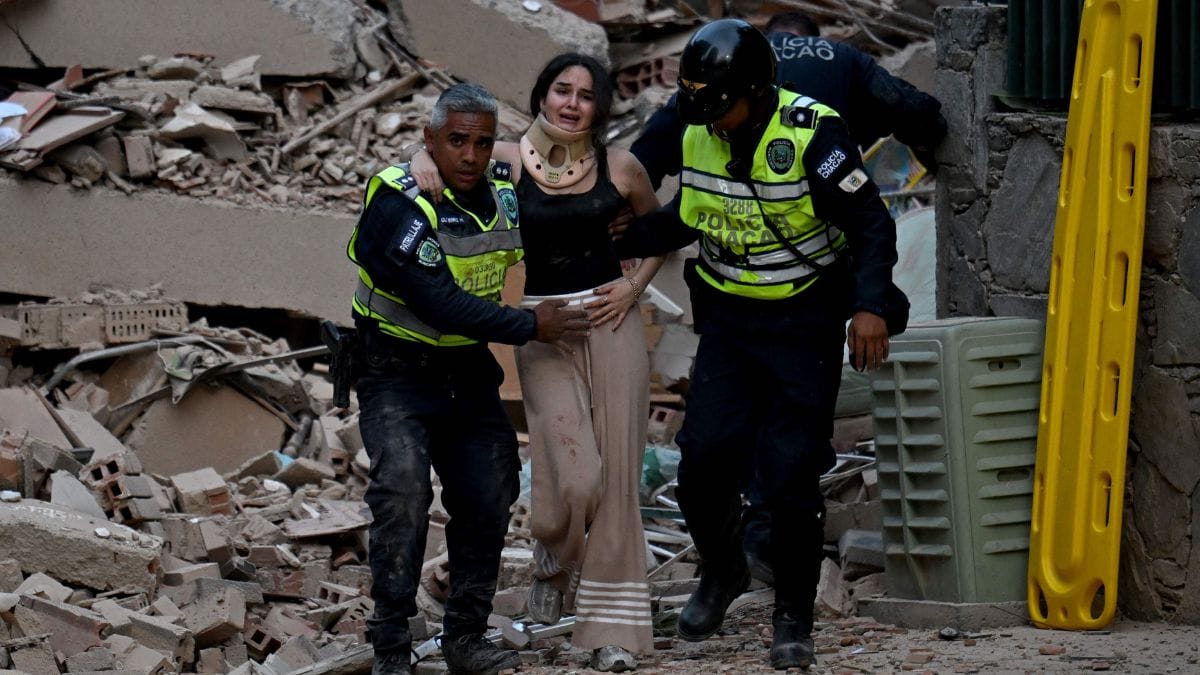
Two massive earthquakes hit north-central Venezuela in rapid succession, completely flipping life upside down for millions. It happened on a national holiday afternoon when families were home celebrating. First came a magnitude 7.2 shock, and just 39 seconds later, a violent 7.5 monster tore through the region. The epicenters hit near Yaracuy, but the devastation radiated directly into Caracas and the coastal state of La Guaira.
Right now, the official death toll sits at 164. Over 1,000 people are injured. But anyone watching the ground reality knows those numbers are a fraction of the actual tragedy. The US Geological Survey predicts the final toll will run into the thousands, likely crossing 10,000. While state television broadcasts structured updates, the real story is playing out in the chaotic, frantic digital sphere.
When Infrastructure Fails Social Media Becomes the Only Lifeline
When the ground stopped shaking, the traditional communication networks basically evaporated. Massive infrastructure damage knocked out power grid segments and disabled landlines. In the vacuum, survivors and desperate relatives turned to social media platforms. It's a digital flood of missing person reports, geo-tagged coordinates of collapsed structures, and raw video clips.
People are bypassing official channels because they have to. On X and Instagram, families post names, photos, and last known locations of loved ones who aren't answering their phones. A crowdsourced tracking website set up by volunteer groups already lists over 10,000 names of people missing or unaccounted for. It's an agonizing, real-time database of human desperation.
The Brutal Reality Inside the Worst Affected Zones
The damage isn't uniform, and the hardest-hit neighborhoods show exactly why the casualty estimates are climbing so high. In Caracas, the affluent and usually bustling areas of Los Palos Grandes and Altamira took a massive beating.
- Altamira: At least three major high-rise structures collapsed completely. Among them was a 22-story residential building that pancaked into a mountain of dust and concrete.
- Chacao: Mayor Gustavo Duque confirmed multiple fatalities and dozens of injuries, with teams working to reach people trapped deep under fractured concrete slabs.
- La Guaira: Acting President Delcy Rodríguez declared this coastal area a total disaster zone. The region's infrastructure is gutted, and Simon Bolivar International Airport suffered severe damage, forcing an immediate halt to all flights.
Witnesses describe the sound of the twin quakes as a deep, terrifying roar that made stairs tear away from apartment walls and sent ceilings crashing down. Because June 24 was a public holiday commemorating the Battle of Carabobo, apartment blocks were packed. People weren't at office buildings with wide plazas; they were trapped in residential high-rises.
Local Volunteers Are Brushing Aside Red Tape
While United Nations search teams and international rescue squads plan their logistics, local communities aren't waiting around. Neighbors are digging through heavy debris with their bare hands and small tools. In Los Palos Grandes, improvised volunteer groups use single flashlights to peer into voids, screaming names into the dark holes and listening for any faint reply.
The biggest roadblock right now isn't a lack of will—it's a lack of heavy equipment. Rescuers need industrial cranes, concrete cutters, and specialized shoring materials to stabilize leaning ruins. The acting government appealed to private construction companies to hand over their heavy machinery to help emergency workers speed up operations before the night gets completely out of hand.
What You Can Do to Help Right Now
If you want to support the relief efforts on the ground, don't just share unverified posts that clog up essential emergency hashtags. Focus on actionable assistance.
- Support Verified Responders: Look for official donation channels established by international organizations like the International Federation of Red Cross and Red Crescent Societies (IFRC), which is actively coordinating with the Venezuelan Red Cross.
- Keep Digital Channels Clear: Avoid reposting unverified missing person flyers from hours ago. Many survivors are being pulled out, but old posts stay online, confusing rescue algorithms and dispatchers.
- Prioritize Material Logistics: If you're near border regions or involved in international logistics, focus on groups supplying medical gear, high-powered flashlights, batteries, and clean water filtration kits.


