Ground doesn't usually move like that in Panama. When a massive 7.7 magnitude earthquake struck southern Panama, followed closely by a 6.6 magnitude jolt and dozens of aftershocks, it sent millions of people running into the streets. Skyscrapers in Panama City swayed, kitchen items crashed to the floor, and panic took over communities from Herrera province to the capital.
If you're wondering what actually happened on the ground and how the country responded, here is the real story behind the tremors that shook Central America.
What Struck Panama and Where Did It Hit
The main event hit on Friday afternoon, packing a punch that registered initially as a magnitude 8 before the U.S. Geological Survey (USGS) finalized it at 7.7. The epicenter sat about 10 kilometers southwest of Pitaloza Arriba in the central province of Herrera, at a shallow depth of roughly 10 kilometers. Shallow earthquakes usually cause much stronger shaking at the surface, which explains why the impact felt so violent across the region.
Just as residents tried to catch their breath, a second powerful earthquake measuring 6.6 magnitude hit, keeping emergency services on high alert. Seismologists at the University of Panama recorded more than 45 aftershocks, with several measuring between 5.2 and 5.8. Many were too weak for people to feel, but the constant rolling kept nerves frayed for hours.
The Immediate Chaos in Panama City and Beyond
In Panama City, located about 200 kilometers from the epicenter, the ground rolled for roughly a minute. High-rise office buildings and apartment complexes emptied out instantly. People crowded onto sidewalks and public plazas, staring up at skyscrapers and waiting for updates on their phones.
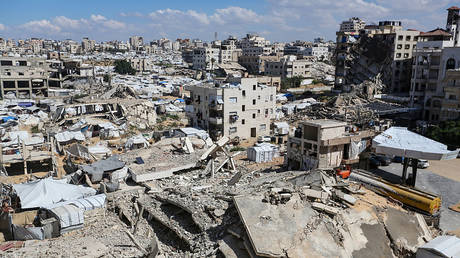
In Herrera, Veraguas, and Los Santos, the damage was more than just psychological. Local reports confirmed structural cracks in buildings, damaged roads, and even a historic church collapsing in Los Santos. Emergency crews handled localized injuries, including a person hit by falling debris from a partially collapsed structure in Penonomé.
President José Raúl Mulino took to social media to urge calm, reminding residents that the situation shouldn't be exploited to spread panic or disorder. Meanwhile, the education ministry ordered schools nationwide to close as a precautionary measure while structural engineers began inspecting public infrastructure.
Did the Panama Canal Keep Operating
Whenever an earthquake hits near Panama, global markets immediately worry about the canal. Shipping traffic is the lifeblood of international trade, and any disruption sends shockwaves through global supply chains.
Fortunately, the Panama Canal Authority acted fast. They activated emergency protocols right away to inspect locks, tugboats, and control facilities. Within hours, officials confirmed that navigation operations continued normally without structural disruptions.
At the same time, Tocumen International Airport temporarily paused operations to run safety checks on terminals and runways, ensuring travellers and staff stayed out of harm's way before resuming normal schedules.
Tsunami Warnings and Regional Impact
Because of the sheer strength of the 7.7 tremor, the US Tsunami Warning System issued warnings for parts of the Pacific coastline, putting neighboring nations in Central and South America on edge. While the threat was monitored closely and later scaled down, the scope of the quake meant that moderate to severe shaking was felt by an estimated 4.6 million people across Panama and parts of neighboring Colombia.
People across borders reported feeling the ground roll under their feet, proving how far-reaching seismic waves can be when a shallow tectonic event of this scale lets loose.
What You Should Do If You Are in an Active Seismic Zone
Earthquakes don't give you a warning call. If you live in or travel through regions prone to major seismic activity, preparation isn't optional.
- Know your drop points: If shaking starts indoors, drop, cover, and hold on under a sturdy desk or table. Don't run outside during the main tremor because falling debris causes most injuries.
- Expect aftershocks: The first big quake is rarely the end. Keep emergency kits packed with water, non-perishable food, flashlights, and portable chargers ready near an exit.
- Monitor official channels: Ignore viral social media rumors. Stick to verified civil protection agencies and local meteorological offices for real-time safety updates.