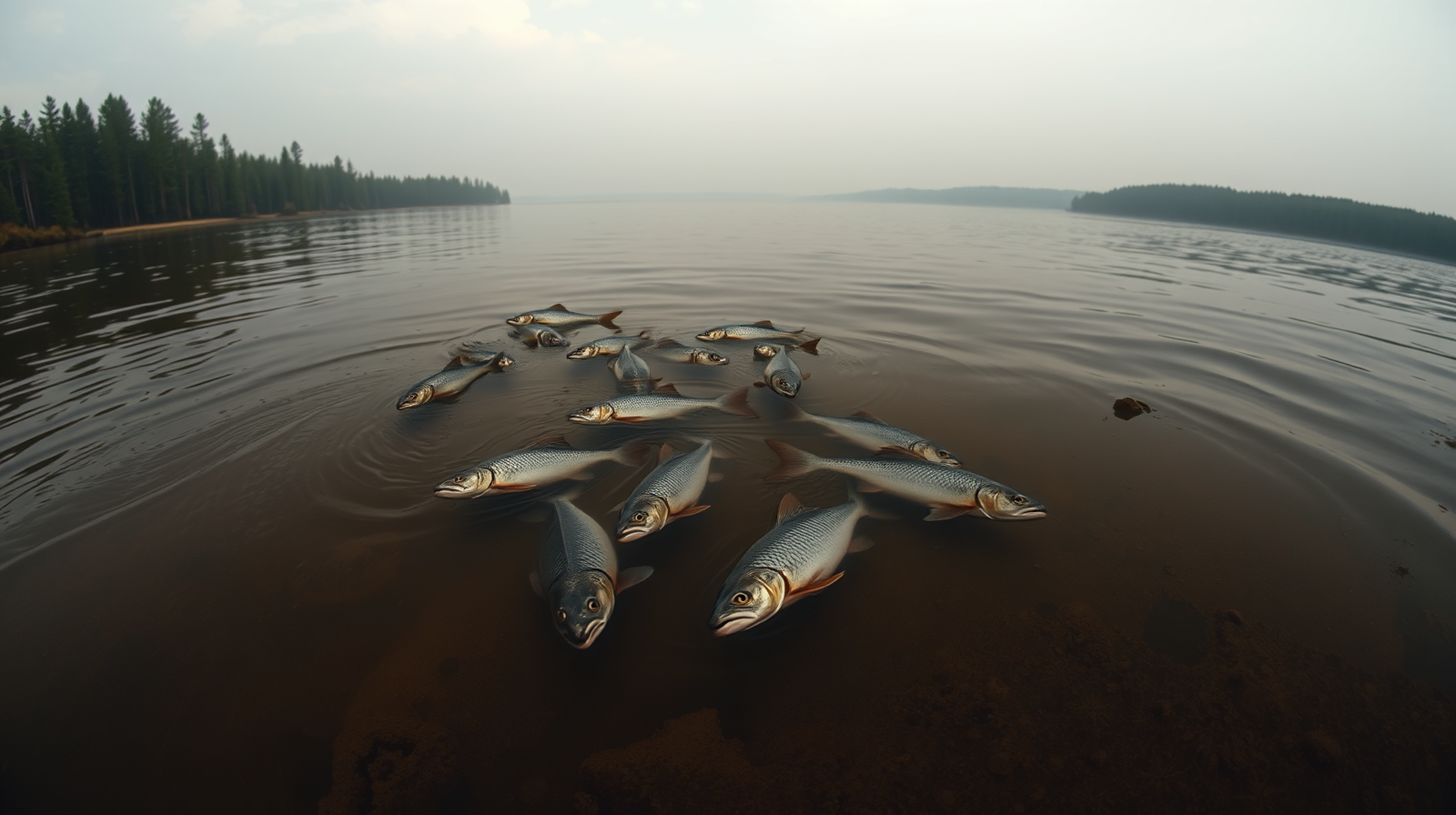
You look out at your favorite local lake and notice something off. The water isn't that crisp, clear blue anymore. Instead, it looks like someone steeped a giant bag of black tea in it. This isn't mud from a recent storm, and it isn't a temporary sludge. It's an environmental shift called freshwater browning, and it's fundamentally changing water ecosystems across North America and Europe.
Many people assume clear lakes are dead lakes, or that darker water is just a cosmetic issue. Both assumptions are dead wrong. Freshwater browning happens when massive amounts of dissolved organic matter and iron dissolve into the water from the surrounding soil. This tea-colored staining blocks sunlight, traps heat at the surface, suffocates the deep layers, and scrambles the hunting dynamics of native fish. If you're an angler, a conservationist, or just someone who enjoys clean water, you need to understand what's happening right beneath the surface.
The Hidden Drivers of Tea Colored Water
For decades, industrial air pollution rained down on northern forests. This acid rain artificially cleared the water. It killed off microbes and kept organic carbon locked tightly inside the soil. Now, thanks to stricter environmental laws like the Clean Air Act amendments, the ecosystems are recovering. But that recovery has triggered an unexpected side effect. As soil acidity drops, the organic matter binds less tightly to the soil particles. It loosens up.
At the same time, global climate change is accelerating. Warmer temperatures speed up the decomposition of leaf litter and dead plants on the forest floor. When heavy, intense storms hit, all that freshly broken-down carbon washes straight into nearby streams and lakes. You get a massive pulse of dissolved organic carbon pouring into the watershed.
Local wildlife can speed up this process too. Take a look at recent data from the University of Helsinki. Researchers tracking the Evo forest area in southern Finland found that local disturbances can cause intense localized staining. When beavers build dams and flood a forest floor, they create perfect incubation zones. The standing water soaks up the carbon from the drowned soil and leaf litter. This local flooding can stain a lake system just as heavily as regional climate shifts do.
Winners and Losers in the Murky Dark
When water turns the color of a dark brew, sight becomes a premium luxury. It rewrites the rules of survival for everything with fins. A massive international study led by researchers at McGill University looked at data from 871 lakes across North America and Europe to see exactly who wins and who loses. The results were stark.
Sight-dependent predators are losing the battle. Lake trout, yellow perch, largemouth bass, smallmouth bass, and lake whitefish populations are dropping significantly in stained waters. These fish need high visibility to spot prey, dodge predators, and navigate their territory. In brown water, their hunting efficiency tanks. They miss meals. They grow slower. The survivors are often smaller, stunted, and less healthy than their clear-water ancestors.
But the darkness isn't bad for everyone. Walleye and northern pike are actually thriving in these murky conditions.
It comes down to pure sensory biology. Walleyes carry a secret weapon in their eyes. They have a specialized reflective layer behind their retinas called the tapetum lucidum. It acts like natural night-vision goggles, gathering fragments of stray light and allowing them to track prey in near-total darkness. Northern pike use a different trick entirely. They rely on their lateral-line system, a row of sensitive pores running down the side of their body. This system detects tiny vibrations, pressure waves, and water movements. A pike doesn't need to see you to kill you. It feels you moving.
This optical shift is forcing physical evolution. When scientists examined fish across 303 Canadian lakes, they discovered a striking pattern. The fish communities living in brown water were increasingly dominated by individuals with significantly larger eyes. The ecosystem is actively weeding out the small-eyed visual hunters.
The Double Threat of Warming and Suffocation
The trouble goes far deeper than bad visibility. Stained water changes the physical structure of the entire lake column. Because dark water absorbs solar radiation much faster than clear water, the surface layer heats up quickly.
A study published in the Proceedings of the National Academy of Sciences highlighted this exact crisis in New York's Adirondack region. The surface waters of browning lakes are warming up to twice as fast as typical temperate lakes. That intense surface heat creates a sharp barrier. It prevents the water column from mixing.
While the top cooks, the deep, cool bottom layers get cut off from atmospheric oxygen. Microbes at the bottom continue to consume oxygen as they break down organic matter, but no new oxygen can get down to replenish it. The deep water suffocates. Cold-water fish like lake trout find themselves trapped in a deadly vice. The top is too hot to handle, and the bottom lacks the oxygen they need to breathe. Their livable habitat shrinks to a thin, unstable sliver in the middle.
Even smaller creatures feel the squeeze. The Helsinki study showed that while total invertebrate numbers might rise slightly due to generalist species taking over, the overall species richness drops. Amphibians are struggling to adjust too. Smooth newts breeding in these dark waters show a distinct loss of ultraviolet brightness on their skin. It seems like a clever camouflage trick to blend into the shadows, but it comes at a steep cost. Male newts rely on those bright visual signals to attract mates. Browning forces them into a brutal trade-off between dodging a predator and finding a partner.
How to Manage Changing Waterways
We can't easily scrub the carbon back out of a lake once it's there. But we can change how we manage these changing habitats to give struggling species a fighting chance.
- Protect the Shorelines: Keep a thick buffer of native vegetation around the water. Trees and deep-rooted shrubs stabilize the soil, slowing down the raw runoff that dumps organic carbon into the lake during flash storms.
- Rethink Fishing Strategies: If you're managing a local fishery or angling in browning waters, realize that traditional clear-water tactics won't cut it. Visual lures fail. Switch to lures that create heavy vibrations, thumping pulses, or strong scents to assist fish using their lateral lines.
- Support Diverse Networks: Ensure your watershed has a mix of interconnected wetlands, temporary pools, and deep clear streams. A diverse network allows species to migrate and find temporary refuge when their primary lake hits a seasonal oxygen low.
- Monitor Local Trends: Watch your local water clarity. Tracking transparency changes helps conservation groups adjust stocking limits and harvest rules before a fish population collapses completely.