You sit in a crowded, sweat-soaked music venue in a trendy Los Angeles neighborhood. The lights dim. The performer on stage starts singing passionately about Jesus Christ. Ten years ago, the crowd would have laughed instantly, assuming it was a joke. Today, they aren't sure whether to chuckle or bow their heads in prayer. This exact tension is redefining how we consume art. We are watching the birth of pop culture's reverent irreverence, a messy cultural phenomenon where artists intentionally blur the lines between irony, sincerity, and religion.
People are exhausted by pure sarcasm. The old millennial defense mechanism of caring about absolutely nothing has grown stale. Yet, modern audiences are equally terrified of looking naive or falling into the trap of rigid, traditional institutions. This leaves us in a strange middle ground. Artists are turning to sacred imagery to find real meaning while using humor to protect themselves from looking foolish. It is an attempt to touch the divine without getting burned by the baggage of organized religion.
The Irony Shield is Cracking
For decades, pop culture treated faith with either intense hostility or cheap mockery. Think of the sharp anti-religious satire of late-nineties cartoons or the aggressive secularism of indie rock scenes. Religion was the establishment. It was the thing to rebel against. But something shifted when the world became completely unmoored.
Now, participation in organized religion in the United States is dropping dramatically. More people identify as religiously unaffiliated than ever before. Sociologists call them the nones. Yet, human beings still crave ritual. We still want to feel something larger than ourselves. When traditional churches empty out, art becomes the new sanctuary.
Look at indie musician Alex Cameron. He built a reputation on transgressive lyrics and deeply uncomfortable character studies. But on his song Jesus Never Had No Porno, he pairs absurd observations about the ancient world with a striking sense of emotional weight. He croons about how Christ never had access to internet vices or modern escapes, driving a laugh from the audience. Then he hits the chorus. He sings about demons leaving when Jesus washed the feet of the poor. The room goes quiet. The laughter stops.
This isn't just a gimmick. It is a calculated artistic choice. Cameron himself points out that laughter disarms people. Once you are laughing, your defenses drop. You are suddenly open to profound sadness or hope. The humor isn't there to destroy the sacred. It is there to make the sacred approachable again.
Plausible Deniability and the Need for Something Real
Why do artists rely so heavily on this balancing act? The answer lies in social survival. In our highly judgmental online spaces, admitting you care deeply about spiritual truths makes you a target. It feels risky.
Leigh Eric Schmidt, a professor at Washington University in St. Louis who has studied parody and religion, highlights a key concept here. He notes that using irony gives artists a form of plausible deniability. If a critic calls you out for being too religious, you can claim it was just a joke. If a traditional believer accuses you of blasphemy, you can point to the earnest beauty of the performance. It is a brilliant tightrope walk. You get to ask massive, terrifying questions about existence while keeping your cool points intact.
Consider the work of Nathan Fielder. In his HBO docuseries The Rehearsal, spiritual themes surface constantly. He explores antisemitism, interfaith co-parenting, and complex numerology under the guise of an awkward, hyper-specific reality experiment. He openly states in the show that he was raised Jewish and keeps the holidays, but found synagogue too boring to attend for years.
Fans love this ambiguity. They never know if he is completely serious or playing a character. In a world where we receive an unbearable amount of information every second, a bit of absurdity protects our sanity. Dissociation becomes a tool for survival. By treating heavy spiritual crises with a deadpan squint, creators can look directly at the sun without blinding themselves.
Absurdity as Protection in the Age of Algorithms
This cultural pivot is gaining massive steam because we no longer trust what is real. The sudden explosion of generative artificial intelligence has fundamentally altered how we view human creativity. We are flooded with deepfakes, automated articles, and music tracks generated by prompts. Everything feels synthesized.
Sociologist George González has pointed out that audiences are struggling to distinguish surface from depth, or real treasure from a cheap knockoff. People are looking at art and asking a terrifying question. Is this expression real, or did an algorithm produce it?
Machines cannot master pop culture's reverent irreverence. AI can write a standard praise song, and it can write a blunt parody song. What it cannot do effectively is hold both states at the same time. It cannot replicate the human friction of an artist who is genuinely weeping while making a ridiculous joke.
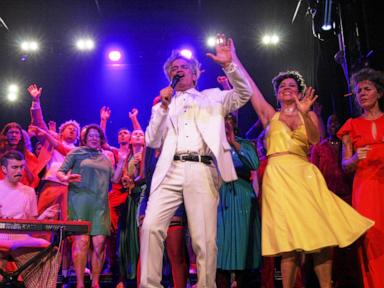
This brings us to groups like Reverend Billy and the Stop Shopping Choir. Led by William Talen, this anti-consumerist collective satirizes the aesthetic of conservative Protestant televangelists. They perform in colorful robes, preaching radical environmentalism and anti-corporate messaging. It looks like a comedy sketch at first glance. But watch them long enough, and the irony melts away. The community they have built is real. The grief they express for the planet is entirely sincere. Talen describes the group as an adopted church for post-religious people. It is a space where you can be seriously full of God and seriously full of nonsense simultaneously.
From Rosalia to Indie Rock
We are seeing this play out across the entire spectrum of mainstream entertainment. This is not limited to small indie venues or experimental television shows. The biggest stars on Earth are playing with these exact dynamics.
- Beyoncé: She has long integrated deep spiritual imagery into her visual projects, pulling directly from Yorùbá religion and African diasporic traditions. She uses pop spectacle to elevate sacred rituals to stadium-level art.
- Rosalía: The international pop star released a concept album titled Lux, which draws heavily on Catholicism, female saints, and Spanish mysticism. She honors these traditions while twisting them into futuristic, experimental pop sounds.
- Cameron Winter: The front man of the rock band Geese went solo with an album titled Heavy Metal. On the record, he belts out lines declaring that God is real and explicitly insists he isn't kidding. The sheer gravity of his vocals makes it impossible to dismiss as a sarcastic joke.
These artists recognize that religion remains an unmatched source of cultural power. You don't have to believe in the literal doctrines to recognize that the language of faith strikes a chord that secular capitalism simply cannot replicate. When life feels chaotic and stripped of clear moral boundaries, people seek out sacred settings. They want transcendence. They want community. They just want it without the dogmatic judgment.
How to Navigate This Cultural Shift
If you are a creator, writer, or just someone trying to make sense of modern media, you cannot afford to ignore this trend. Pure cynicism is dead weight. Earnest preaching bores people to tears. The magic happens in the collision of both.
Stop trying to make your work perfectly safe or easy to categorize. Lean into the contradiction. If you are writing an essay, creating music, or building a brand, look for the places where humor can open the door for a much heavier truth. Disarm your audience first. Make them laugh. Then, while their guards are down, give them something real to chew on.
Pay attention to the rituals people are building outside of traditional spaces. Look at how fitness communities, internet subcultures, and music fandoms are adopting the language of the sacred. The hunger for meaning hasn't vanished. It just changed its outfit. Find ways to speak to that hunger directly, without pretending you have all the answers. The modern audience respects the question far more than the lecture.