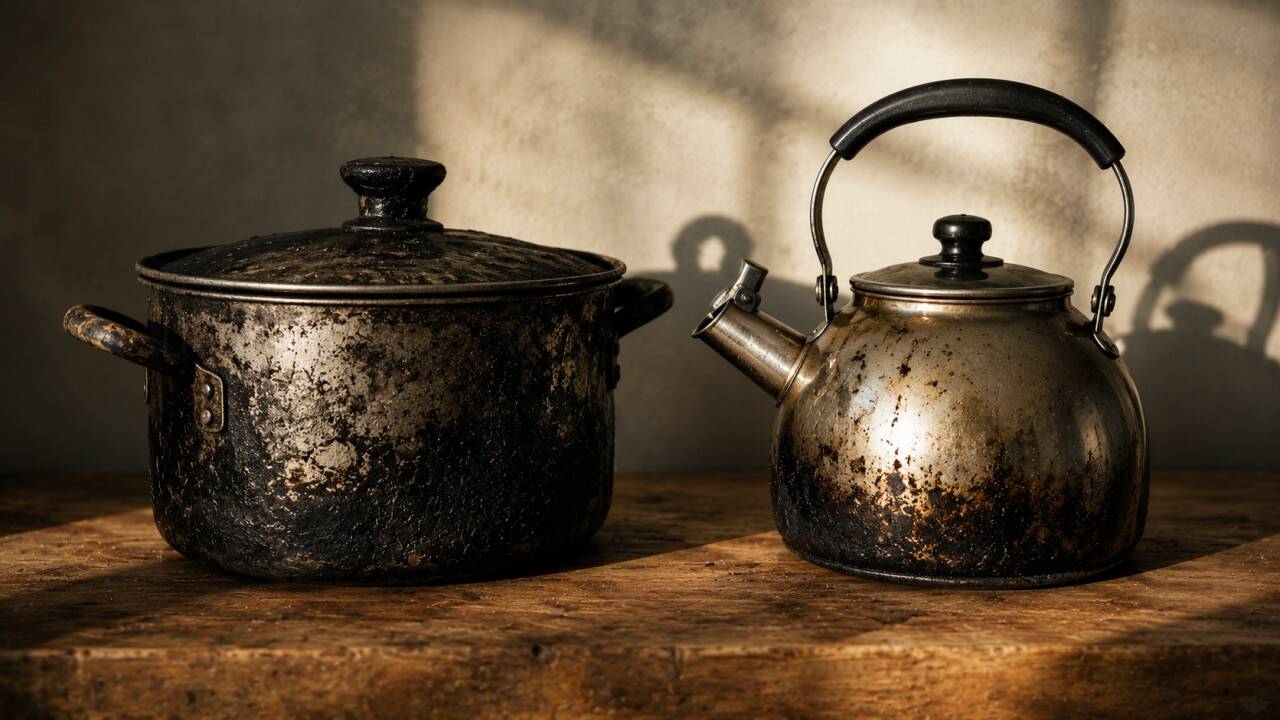
We've all been there. You're listening to a coworker complain about someone else's terrible communication skills, while you're currently staring at three unread, urgent emails from that exact coworker. It takes everything in you not to laugh out loud. You're witnessing a live performance of the pot calling the kettle black.
It's one of those phrases we throw around without thinking. But if you stop and look at how people behave online, at work, and in relationships, this centuries-old kitchen metaphor isn't just a quirky idiom. It's a psychological mirror. We love pointing out flaws in others, especially when those flaws are the exact ones we're trying to hide in ourselves.
The Open Fire And The Sooty Truth
To understand why this phrase works, you have to picture a kitchen from the 1600s. We aren't talking about spotless stainless steel or smooth ceramic cooktops. Cookware back then was heavy cast iron, suspended directly over open logs or coal fires.
Every single time you cooked, smoke and soot coated the bottom and sides of the vessels. The pot and the kettle sat in the exact same flames, collecting the exact same black grime.
So, when the pot decides to insult the kettle for being black, the irony is total. They're identical in their dirtiness. The pot isn't necessarily lying about the kettle—the kettle is black—but the pot lacks any moral ground to make the accusation.
There's another brilliant, lesser-known twist to the imagery that emerged later in literature. Think about a polished copper or silver kettle. If it's clean and shiny, it acts like a mirror. When the sooty iron pot looks at the kettle and screams, "You're black!", it's literally looking at its own reflection. It mistakes its own ugliness for a flaw in someone else.
Where Did It Actually Come From?
People often think Shakespeare invented every good phrase in the English language, but he missed this one. The concept itself is ancient. If you look back at Aesop's Fables from around 500 BCE, you find a story about a mother crab telling her child to walk straight, only for the child to ask for a demonstration. Hint: the mother couldn't do it either.
The specific imagery of kitchen tools, though, started gaining traction in the early 17th century.
- 1620: Thomas Shelton translated Miguel de Cervantes’ famous Spanish novel Don Quixote into English. In the text, Sancho Panza criticizes his master, and Don Quixote snaps back with a direct precursor to our modern phrase, comparing Sancho to a frying pan telling a kettle, "Avant, black-brows."
- 1682: William Penn, the founder of Pennsylvania, pinned down the modern usage in his book Some Fruits of Solitude. He wrote about hypocrites, noting that for a drunkard to rail against intemperance is "for the Pot to call the Kettle black."
Why Our Brains Love This Trap
Psychologists don't usually use medieval kitchen metaphors, but they talk about the exact same behavior. They call it psychological projection.
It's a defense mechanism. Recognizing your own toxic traits, laziness, or bad habits hurts your ego. It's painful. To protect yourself, your brain unconsciously takes those unwanted traits and pins them on someone else.
If you secretly worry that you're lazy, you'll likely become hyper-vigilant about your partner's couch time. If you know you're prone to exaggeration, you'll be the first to call someone else a liar. It's much easier to attack a flaw out there in the world than it is to fix it inside your own house.
In classical logic, this is known as the tu quoque fallacy—literally translating to "you too." It's a deflection tactic. When someone gets called out for bad behavior, instead of defending their actions, they attack the accuser for doing the same thing. It doesn't make the original accusation false, but it completely derails the conversation.
Spotting Modern Kettle Moments
This isn't just history; it happens every day.
Take the corporate manager who constantly demands "transparency" from their team but hides budget details and leadership decisions until the last possible minute. Or the friend who blasts everyone on social media for being "too online" and disconnected from reality, completely blind to the fact that they spent four hours crafting that exact rant.
Even parents fall into this trap constantly. We tell our kids to put their tablets down while we type out a work email under the dinner table. We demand patience from our toddlers while actively losing our temper because they couldn't find their shoes.
Break The Cycle In Three Steps
Blaming others is easy. Self-reflection is hard. If you want to stop acting like a hypocritical piece of ironware, you need a strategy.
- Track your annoyances: The next time someone absolutely infuriates you over a specific behavior—like cutting people off in conversation or constantly being late—take a beat. Ask yourself honestly: Do I do this too?
- Accept the reflection: If you find out you're guilty of the same flaw, don't panic. Acknowledge it. It's better to catch your own reflection than to wait for someone else to point it out to you.
- Shift from blame to boundaries: Instead of calling someone else out to make yourself feel superior, focus on changing your own actions. Lead by example rather than by criticism.
For a deeper dive into how our everyday language preserves these historical quirks, check out this video on the History of English Idioms, which breaks down the unexpected origins of phrases we use without a second thought.