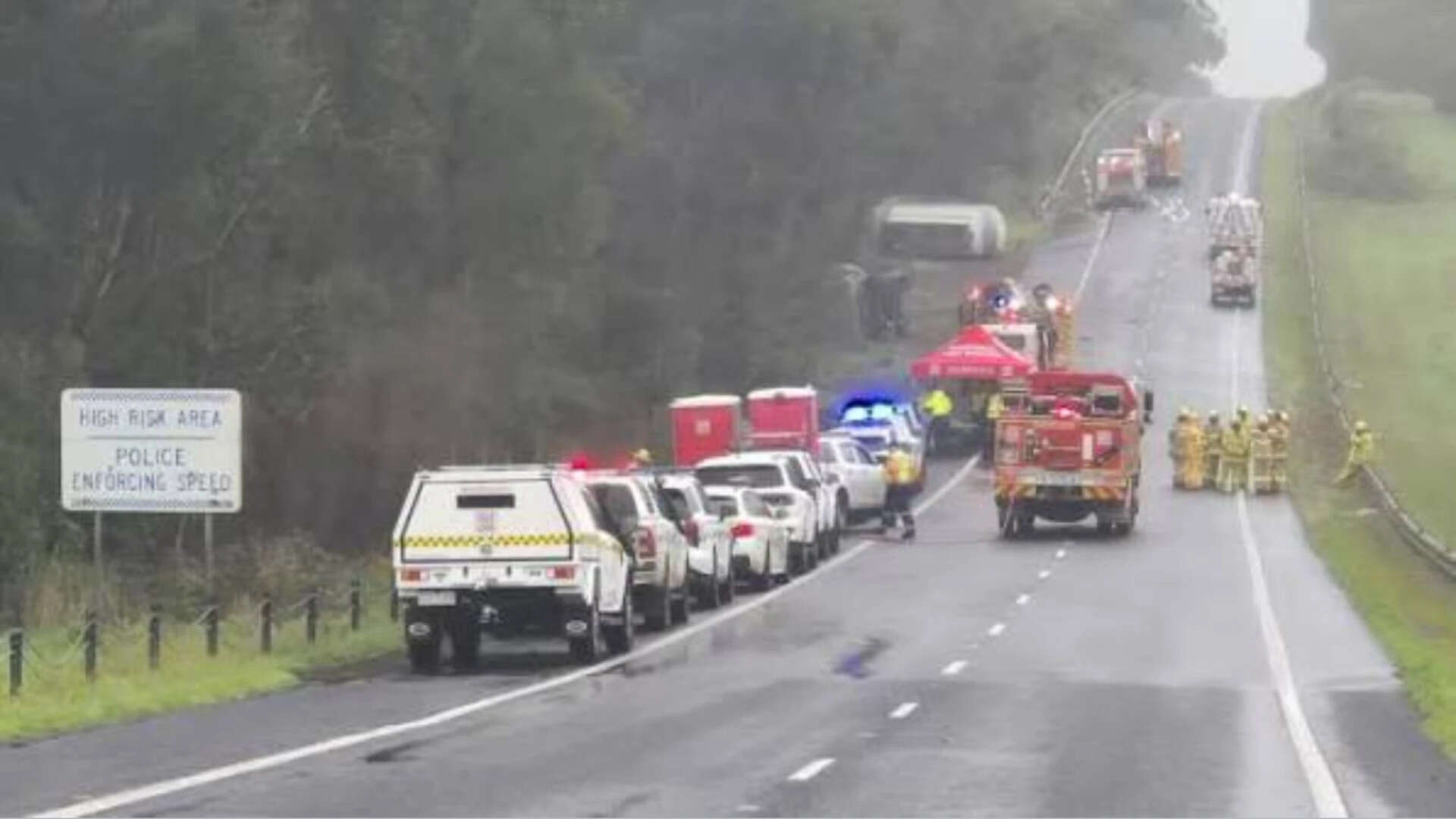
Driving a B-double fuel tanker through a wet, misty Australian morning requires intense concentration. For 25-year-old Ashwani Sharma, it was just another shift on the Princes Freeway in Victoria. Then, in a matter of seconds, everything went wrong. His truck hit a cable barrier, the cabin broke apart from the dual fuel trailers, and a young life ended against a line of trees near Darnum.
This horrific crash near Warragul highlights a massive, ignored issue in the transport sector. Young migrant drivers are taking on some of the most demanding, hazardous jobs on Australian roads. They face high pressure, complex machinery, and unforgiving weather conditions.
The Darnum Fuel Tanker Crash and What Went Wrong
The crash happened shortly before 6:30 am on a Saturday. Ashwani Sharma was heading east along the Princes Freeway when his B-double tanker lost control. Victoria Police reported that the impact with the cable barriers was so violent it tore the driver's cabin away from the fuel trailers. The cabin then slammed into trees and overturned. Sharma died right there at the scene.
Acting Senior Sergeant Dave Harrison described the crash scene as complex and horrific. Wet weather had made the road conditions incredibly challenging that morning. The crash triggered a massive fuel spill across the freeway and into nearby bushland. Authorities closed all eastbound lanes between Darnum and Yarragon for hours. Emergency crews scrambled to manage the hazardous fumes, and regional train services were disrupted, forcing passengers onto replacement buses.
Why Driving a B-Double Fuel Tanker is Highly Dangerous
A B-double is not a standard truck. It consists of a prime mover towing two semi-trailers, linked by a fifth wheel. Operating one requires specialized training, immaculate spatial awareness, and deep experience. When you add thousands of liters of highly volatile fuel into the mix, the margin for error drops to zero.
Liquid cargo shifts constantly during transit. This dynamic weight distribution can cause a phenomenon known as sloshing. When a driver brakes or turns on a wet surface, the moving liquid creates immense kinetic energy that can push the vehicle out of control. If a trailer begins to swing, correcting it on a slick highway is almost impossible for an inexperienced operator.
The physical division of the truck during the crash indicates an immense transfer of force. Cable barriers are designed to catch passenger vehicles and absorb impact. When a massive, fully loaded B-double hits them at highway speeds, the barriers can act like a tripwire, causing catastrophic structural separation if the momentum shifts sideways.
The Hidden Costs of the Migrant Trucking Boom
The Indian community in Melbourne is mourning a hardworking young man, but this tragedy exposes a broader trend. Australia faces a massive shortage of heavy vehicle drivers. To fill the gap, the logistics industry relies heavily on young migrants who see trucking as a path to financial stability and permanent residency.
These drivers often enter the industry without years of driving on regional Australian roads. Driving in heavy rain through Victoria's Gippsland region is vastly different from driving in suburban Melbourne or overseas. The pressure to complete routes quickly, combined with shifting shift patterns, creates severe fatigue.
Fatigue management laws in Australia are strict, but enforcement relies heavily on logbooks and self-reporting. Young drivers, eager to secure their positions or support families back home, sometimes push through the tiredness. They don't want to complain or risk losing shifts.
Financial and Emotional Devastation for Families Left Behind
Ashwani Sharma's wife shared her heartbreak, noting that his sudden death left the family devastated both emotionally and financially. He was a loving husband and a dedicated worker, providing the primary income for his household. Now, his family faces the daunting task of navigating legal systems, funeral costs, and the sudden loss of livelihood in a foreign country.
Migrant workers often lack extended family networks in Australia to lean on during a crisis. When a tragedy like this strikes, communities have to step in with crowdfunding campaigns to cover basic expenses and repatriate remains.
The financial fallout extends beyond immediate expenses. Navigating insurance claims for commercial vehicle accidents involves complex legal scrutiny. Transport companies and insurers thoroughly investigate logbooks, vehicle maintenance records, and driving history before paying out policies. This leaves grieving families waiting months for vital financial support.
Practical Safety Steps for Young Commercial Drivers
If you are a young or newly licensed heavy vehicle driver in Australia, you need to protect yourself on the road. Do not rely solely on your basic licensing course to keep you safe in extreme conditions.
Master Dynamic Risk Assessment
Weather conditions in Victoria change rapidly. If you notice heavy rain or fog, drop your speed immediately. Do not worry about falling slightly behind schedule. No delivery is worth your life. Increase your following distance to at least double what you would use in dry conditions.
Understand the Logistics of Liquid Cargo
When hauling fuel or other liquids, remember that the vehicle handles differently when the tanks are partially full compared to completely full. A half-empty tank allows for more sloshing, which destabilizes the truck during sudden maneuvers. Avoid sudden steering inputs or aggressive braking when entering bends.
Stand Your Ground on Fatigue
If you feel your eyes dropping or your concentration slipping, pull over at the next designated heavy vehicle rest stop. The law protects your right to rest. Never let a fleet manager or dispatcher pressure you into driving when you are exhausted. Document your hours accurately and keep your own copies of logbook entries.
Invest in Comprehensive Income Protection
Do not assume your employer's work cover or standard insurance will instantly take care of your family if the worst happens. Look into independent life insurance and income protection policies that explicitly cover high-risk occupations like heavy vehicle driving. Ensure your spouse or next of kin knows where these documents are kept.
Urgent Policy Changes Needed in the Transport Industry
Regulatory bodies must look closely at how young drivers are inducted into high-risk transport roles. Licensing requirements for driving multi-combination vehicles like B-doubles should include mandatory simulator training for extreme weather scenarios and liquid load shifts.
Transport companies need to implement better onboarding programs for migrant drivers, ensuring they get sufficient supervised experience on challenging regional routes before driving solo. Relying on overseas experience or quick domestic license conversions is proving to be a dangerous strategy for everyone on the road.
The loss of Ashwani Sharma is a stark reminder that behind the logistics chains keeping stores stocked are real people facing extreme dangers every day. True safety reform will only happen when driver well-being and rigorous on-the-road training are prioritized over tight delivery deadlines. Get proper training, know your legal rights regarding fatigue, and prioritize survival over speed every time you climb into the cabin.
:quality(85)/Mp/Yp/2p5ae8FJtFWypSo8rM/6f889f29-54f6-453d-a332-41914679edeb.jpg)