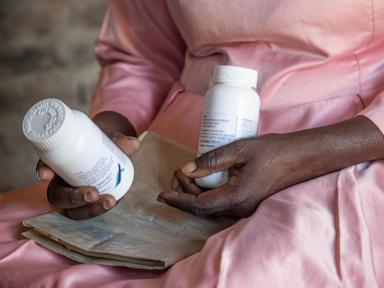
For over two decades, the President’s Emergency Plan for AIDS Relief—better known as PEPFAR—stood out as one of the most effective foreign policy initiatives in history. It saved an estimated 26 million lives. It helped build health infrastructure in places that desperately needed it. It turned a deadly diagnosis into a manageable condition for tens of millions.
That progress is slipping away fast.
A fresh report from amfAR, The Foundation for AIDS Research, outlines a disturbing breakdown in international HIV prevention and treatment. The source of the trouble isn't a new mutation of the virus or a collapse in medical technology. It's direct fallout from recent policy choices, aid freezes, and administrative shifts in Washington.
If you think foreign aid decisions in Washington stay inside political circles, the numbers tell a very different story.
The Real Numbers Behind the Shutdowns
When foreign assistance programs face funding pauses or sudden policy rewrites, the damage hits local healthcare networks immediately. To understand the scale of what's happening right now, you have to look at how PEPFAR actually operates. It doesn't run its own hospitals with American doctors. Instead, it funds local clinics, community groups, and regional health workers who know their neighborhoods inside out.
When those funds stop or get delayed, those front-line operations freeze.
Researchers from amfAR surveyed 166 partner organizations across 46 countries to figure out what happened on the ground over the past year. The findings aren't subtle:
- Over 1,700 clinics, drop-in centers, and health service points shut their doors permanently or temporarily.
- More than 16,000 full-time healthcare workers lost their jobs.
- Nearly two million fewer people received antiretroviral treatment compared to the year before. That is roughly a 10 percent drop in active treatment coverage.
- Spending on HIV prevention dropped by 51 percent between fiscal years 2024 and 2025.
Think about those figures for a second.
A 10 percent drop in treatment isn't just a administrative metric on a spreadsheet. It means nearly two million real human beings missed doses of medication that keep the virus suppressed. When antiretroviral therapy stops, viral loads rise. When viral loads rise, health fails, and the risk of transmitting the virus to others jumps dramatically.
It takes years to build public trust in a community health program. It takes weeks to destroy it.
Why Local Organizations Got Hit First and Hardest
One of the report's most revealing findings highlights who took the brunt of the damage. International non-governmental organizations usually have cash reserves, diverse funding streams, and legal teams to cushion administrative shocks. Local community organizations don't.
Local groups were far more likely to see their contracts terminated abruptly or their payments held up.
That detail matters because local organizations carry the entire weight of community care. They run the mobile clinics that visit rural villages. They staff the drop-in centers where marginalized groups feel safe getting tested. When a large foreign NGO loses a grant, it downsizes. When a local clinic in Sub-Saharan Africa loses a grant, it closes down completely.
When those local operators vanish, the network breaks.
Healthcare workers who spent a decade earning community trust are laid off. Patients show up to locked doors. Equipment sits unused in empty rooms. Once those local workers move on to other jobs or migrate to find work, you can't simply turn the funding back on and expect them to reappear the next morning.
The Quiet Impact on High Risk Groups
HIV doesn't affect all populations equally. Epidemiologists have known for decades that controlling the epidemic requires reaching high-risk groups, including sex workers, men who have sex with men, transgender individuals, and people who inject drugs.
If you don't offer prevention and care to high-transmission groups, you cannot control the virus overall. It's basic infectious disease dynamics.
Yet, those specific programs took the hardest hit under recent US policy shifts. The amfAR report revealed that most surveyed organizations that provided services tailored to high-risk groups ended up shuttering those programs entirely.
Some lost their funding directly. Others stopped offering specialized care voluntarily because they feared losing what little funding they had left under strict political mandates regarding diversity initiatives and service restrictions.
When prevention work halts, condom distribution stops. Access to Pre-Exposure Prophylaxis, known as PrEP, collapses. Education campaigns disappear. The result is predictable: transmission rates rise again, erasing years of steady progress in a matter of months.
Government Claims versus On the Ground Reality
Official statements from Washington present a much brighter picture than what health workers report on the ground. Government spokespeople point to quarterly figures showing millions of people still receiving treatment, claiming the overarching program remains stable.
They highlight specific wins, like increased PrEP uptake among pregnant and breastfeeding women in select areas.
That official narrative relies on selective snapshots. Looking at isolated quarters hides broader yearly drops. When independent researchers combined data across all four quarters of the fiscal year, the overall decline in patients receiving active treatment stood clear as day.
There is also a huge gap between maintaining existing patients and preventing new infections. Even if treatment numbers appear steady on paper over a short timeframe, cutting prevention spending by half guarantees a surge in new cases down the road.
You can't treat your way out of an epidemic while cutting off prevention at the knees.
What Needs to Happen to Fix the Damage
Reversing this slide requires immediate, practical steps from both US policymakers and international partners. Endless debate won't restore clinic operations or bring back trained medical staff.
Here is what actually needs to happen to stabilize global HIV care:
- Restore full funding for core prevention and community care. Treatment alone is not enough. Funding must be re-established for PrEP distribution, condom access, and community testing centers.
- Remove ideological restrictions on key populations. Public health strategies should be guided by epidemiological data, not political agendas. Programs targeting high-risk groups must be fully reinstated.
- Prioritize direct support to local partners. International aid agencies must route resources directly to local health groups that maintain permanent ties in affected communities.
- Diversify funding sources globally. Host country governments and international donors cannot rely solely on US foreign policy stability. National health budgets must absorb more operational costs to build long-term resilience against sudden foreign policy shifts.
The global fight against HIV was one of the greatest public health victories of the past half-century. Letting it fall apart over political friction isn't just bad policy—it's a human tragedy unfolding in real time. Action needs to happen now before the infrastructure disappears completely.