The British government just quietly confirmed what international development experts have feared for months. A massive, brutal retreat from global solidarity is underway. The Foreign, Commonwealth and Development Office (FCDO) has released its long-awaited country-by-country spending plans, laying bare a devastating series of UK aid cuts in Africa. Nine crucial African nations are seeing their direct bilateral support slashed by 80% or more, with several long-standing partners practically cut off.
This isn't a minor budgetary trim. It's a fundamental dismantling of Britain's footprint on the continent. Under the cover of domestic political maneuvers, Keir Starmer’s Labour government is systematically withdrawing funding from communities facing severe climate shocks, acute poverty, and strained public services.
By shifting the focus toward military spending, Downing Street has made a calculated choice. They decided that domestic defense is worth more than the survival of vulnerable people abroad. The consequences of that choice will be measured in human lives.
The Brutal Math Behind the Cuts
Let's look at the actual numbers. They are grim.
For years, the UK was a reliable, major donor to nations like Mozambique, Malawi, Rwanda, and Sierra Leone. That era is over. According to an analysis of the government's newly published allocations by the development coalition Bond, the reductions are staggering:
- Mozambique and Malawi are facing a near-total wipeout, with bilateral support set to drop by 90% by 2029.
- Rwanda and Sierra Leone are seeing their direct funding slashed by 80%.
- Somalia, already dealing with relentless conflict and climate instability, will lose 49% of its bilateral aid.
- Other key partners including Ghana, Kenya, Tanzania, Uganda, and Zambia are having their aid relationships virtually eliminated, with budgets reduced to £5 million or less.
To put this in perspective, £5 million is practically pocket change for a country-level development program. You can’t run national maternal health initiatives, maintain clean water infrastructure, or support countrywide education reforms on a budget that small.
Historically, the UK committed to spending 0.7% of its gross national income (GNI) on foreign aid. That was a badge of pride. The previous Conservative administration temporarily brought it down to 0.5%. But the current Labour government has taken the ax even deeper, driving aid spending down to just 0.3% of GNI by 2027.
It is the steepest cut in the G7.
Why Downing Street is Pulling the Plug
The official justification for this shift is national security. The government argues that a unstable geopolitical environment requires a massive ramp-up in defense spending—targeting 2.6% of GDP by 2027. To fund this military build-up, they are cannibalizing the international development budget to the tune of £6.5 billion.
It is a short-sighted trade-off.
The decision was so contentious within the government that it triggered the high-profile resignation of international development minister Anneliese Dodds. Upon leaving, Dodds warned that a pullback on this scale would force the UK out of numerous African, Caribbean, and Western Balkan nations, severely diminishing Britain’s global standing.
Foreign Secretary Yvette Cooper has tried to put a positive spin on the disaster. She talks about transitioning away from "traditional paternalism" toward "genuine partnership" and investment. But you can't build a partnership with empty pockets. If you show up to a meeting with a former partner and announce you're cutting their funding by 90%, they don't see it as a "modernized relationship". They see it as abandonment.
The Human Impact Beyond the Spreadsheets
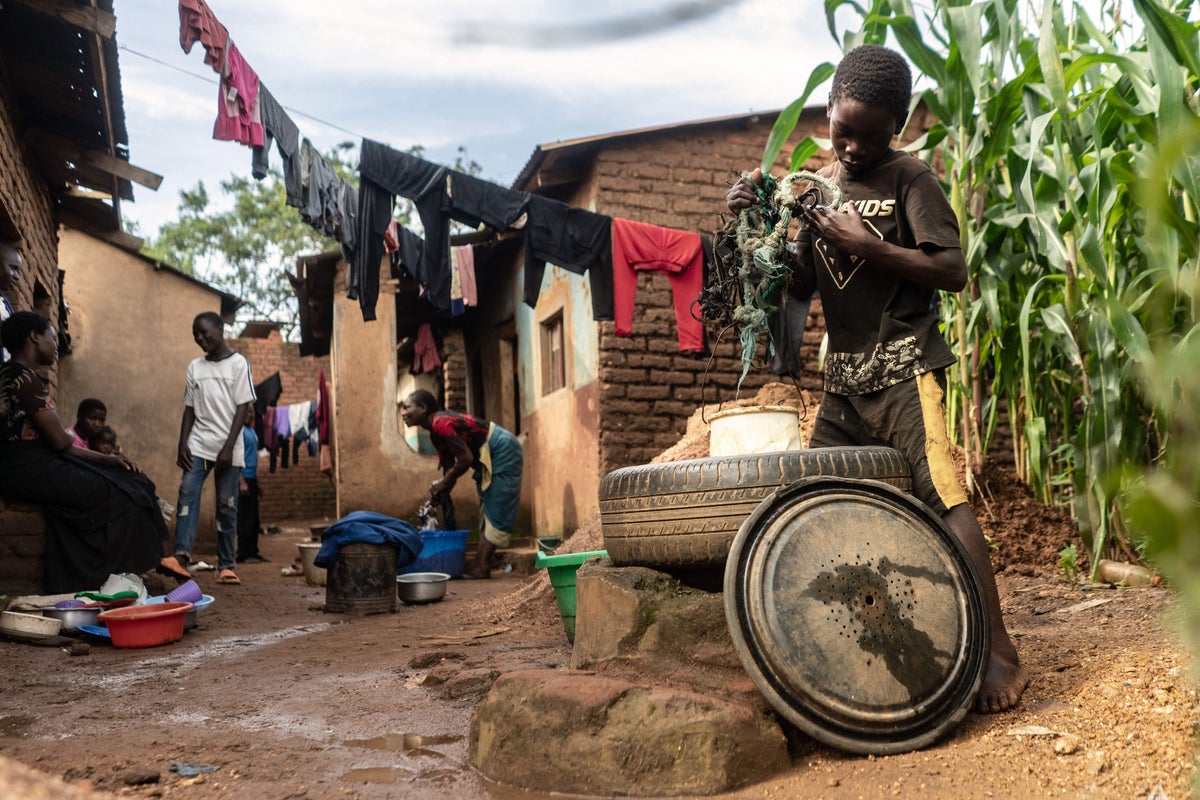
When politicians in London talk about "rebalancing budgets," they deal in abstract terminology. On the ground in Sub-Saharan Africa, these decisions translate directly into closed clinics, untreated illnesses, and hungry children.
The government’s own Equality Impact Assessment admitted that the scale of these cuts will disproportionately harm the most vulnerable people—especially children, older populations, and people with disabilities in countries like Ethiopia, Mozambique, Rwanda, Tanzania, and Zambia.
Consider the healthcare sector. Direct bilateral aid has funded essential local services for decades. In Kenya, health promoters are already sounding the alarm. With bilateral funds evaporating overnight, unpaid community volunteers are being forced to act as "shock absorbers," trying to patch massive funding gaps out of their own empty pockets.
When clinic funding vanishes, pregnant women miss their prenatal checkups. Sick children don't get malaria medication. Routine immunizations slide. We are talking about decades of hard-won progress in public health being wiped out in a matter of fiscal quarters.
The Flawed Logic of Multilateralism
To defend these brutal bilateral cuts, the FCDO claims it is redirecting money through multilateral institutions like the World Bank and the African Development Fund. The UK recently pledged a 40% increase to the World Bank’s International Development Association (IDA), totaling £2 billion.
This sounds reasonable on paper. Multilateral organizations have broad reach and deep pockets.
But there is a major problem with this strategy. Multilateral funds do not target local, grassroots needs in the same way direct bilateral partnerships do. Large development banks focus heavily on massive infrastructure loans, macroeconomic policy, and large-scale government systems. They do not fund the small, local NGO running a mobile health van in rural Malawi. They do not fund the community-led girls' education program in Sierra Leone.
By bypassing bilateral aid, the UK is cutting off the lifeblood of local civil society. It also surrenders direct British influence and oversight. When you dump money into a massive global fund, you lose the ability to shape how, where, and when that money is used to solve specific crises.
A Geopolitical Vacuum Waiting to Be Filled
If the moral argument doesn't move Whitehall, the geopolitical one should.
Western nations frequently complain about the growing influence of geopolitical rivals in Africa. Yet, by slashing bilateral aid so drastically, the UK is willfully handing over its soft power.
When the UK pulls out of a country, it doesn't leave a neutral empty space. Other global powers are more than happy to step in. Governments in the Global South are already facing immense economic pressure from rising debt and climate disasters. If Western democracies show they are unreliable, transactional partners who cut and run when domestic politics get tough, African nations will naturally look elsewhere for alliances.
This isn't just about charity; it's about strategic diplomacy. Cutting aid to 0.3% of GNI to fund defense is a self-defeating strategy. You cannot buy global security solely with missiles and warships if you are actively destabilizing the fragile regions where future conflicts, mass migrations, and global health crises are born.
What Needs to Happen Now
The damage from these decisions is already trickling down, but the fight to reverse this trajectory is far from over. Civil society, development advocates, and concerned citizens must focus on clear, actionable priorities:
- Demand Transparency on Transition Timelines: The government must be forced to publish clear, realistic transition timelines for every country affected. Phasing out programs over months rather than weeks is the bare minimum required to prevent complete local systemic collapse.
- Lobby for Ring-fenced Local Funding: Even within diminished country budgets, the FCDO must prioritize direct grants to local, community-led organizations rather than massive international contractors. This ensures that the remaining funds actually reach the ground level.
- Keep the Pressure on the GNI Target: The UK's regression to 0.3% of GNI must not be normalized. Development advocates must continue to campaign to restore the legally enshrined 0.7% target as soon as economic conditions allow.
- Support NGO Direct Giving: With government funding dry, supporting independent international NGOs that work directly with local African partners is more critical than ever.