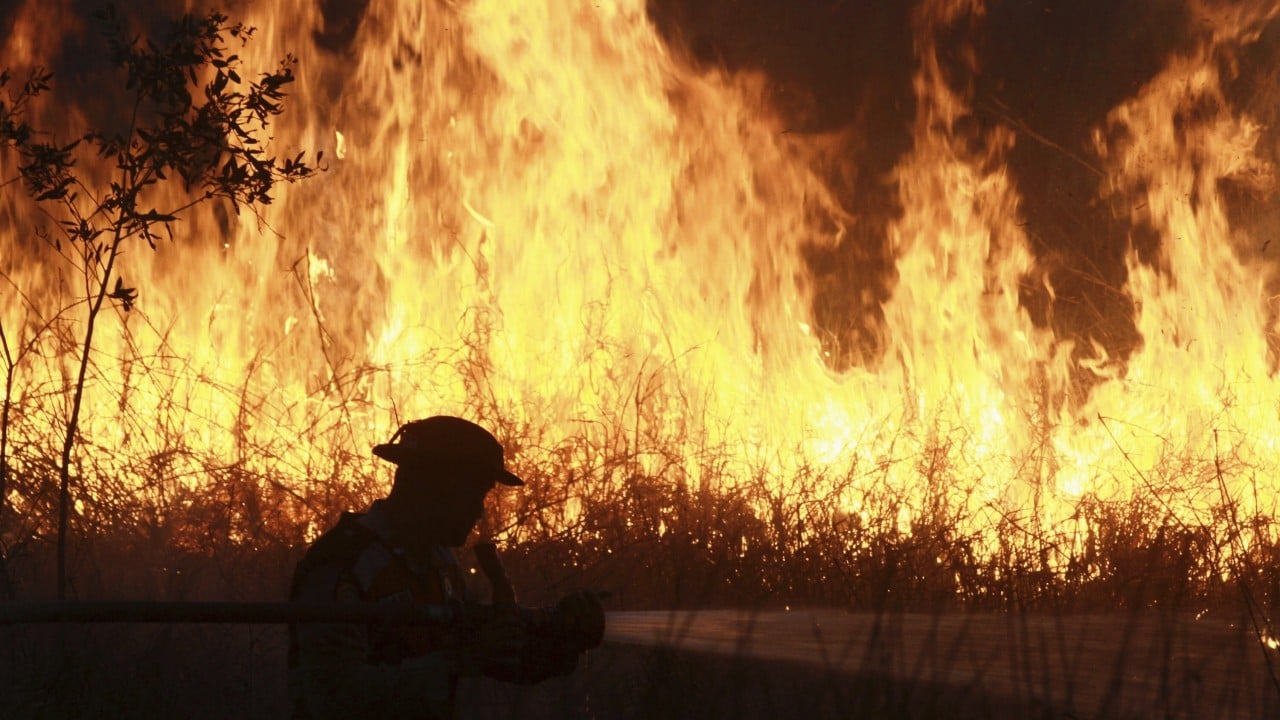
You can already smell it in the air if you know what to look for. The slight, acrid tang of burning peat. Every few years, a choking, toxic blanket settles over Singapore, Malaysia, Indonesia, and Brunei. It isn't a natural disaster. It's an economic ritual.
Right now, the Singapore Institute of International Affairs (SIIA) has issued a rare "red" alert in its annual Haze Outlook report. It's only the second time they've hit the panic button like this since launching the index. The last time was in 2023. This means between August and September, the region faces a massive risk of severe, transboundary air pollution.
Everyone wants to blame the weather. Sure, El Niño is coming back, threatening a longer, nastier dry season. Toss in a potential positive Indian Ocean Dipole—a climate phenomenon that slashes rainfall across the Indonesian archipelago—and you have the perfect tinderbox.
But weather just provides the spark. The real fuel is cash, or rather, the lack of it.
The standard narrative tells us that greedy multinational corporations are burning down the rainforests to plant palm oil. That story is outdated. Today, the real danger comes from a brutal squeeze on small farmers, global geopolitical shocks, and local budget cuts that nobody wants to talk about.
The Secret Drivers of the 2026 Haze
If you want to know why the skies will turn gray, don't look at the clouds. Look at the shipping lanes. Recent disruptions in the Middle East have sent global supply chains into a tailspin. For a farmer in Sumatra or Kalimantan, that means two things became incredibly expensive: diesel and fertilizer.
When the price of fuel shoots up, clearing land with heavy machinery becomes a luxury. When fertilizer prices spike, agricultural margins evaporate. If you're a small-scale fruit or vegetable grower running on razor-thin margins, you can't absorb those costs.
You use fire. It's cheap. It's fast. It clears the brush and flushes nutrients back into the soil instantly, even if it destroys the regional air quality for months.
At the same time, governments are pushing hard for energy independence. Indonesia is aggressively rolling out its biodiesel mandates, aiming for higher blends like B50. This creates an insatiable domestic demand for agricultural commodities. When demand shoots up and production costs rise, the temptation to clear land cheaply becomes overwhelming for smallholders who operate outside the tight scrutiny facing the big palm oil conglomerates.
The Prabowo Stress Test
This season isn't just an environmental crisis. It's a massive political test for Indonesia’s President Prabowo Subianto, who took office in late 2024.
His predecessor, Joko Widodo, made haze prevention a personal obsession. He threatened to sack military and police chiefs if fires got out of hand. It worked, mostly. But Prabowo inherited a different economic landscape. Indonesia is desperately trying to keep its national fiscal deficit below 3% of GDP.
When a government cuts spending, the axe falls on unsexy line items. The Ministry of Forestry and various provincial governments have already warned that fire management budgets are under severe pressure. Expensive cloud-seeding and weather modification operations are on the chopping block. Experts doubt their efficacy anyway, but losing them removes a critical defensive psychological tool.
It’s easy to sign regional environmental treaties in air-conditioned rooms in Jakarta or Singapore. It’s much harder to enforce them when local fire wardens don't have enough gas for their patrol trucks.
The Multi-Billion Dollar Breathing Tax
We’ve seen this movie before, and it’s incredibly expensive. The infamous 1997 to 1998 haze crisis cost Southeast Asia roughly US$9.3 billion in economic losses. In 2015, another severe episode wiped out US$16.1 billion in Indonesia alone, while costing Singapore up to US$1.42 billion in lost productivity, healthcare costs, and tourism cancellations.
The economic math is broken. We protect the margins of small supply-chain actors by allowing them to burn land, and in return, the entire region pays a massive tax via hospital admissions, closed schools, and empty flights.
Big palm oil companies have largely cleaned up their act because international buyers demand it. They have the capital to implement "no burn" policies. But the agricultural supply chain in Southeast Asia is an intricate network of millions of independent smallholders. If the global economy makes sustainability unaffordable for them, they will burn.
What Needs to Happen Next
Stop treating the haze like an unpredictable meteorological anomaly. It’s an economic externality. If we want clean air in August and September, the strategy has to shift immediately.
- Fund the Frontlines: ASEAN nations, particularly Singapore and Malaysia, need to stop pointing fingers and start co-funding local fire-prevention budgets in vulnerable Indonesian provinces. If Indonesia's domestic budget is squeezed, regional neighbors must bridge the gap. It's cheaper than losing billions in tourism.
- Target the Smallholders, Not Just the Conglomerates: Subsidy programs must target small-scale fruit and vegetable growers who are feeling the squeeze from high fertilizer prices. Provide mechanical clearing equipment sharing programs at the village level so fire isn't the only affordable tool.
- Enforce Supply Chain Transparency: Tech-driven tracking must move beyond palm oil. Biofuel supply chains need the same rigorous, satellite-tracked "zero-burn" certification that international markets demand for export-grade oil.
The forecasts are grim, but a red alert doesn't mean disaster is inevitable. It means the clock is ticking. If the region doesn't act on the economic root causes within the next few weeks, get ready to buy N95 masks in bulk. Again.