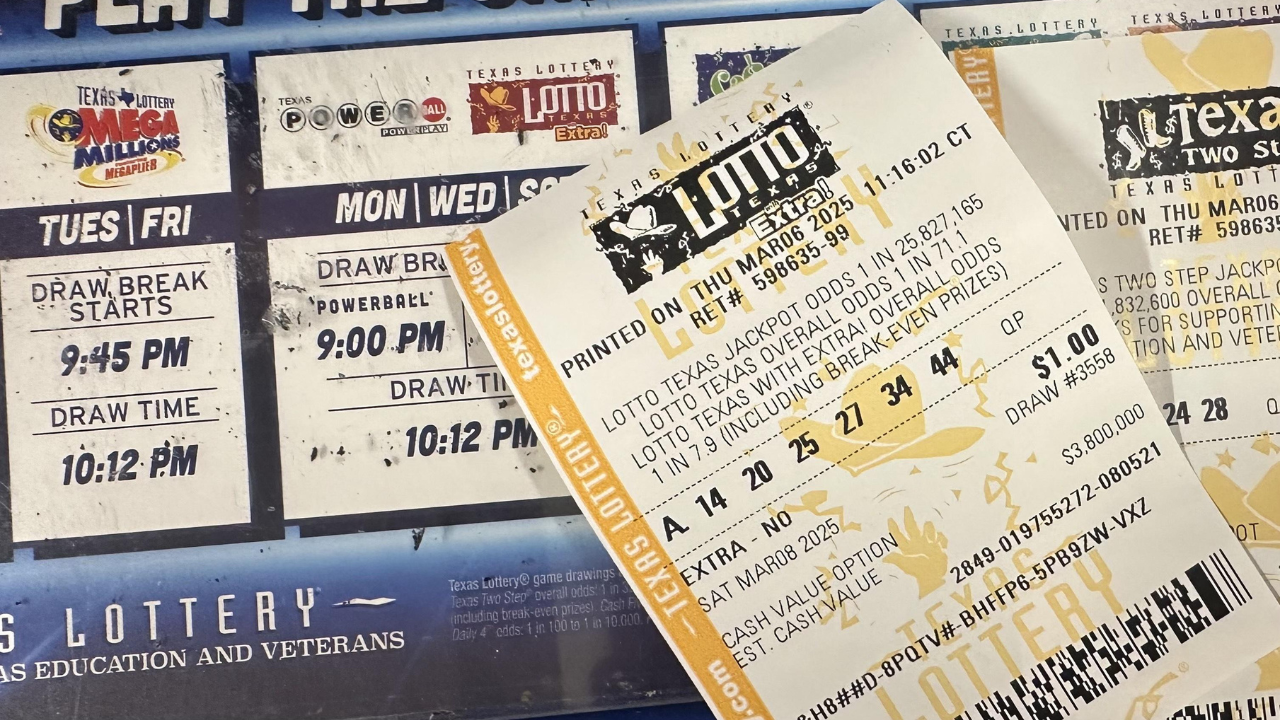
We have all heard the story of the luckiest woman alive.
The media loves a good miracle. In the late 2000s and early 2010s, news outlets went wild over Joan Ginther. She was a quiet, intensely private woman who grew up in Bishop, Texas. She also happened to hold a PhD in statistics from Stanford University. Between 1993 and 2010, she won four massive Texas Lottery jackpots, pulling in a combined total of over $20 million.
The Associated Press ran the numbers and quoted mathematicians who claimed her winning streak was a 1-in-18-septillion event. For perspective, that is an 18 followed by 24 zeros. You have a better chance of finding a specific grain of sand among all the beaches on Earth.
But here is the thing about statisticians: they don't believe in septillion-to-one miracles. They believe in system design, probability curves, and market inefficiencies.
Joan Ginther did not just get lucky. She figured out how the game was built, waited for the right moments, and deployed millions of dollars in capital to exploit a physical flaw in how state lotteries distribute scratch-off tickets.
Let's break down exactly how she did it, why the media got the math completely wrong, and what this tells us about the illusion of randomness.
The Myth of the Septillion to One Jackpot
The 1-in-18-septillion figure is a classic example of bad math framing.
When newspapers quoted that number, they calculated the probability under a highly flawed assumption: that Ginther had walked into a store, bought exactly four tickets in her lifetime, and won a jackpot with every single one of them.
If you buy four tickets and win four major jackpots, yes, you are looking at cosmic, statistically impossible odds. But that is not what Ginther did. She bought tens of thousands of tickets over a span of nearly two decades.
When you increase the number of trials, the probability of an event happening increases dramatically. To analyze Ginther's true odds, we have to look at the sheer scale of her play. Locals in her hometown of Bishop, Texas, reported seeing her purchase entire boxes of high-dollar scratch-offs. She wasn't playing a fun little $2 game on a whim. She was treating scratch-offs like a high-yield financial asset.
Once you buy 10,000 or 50,000 tickets, the probability of hitting a top tier prize isn't a septillion-to-one anomaly anymore. It becomes a statistical expectation.
How Scratch-Off Games Can Be Solved
To understand her strategy, we have to look at how scratch-off lotteries differ from draw games like Powerball.
Draw games are close to truly random. Every drawing is independent of the last, and the numbers are generated live. There is no physical inventory to track.
Scratch-offs are a completely different animal. They are physical products printed in fixed batches by corporate security printers. Because they are physical, they have rules of distribution:
- Guaranteed prize distribution: A roll of scratch-offs cannot be completely random. If a state printed a million tickets and put all the winning tickets in one box, the game would be a disaster. Players in other regions would buy thousands of losing tickets, get frustrated, and stop playing.
- Minimum payback structures: To keep players hooked, every single pack of tickets is guaranteed to return a minimum dollar amount. For example, a $1,000 pack of $50 tickets might be hardcoded to return at least $340 or $400 in minor prizes. This acts as a safety net for high-volume buyers.
- Publicly trackable data: State lottery commissions are legally required to publish real-time statistics on their websites. They tell you how many tickets have been sold, which top prizes have been claimed, and how many winning tickets are still floating around in the wild.
To a Stanford statistics PhD, this public data sheet is not just information—it is a financial statement.
The Simple Math of Expected Value
Ginther's strategy relied on a basic mathematical concept called Expected Value ($$EV$$).
Expected Value is the average amount of money you can expect to win or lose on a single bet if you repeat the process over and over again. The basic formula for the expected value of a lottery ticket is:
$$EV = \sum (P_i \times V_i) - C$$
Where $P_i$ is the probability of winning a specific prize tier, $V_i$ is the value of that prize, and $C$ is the cost of the ticket.
When a new scratch-off game is launched, the initial $$EV$$ is always negative. If a ticket costs $30, the expected value might be $20, meaning you lose an average of $10 on every ticket you buy. The house always wins at the start.
But as the weeks and months go by, people buy tickets and claim prizes. The ratio of remaining low-tier tickets to remaining jackpot tickets changes.
Imagine a hypothetical game with only 10 tickets left. Nine are losers, but one is a $1,000 jackpot. If each ticket costs $50, buying all 10 tickets will cost you $500, but you are guaranteed to win $1,000. Your $$EV$$ has suddenly shifted from negative to highly positive.
$$EV = (1.0 \times $1000) - $500 = +$500$$
This is the exact window Ginther looked for. She monitored the state’s public reports. She waited for games where a high percentage of the cheap, non-winning tickets had already been bought and discarded by regular players, but the massive multimillion-dollar jackpots remained unclaimed.
When the mathematical curve crossed the line into positive expected value, she struck.
Buying Out the Rest
Once Ginther identified a game with a positive $$EV$$, she didn't just buy a couple of tickets. She bought in massive bulk, sometimes purchasing entire shipping boxes or rolls of tickets.
This allowed her to rely on the Law of Large Numbers.
If you buy one ticket in a positive $$EV$$ game, you still have a massive chance of losing your money. But if you buy 5,000 tickets, the individual randomness starts to smooth out. Your actual return on investment begins to align almost perfectly with the mathematical expected value.
Furthermore, because every pack of high-tier scratch-offs has a guaranteed minimum payback (for instance, recouping 30% to 40% of the cost through small $50 and $100 wins), her downside risk was severely capped. She wasn't risking $1 million to win $10 million; she was risking a net of $600,000 after factoring in the guaranteed minor wins.
The Logistics of Bulk Buying in Bishop
How did a woman living in Las Vegas manage to buy thousands of physical scratch-off tickets in a tiny, rural Texas town?
This is where her execution was flawless. Ginther did not wander randomly across the state of Texas. Out of her four major wins, three came from tickets bought at the exact same convenience store: the Times Market in Bishop, Texas.
Buying in bulk requires a compliant partner. If you walk into a busy convenience store in Houston and ask to buy $100,000 worth of scratch-off rolls, the clerk will probably look at you like you are insane, and the line behind you will start a riot.
In a tiny town like Bishop, however, she could establish a relationship with the store owner, Sun Bae. Ginther could order entire shipments of specific game packs directly to the store. The store got a percentage of every ticket sold, meaning the owner was highly incentivized to facilitate these massive transactions.
By concentrating her buying at a single, low-traffic location, she kept her operations quiet, prevented other players from buying the winning tickets before she could, and ensured she could run her system without interruption.
Exploiting the Tax Code
There is another massive advantage Ginther had that most regular players completely overlook: the United States tax code.
Normally, if you win $10 million in the lottery, the government takes a massive chunk of it. But the IRS allows professional gamblers to deduct their gambling losses against their gambling winnings.
Because Ginther was buying tickets in such massive quantities, she generated millions of dollars in losing tickets alongside her winning ones. By documenting these losses, she could write them off against her jackpot wins, significantly lowering her overall tax burden.
Essentially, Uncle Sam was subsidizing her bulk-buying strategy, making her mathematical edge even more profitable than it looked on paper.
What We Can Learn From the Statistics Legend
Joan Ginther passed away in 2024, taking her exact methods to the grave. Her Stanford dissertation sits in an archive, untouched and private. She never gave a single interview or explained her process to the media.
But we don't need her to explain it. The math speaks for itself.
She proved that when humans try to design "random" systems, those systems almost always contain predictable patterns. Whether it is an MIT group exploiting Massachusetts' Cash WinFall game or a Stanford statistician identifying shipping and distribution cycles in Texas, the lesson remains the same.
If you want to apply this kind of analytical thinking to your own life, start with these practical next steps:
- Stop looking at scratch-offs as a game of luck. They are printed products with fixed financial structures. If you must play, check your state’s lottery commission website first. Look for games that are near the end of their print runs but still have a high ratio of top prizes unclaimed.
- Understand the difference between probability and possibility. Anything is possible, but only a few things are mathematically probable. Stop making decisions based on "what if" and start making them based on expected value.
- Look for system flaws, not luck. Whether in business, investing, or career choices, look for areas where the rules are rigid, the data is public, and other people are acting on emotion rather than numbers. That is where the real opportunities hide.