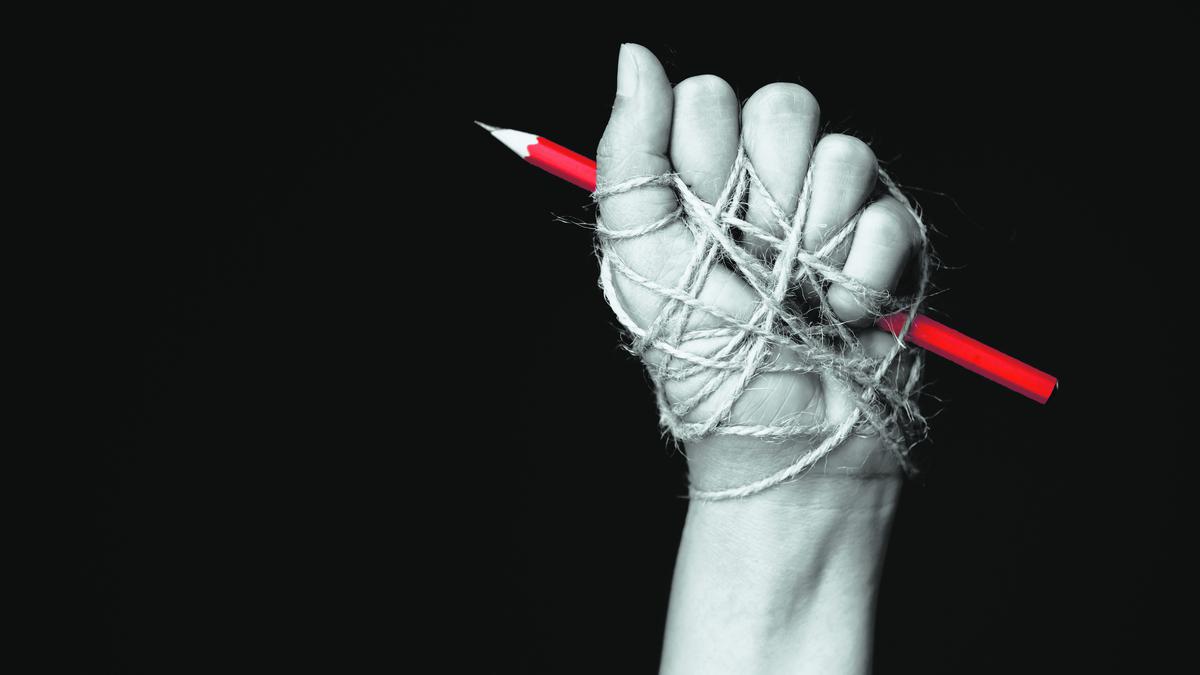
Every year on May 3, politicians and media executives release high-minded statements about truth, democracy, and courage. They celebrate World Press Freedom Day with predictable rituals. But if you look behind the press releases, the reality is grim. Journalists are targeted, independent outlets are dying, and corporate giants control the flow of information.
To understand how we got here, we have to look back to a dusty seminar in Namibia in 1991. That was where the Windhoek Declaration was born. For an alternative look, check out: this related article.
It wasn't a product of Western academics or United Nations bureaucrats lecturing the global South. It was written by African journalists who had survived prison, censorship, and state violence. They wanted to define what a free press actually meant.
The document they drafted didn't just change Africa. It changed the world. Yet today, the core ideas of that landmark text are under fire from new directions. The state censors are still there, but now they have algorithms, corporate monopolies, and digital spyware on their side. Further coverage regarding this has been shared by Wikipedia.
If we want to save independent journalism, we need to stop treating May 3 as a day of empty celebrations. We need to treat it as a call to action.
The Urgent History Behind World Press Freedom Day
The path to World Press Freedom Day began in a moment of historic transition. In 1991, the Cold War was ending. Dictatorships across Africa and Europe were crumbling. Namibia had just gained independence from South Africa’s apartheid regime.
Against this backdrop, UNESCO organized a seminar in Windhoek called "Promoting an Independent and Pluralistic African Press".
It wasn't a peaceful academic debate. Many of the 60-odd journalists in the room had scars. Some had run underground newspapers. Others had been jailed by their own governments. They knew that a state-run newspaper was nothing more than a megaphone for the ruling elite.
On May 3, 1991, they adopted the Windhoek Declaration. It was a loud, uncompromising demand for media freedom. Later that year, UNESCO's General Conference endorsed the text. By December 1993, the United Nations General Assembly officially declared May 3 as World Press Freedom Day to honor the anniversary of the Windhoek meeting.
The declaration wasn't just a list of complaints. It was a philosophy. It argued that you cannot have a working democracy without a free press. It sounds obvious now, but in 1991, it was a direct challenge to the authoritarian regimes that ruled much of the globe.
What the Windhoek Declaration Actually Demanded
The writers of the declaration were practical professionals. They knew that vague promises of "free speech" in a constitution were useless if the government controlled all the paper mills or printing presses.
The document focused on two key concepts: independence and pluralism.
Independence
An independent press must be free from government, political, or economic control. The declaration specifically warned against state monopolies over the infrastructure of journalism. If a government owns the only printing press in the country, it controls the news, even if it claims to allow free speech. Independence also means that journalists must have the right to form their own trade unions and professional associations to protect themselves.
Pluralism
A pluralistic press means the end of monopolies of any kind. It requires the existence of many different news outlets reflecting the widest possible range of opinion within a community. True pluralism prevents a single wealthy family or a single state entity from dominating the conversation.
The declaration also made immediate, concrete demands. It called on African governments that had jailed journalists to release them at once. It demanded that exiled journalists be allowed to return home. It called for the removal of economic barriers like high tariffs on newsprint, printing equipment, and typing machines.
These were not abstract theories. They were the practical tools needed to build a free press from the ground up.
The Bitter Battle Over Who Controls the News
To understand why the Windhoek Declaration was so radical, you have to understand what came before it.
During the 1970s and 1980s, UNESCO was the battleground for a fierce debate over the "New World Information and Communication Order," or NWICO. Developing nations argued that global news was dominated by a handful of Western news agencies like Reuters and the Associated Press. They claimed this led to a biased, neo-colonial view of the world.
Their solution, however, was dangerous.
They proposed that governments should have more control over the flow of information to "balance" the news. Authoritarian regimes loved this idea. They used it as a cover to shut down critical voices, license journalists, and build state-run media empires. The debate grew so toxic that the United States and the United Kingdom actually withdrew from UNESCO in protest during the mid-1980s.
Windhoek changed everything.
It was a declaration by journalists from the developing world rejecting state control. They basically said: "We do not want our governments to protect us from Western media by controlling what we can print". They demanded a free market of ideas.
This historic shift allowed UNESCO to move past the Cold War battles and adopt a new strategy that emphasized the free flow of ideas by word and image. It was a massive win for independent journalism.
How Todays Tech Threatens the 1991 Dream
The journalists in 1991 were worried about physical printing presses and heavy-handed government censors. They couldn't have predicted the rise of the internet, social media, and generative artificial intelligence.
Today, the threats have shifted from physical violence to digital manipulation, though physical danger remains terrifyingly high.
Governments don't always need to shut down printing presses anymore. They can simply deploy spyware like Pegasus to monitor a journalist’s every move, track their sources, and read their encrypted messages. This digital surveillance creates a chilling effect that kills investigative reporting before it even starts.
At the same time, the digital environment is flooded with state-sponsored disinformation. Censors no longer just block information; they drown out the truth with a wave of fake news, bots, and coordinated harassment campaigns. Female journalists, in particular, face horrifying levels of online abuse designed to scare them into silence.
The economic foundations of journalism have also collapsed. In 1991, newspapers relied on advertising and subscriptions to survive. Today, tech giants capture the vast majority of digital ad revenue, leaving local newsrooms starved of resources. When local papers close, communities lose their watchdogs. Corruption thrives in the dark.
To address these new realities, media advocates drafted the Windhoek+30 Declaration in 2021. This updated document calls on governments to protect access to information, treat information as a public good, and force digital platforms to be transparent about their algorithms. It’s a necessary update, but the fight is harder than ever.
Why Corporate Monopolies Are Just as Dangerous as Government Censors
We often talk about press freedom as a battle between brave journalists and corrupt politicians. That’s a convenient narrative, but it ignores the corporate threat.
In many countries, a few billionaires or massive conglomerates own almost all major news outlets.
This corporate concentration of media ownership is a direct violation of the pluralism demanded by the Windhoek Declaration. When a handful of executives decide what gets reported, they can easily kill stories that hurt their business interests. They don't need a government censor to tell them what to do; they censor themselves to protect their profits.
This corporate control also leads to a homogenization of news. Instead of diverse local reporting, we get sensationalized national stories designed to drive clicks and outrage.
True press freedom requires independence from economic control, not just political control. If you only rely on media outlets owned by tech billionaires or corporate conglomerates, you are not getting the full picture. You are getting a curated version of reality designed to keep you scrolling.
Actionable Steps to Protect Independent Journalism Today
We can't just look back at 1991 and feel nostalgic. We have to act. If you care about democracy, you have to support the people who keep it alive. Here is how you can make a difference right now.
- Pay for your news. If you get your news for free, you are the product. Support independent, local news outlets by buying a subscription or donating to their reporting funds.
- Use encrypted communication tools. If you are a source or a journalist, protect yourself. Use Signal for messages and secure drop boxes for documents. Treat your digital security with the same seriousness as your physical security.
- Support non-profit media models. The commercial model for journalism is broken. We need to fund public-interest journalism through non-profit foundations, community donations, and public funding models that are completely insulated from political interference.
- Demand algorithmic transparency. Write to your representatives and demand laws that force tech giants to reveal how their algorithms prioritize information. We must stop the spread of outrage-driven disinformation.
- Protect local journalists. The vast majority of journalists killed or imprisoned around the world are not international correspondents. They are local reporters covering municipal corruption, environmental crimes, or local gangs. Support groups like the Committee to Protect Journalists and Reporters Without Borders who provide legal and financial aid to these local reporters.
The Windhoek Declaration was a reminder that freedom is never given; it must be taken. It was written by people who risked everything to write the truth. In 2026, that responsibility falls on all of us. Stop taking your news for granted. Support the people who write it.