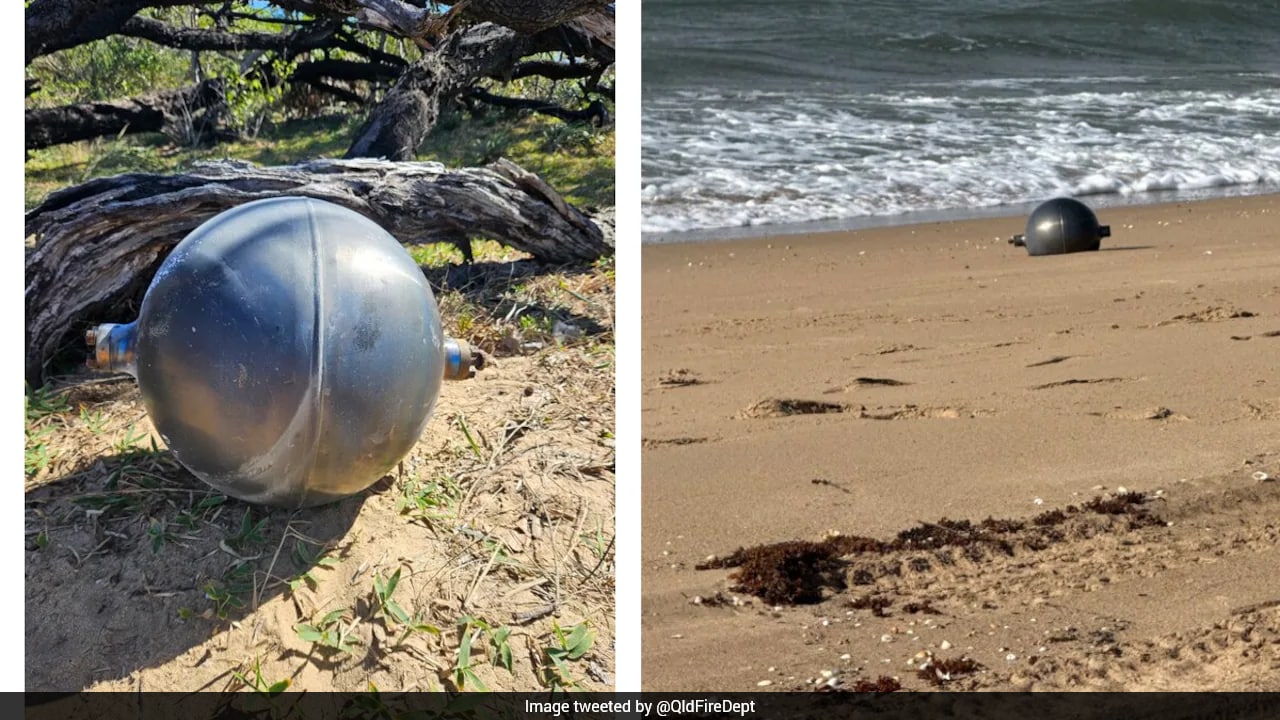
A quiet weekend at Forrest Beach in North Queensland completely flipped on its head when six metallic, highly polished spheres rolled out of the surf and onto the sand. Locals didn't know what to make of them. They looked futuristic, perfectly round, and incredibly out of place against the backdrop of tropical waves and regular driftwood.
The mystery didn't last long, but the tension definitely spiked. Within hours, emergency crews scrambled to the scene wearing heavy hazmat suits, police threw up a strict 50-meter exclusion zone, and the Australian Space Agency stepped in to take control of the situation.
These objects are what space experts call space balls. They aren't alien technology, and they aren't standard marine debris. The Australian Space Agency confirmed that these six spheres are almost certainly pressure vessels from a foreign rocket body that recently fell back to Earth from orbit. While they might look like the ultimate beachcombing trophy, they present serious chemical risks that caused authorities to pack them away in specialized hazardous material drums.
What Exactly Are These Mysterious Silver Spheres
When a massive rocket blasts off to carry a satellite into space, it doesn't stay in one piece. Rockets are built in stages. Once a stage burns through its fuel, the rocket drops it to shed weight. Most of these components are designed to drop over the ocean or burn up completely when they slam back into the atmosphere at thousands of miles per hour.
Most parts do burn up. The intense friction generated by atmospheric re-entry creates temperatures hot enough to vaporize heavy metals, turning aluminum structures into ash long before they hit the ground. Titanium is a completely different story.
These space balls are actually pressurized tanks used within a rocket's fuel system. Engineers build them out of high-grade titanium alloys because these materials possess an incredibly high melting point and can withstand immense internal pressures. Inside the rocket, these spheres hold helium or nitrogen gas at extreme pressures to push liquid propellants into the main engines.
Because titanium resists heat so well, these tanks routinely survive the fiery plunge back to Earth completely intact. When the rest of the rocket stage disintegrates into glowing sparks, these tough spheres break free and plunge into the ocean. Ocean currents then do the rest of the work, rolling them onto shores like the coast of Queensland.
The Toxic Secret Inside the Titanium Shell
You might wonder why a titanium ball warrants a full emergency response with hazmat teams and strict public exclusion zones. The issue isn't the metal shell itself. The real danger hides inside the residual contents of the tanks.
Spacecraft and upper rocket stages frequently rely on a highly reactive, incredibly volatile chemical propellant known as hydrazine. Rocket designers love hydrazine because it is a hypergolic fuel, meaning it ignites instantly the moment it comes into contact with an oxidizer. You don't need a complex ignition spark system in the vacuum of space, which makes the rocket highly reliable.
The downside is that hydrazine is incredibly toxic to humans and the environment.
- Breathing in even tiny amounts of hydrazine vapor causes immediate irritation to the nose, throat, and lungs, leading to severe coughing, dizziness, and nausea.
- Direct skin contact with the liquid can cause severe chemical burns and systemic poisoning, as the chemical absorbs rapidly through human tissue.
- Long-term exposure or acute high-dose inhalation can cause permanent damage to the liver, kidneys, and central nervous system.
- The chemical is a known carcinogen, meaning it carries a massive risk of causing cancer down the line.
When these fuel pressure vessels spend months or years floating in the ocean or suddenly wash up on a beach, they can develop micro-fractures. If a curious beachgoer picks up one of these objects, shakes it, or tries to open a valve, they risk releasing trapped hydrazine gas or liquid directly into their face. That is exactly why the Queensland Fire Department worked overnight to isolate the objects, sealing five of them into secure drums and carefully rendering the sixth safe before transport.
Australia Has a Weird History of Catching Falling Rockets
This strange incident in North Queensland isn't an isolated event. Australia occupies a vast geographic footprint, and its long, sparsely populated coastlines make it a frequent landing pad for orbital debris falling out of control.
Just a few years ago, a massive, charred copper-colored dome washed ashore on a remote beach near Green Head in Western Australia. The object sparked massive internet speculation before the Indian Space Research Organisation confirmed the item belonged to one of their Polar Satellite Launch Vehicle rockets. It had survived launch and re-entry before drifting thousands of miles across the Indian Ocean to rest on Australian sand.
The most famous incident happened decades ago in 1979. NASA's massive Skylab space station experienced an uncontrolled re-entry, scattering large chunks of heavy debris across the southeastern goldfields of Western Australia and the coastal town of Esperance. The local shire council famously issued NASA a $400 fine for littering. NASA ignored the ticket, but a US radio host eventually raised the funds from listeners and paid the fine on behalf of the space agency thirty years later.
Similar spherical tanks have turned up globally, including a famous case in 2011 where an identical metallic sphere dropped from the sky into remote grasslands in Namibia. The physics remain identical every time. The fragile parts of the spacecraft burn away, leaving the indestructible titanium fuel spheres to fall to earth intact.
Who Pays for the Cleanup When Space Trash Hits the Sand
The legal reality of space junk is governed by international law. Under the 1967 United Nations Outer Space Treaty and the subsequent 1972 Space Liability Convention, the country that launches an object into space retains permanent ownership and absolute liability for it forever.
If a piece of space debris falls from orbit and damages a house, destroys property, or hurts a person, the launching nation is legally required to pay full compensation to the victim nation. In this specific case in Queensland, no property was damaged and nobody got hurt. The financial costs are limited to the emergency response, hazardous material disposal, and long-term storage.
The Australian Space Agency is actively coordinating with international space organizations to trace orbital tracking data. By cross-referencing the exact day and time these objects likely re-entered the atmosphere with known orbital decay paths, experts can pinpoint the exact country and specific rocket launch responsible for the debris. Once identified, the launching country will face formal diplomatic channels to arrange the transfer or disposal of their hardware.
Space junk is becoming a far more frequent problem because human orbital activity has exploded. We have launched more satellites and rockets in the last five years than during the entire previous history of space exploration. With thousands of new satellites entering low Earth orbit, the frequency of uncontrolled re-entries will naturally climb, making beach discoveries like this a regular part of coastal life.
What You Should Do If You Spot Space Debris on the Shore
Finding a piece of space history on your morning walk sounds exciting, but treating these objects like ordinary sea trash can end terribly. If you come across a strange, metallic sphere or any highly engineered, burnt piece of hardware on the beach, you need to follow a strict safety protocol.
- Back away immediately. Do not approach the object to take close-up photos or selfies. Maintain a distance of at least 50 meters to ensure you stay out of the plume zone if a pressurized valve decides to vent toxic gas.
- Never touch or move the item. Do not attempt to roll the sphere out of the water line or drag it up the beach. Internal pressures can remain incredibly high even after years at sea, and physical agitation can cause structural failure.
- Call emergency services. In Australia, dial Triple Zero (000) immediately. Explain to the operator that you have located suspected space debris or a highly unusual hazardous object on the shoreline.
- Report the coordinates. Note the exact location using your phone’s GPS or nearby landmarks so emergency services and scientific teams can locate the object quickly before the tide changes and drags it back out to sea.