Washington loves a political fight over stone and bronze. Walk down any street in the capital and you are surrounded by statues of men who shaped America, for better or worse. But a recent installation at Freedom Plaza is turning heads not just for who it represents, but for the staggering bill left on the taxpayer’s doorstep.
The Trump administration quietly spent $527,226 of your money on a single pedestal. It holds a statue that sat in a storage warehouse for six years after being pulled down during racial justice protests.
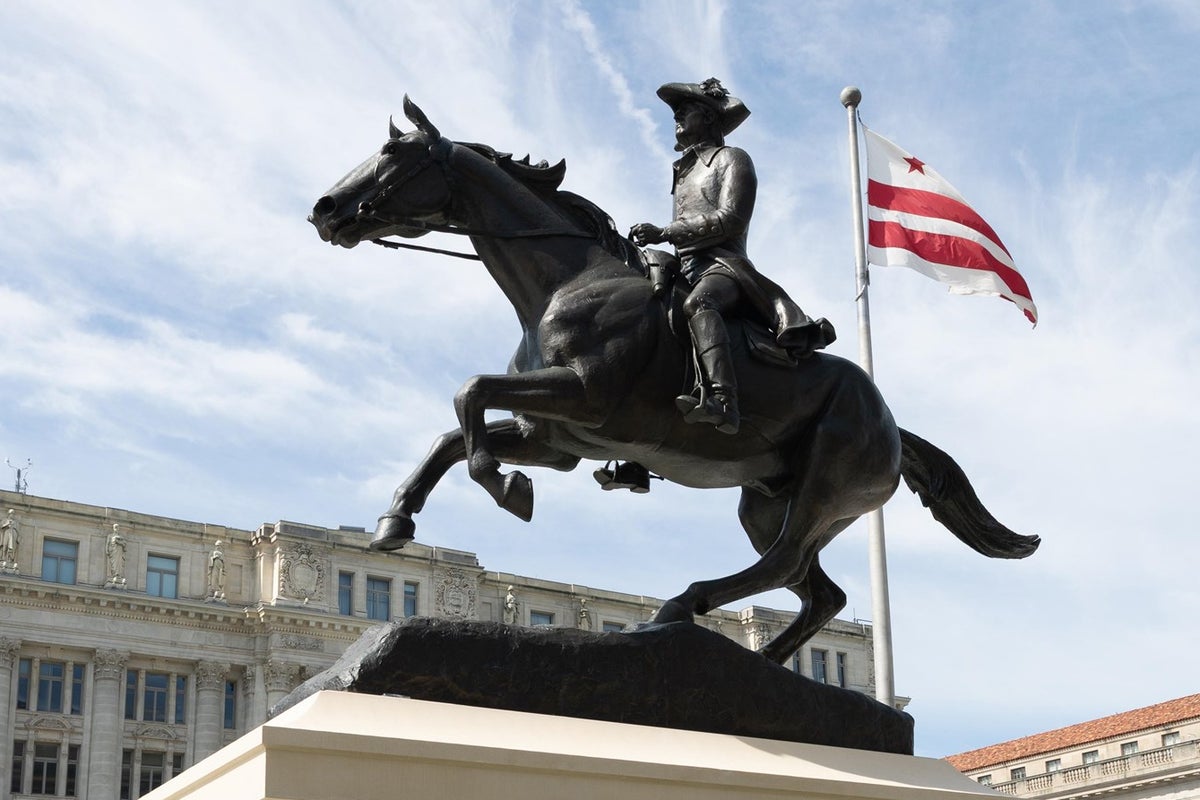
The monument honors Caesar Rodney. He was a Delaware politician who famously rode through a thunderstorm in 1776 to cast a deciding vote for American independence. He also enslaved more than 200 human beings on his plantation.
Spending over half a million dollars to mount a temporary statue in a rush job is wild. It shows a massive disconnect between federal budgeting and reality. It reveals how far the government will go to fight a culture war on a tight deadline.
A Rush Job with a Massive Surcharge
When the National Park Service decided to bring the Caesar Rodney monument to Washington, they had a tight schedule. The administration wanted the plaza ready for the 250th anniversary of the United States. Because of that timeline, the government essentially threw open its wallet to contractors.
Internal documents obtained by investigative reporters show the original estimate for building the statue's base was $286,549. That is still a lot of money for a concrete block, but federal construction is pricey. What happened next is a classic case of bureaucratic incompetence mixed with political pressure.
The Park Service skipped deep negotiations because they ran out of time. The project manager noted that higher pricing was justified because the design had to be rushed. The agency failed to include basic steps like geotechnical investigations in its original budget. When the bills came due, the cost skyrocketed to nearly double the initial projection.
The actual work to install the statue took less than 24 hours. Think about that for a second. The federal government spent more than $500,000 on a rush fee for a project that took one day to complete.
The Journey from Delaware to Freedom Plaza
This is not a new monument. The bronze equestrian statue was sculpted by James Edward Kelly and stood in Wilmington, Delaware, for nearly a century.
In June 2020, city officials in Wilmington removed the statue alongside one of Christopher Columbus. Protesters had threatened to topple it during the nationwide protests following the murder of George Floyd. For years, the city kept the bronze rider locked away in a warehouse. Local leaders promised a community dialogue about what to do with it, but that conversation never really happened.
Instead, local Republican lawmakers in Delaware began lobbying to find the statue a new home. State Senator Eric Buckson pushed for its return, arguing that Rodney was a vital figure who deserved a public spotlight. Buckson admitted Rodney owned slaves but argued that the public could handle both truths at once.
The White House did not call Wilmington directly. The National Park Service did the legwork, offering to take the statue off Delaware's hands and bring it to Washington. It now stands wrapped in a black metal fence, adorned with banners for the administration's "Freedom 250" program.
Rewriting History or Balancing It
The administration claims this installation is part of a broader push to protect American heritage from what it calls anti-American revisionism. They want to celebrate the founders without qualifiers. If you look at the official White House documentation or the "Founders Museum" website, you will not find a single mention of the 200 people Rodney held in bondage. The official narrative simply notes that he inherited wealth and used it for the good of the new nation.
This is part of a broader pattern. Across national parks and historic landmarks, federal officials have altered or removed exhibits that deal with the darker chapters of the American past.
Earlier this year, federal workers used crowbars to rip out an exhibit in Philadelphia. That display detailed the lives of nine African Americans enslaved by George Washington at the nation’s first executive mansion. The city of Philadelphia sued the federal government over the removal. A federal judge stepped in, citing George Orwell's classic novel 1984, and ordered the administration to put the exhibit back exactly as it was.
The judge noted that the government cannot simply erase historical facts to match a preferred political story. Yet, while the administration fought in court to keep slavery exhibits hidden in Philadelphia, it was fast-tracking half a million dollars to elevate an enslaver’s likeness in Washington.
The Problem with Temporary Political Stunners
The Caesar Rodney statue is only scheduled to sit in Freedom Plaza for six months. Spending over half a million dollars for a short-term display is an absurd waste of resources.
Watchdog groups are calling foul. Representatives from groups like the Project on Government Oversight point out that urgency contract modifications are meant for emergencies. You use them when a delay would cause actual damage or danger to the government. A holiday celebration or an anniversary deadline does not meet that standard.
When you rush a construction contract, you get fleeced. Contractors know the government is desperate to meet a political deadline, so they charge top dollar. The taxpayer gets stuck with the premium price tag.
What Taxpayers Should Do Next
If you want to see where your money went, you can walk right up to Freedom Plaza in downtown Washington. Look past the security fencing and the glossy government banners. You will see a piece of bronze that cost a fortune to move and mount.
Do not let these spending sprees pass without scrutiny. Keep an eye on local and federal historical preservation budgets. Demand transparency from the National Park Service on how fee dollars are allocated. When agencies claim they lack funds for basic park maintenance or trail upkeep, remind them of the $527,226 spent on a single temporary pedestal. Look up the public dockets for the ongoing legal battles over historical exhibits in Philadelphia and Washington. Vote for representatives who treat public funds like real money, not a political piggy bank.