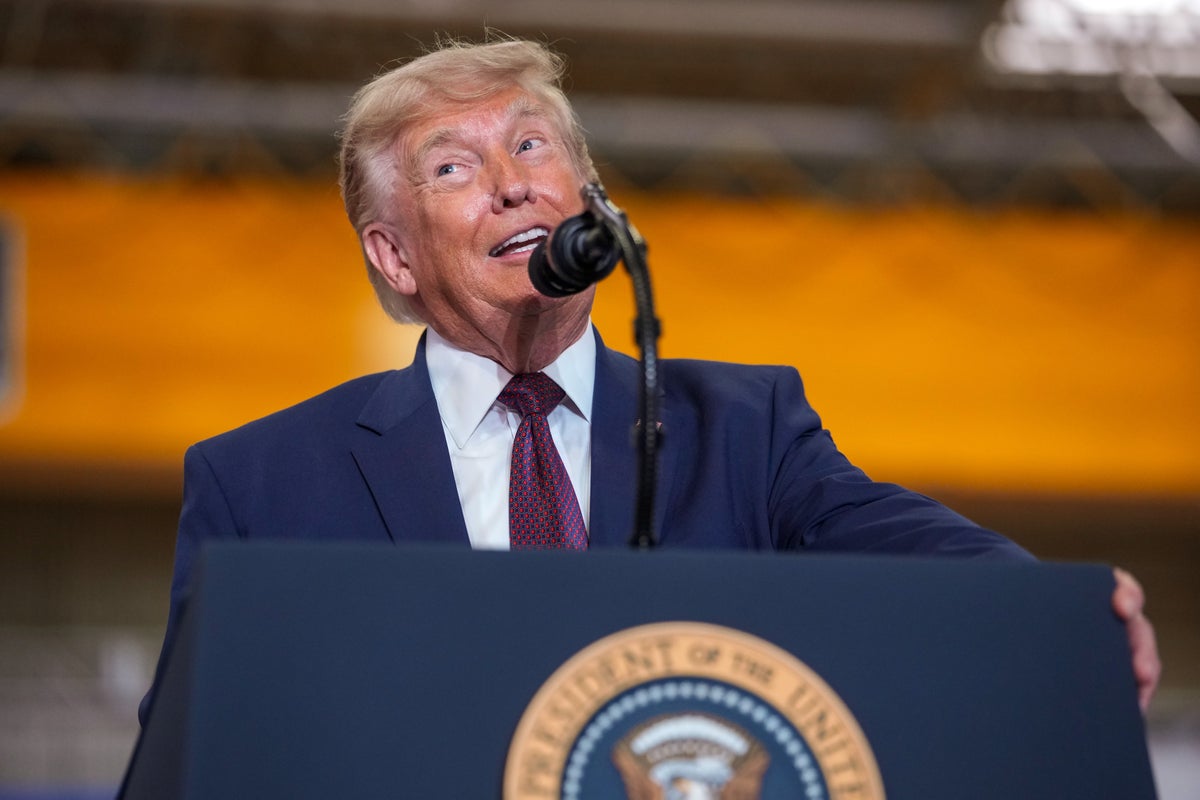
You cannot tweet gas prices down. Someone should tell Donald Trump.
The president took to Truth Social in the middle of the night to vent his frustration. He targeted big oil companies. He claimed they are gouging customers because prices at the pump are not falling as fast as crude oil prices. He even claimed he ordered the Justice Department to investigate.
This public meltdown follows months of big promises. Trump told voters that gas would hit two dollars a gallon pretty soon. He promised prices would drop like a rock the second his war with Iran wrapped up. Well, a tentative peace deal was signed last week. The war is winding down. Crude oil prices are sliding. Yet, the national average for a gallon of regular gas is still sitting at $3.93, according to AAA data.
Americans are angry about inflation. Trump is furious because his promises are colliding with basic economics. But shouting at oil executives or threatening federal investigations will not change how gas stations price their fuel. The reality of energy markets is complicated, slow, and completely indifferent to political timelines.
The Myth of the Immediate Gas Discount
When the military campaign in Iran launched in late February, energy markets went into a predictable tailspin. The closure of the vital Strait of Hormuz cut off a massive chunk of the global oil supply. Tanks and vessels faced aggression from the Iranian missile arsenal. Crude prices soared past one hundred dollars a barrel. Naturally, gas prices at home skyrocketed from their pre-war average of around $3. Drivers felt the squeeze immediately.
Last week, the U.S. and Iran signed a 14-point memorandum of understanding. It is a fragile truce setting out broad agreements in principle, kicking off 60 days of intensive talks. Crude prices began to fall on the news. Trump expected an immediate, matching drop at local gas stations. When that did not happen, the late-night posting began.
Politicians love to treat gas prices as a simple thermostat. They think you can just turn the dial down whenever an election approaches. It does not work that way. A drop in crude oil prices on the global market does not instantly translate into cheaper fuel at your local corner station. The fuel in those underground tanks right now was bought weeks ago when wholesale prices were much higher. Station owners are not going to sell that fuel at a loss just to make a political promise look good.
Experts are already warning that a full recovery will take time. Rob Smith, an energy analyst with S&P Global Energy, pointed out that even with a lasting end to the conflict, it will take several months before traffic through the Strait of Hormuz returns to its pre-war level. Patrick De Haan, head of petroleum analysis at GasBuddy, estimates that Americans might not see a true return to pre-war gas prices until early or mid-2027. Trump's timeline is completely out of sync with industrial reality.
Understanding Rockets and Feathers in the Energy Market
Economists have a specific phrase for what Trump is complaining about. They call it the rockets and feathers phenomenon. The Federal Reserve Bank of St. Louis has documented this for decades.
When oil prices spike, gas prices go up like a rocket. When oil prices fall, gas prices drift down like a feather. This isn't a vast corporate conspiracy. It is basic human behavior and retail survival.
Think about how a local gas station operates. Most stations are independently owned franchises, not corporate behemoths. They make razor-thin margins on fuel, usually just a few cents per gallon after credit card fees and taxes. They make their real money on coffee, cigarettes, and snacks inside the store.
When wholesale oil prices skyrocket, the station owner knows their next delivery is going to cost a fortune. If they do not raise prices immediately, they won't have enough cash to buy the next truckload of fuel. They raise prices fast out of sheer necessity to replace their inventory.
When wholesale prices drop, the opposite happens. The owner finally has a chance to recoup the losses they took when prices were rising. They hold their retail price steady for a few extra days to make up for lost ground. They also look at the station across the street. If the competitor isn't lowering prices yet, no one has an incentive to drop theirs first. It takes time for local competition to drag the price down. Trump calls this gouging, but economists call it standard margin recovery.
Why a Justice Department Investigation Will Not Change Anything
Trump announced he told the Department of Justice to look into price gouging. This is a classic political stunt. Almost every president faces high fuel prices at some point, and almost every president tries this exact move.
George W. Bush did it. Barack Obama did it. Joe Biden did it. Every single time, the resulting investigation finds the same thing. The market is working based on supply, demand, and refining capacity. True, illegal price-fixing can happen, but it requires actual collusion—secret meetings where executives explicitly agree to set prices. Holding onto retail margins during a market downturn is perfectly legal. It is just capitalism.
A federal investigation takes months or years. It requires subpoenas, depositions, and endless data analysis. It does not produce a sudden discount at the pump by Friday afternoon. Trump's threat is meant to show anxious voters that he is fighting for them before the midterm elections, but it has zero regulatory teeth. The DOJ cannot pass a law forcing an independent business owner in Pennsylvania or Ohio to lower their prices overnight.
The Real Bottleneck is Refining, Not Just Crude Oil
Even if crude oil sat at fifty dollars a barrel tomorrow, you still might not see two-dollar gas. Trump's rhetoric focuses entirely on the price of raw crude. He ignores the actual process that turns black sludge into something you can put in your SUV.
The United States has a massive refining bottleneck. We have not built a major new refinery with significant capacity in decades. The existing plants are running at near-maximum capacity constantly. When a war occurs, or when sanctions shift trade routes, refineries have to change the types of crude they process. This complicates operations and raises costs.
Refineries also change their fuel mixtures depending on the season. Summer blend gasoline requires more complex processing to prevent evaporation in hot weather. This adds extra cents to every gallon. The peace deal with Iran might lower the cost of raw oil, but it does not magically expand American refining capacity overnight. Until refining capacity grows or demand drops significantly, fuel prices will stay structurally higher than Trump wants to admit.
What it Actually Takes to Lower Fuel Costs
If political pressure and midnight social media posts cannot lower gas prices, what can? True relief comes down to hard economic realities that take months or years to resolve.
First, global supply chains must stabilize completely. The truce with Iran is just a framework. Shipping companies are still terrified of lingering threats in the Persian Gulf. Insurance rates for oil tankers traveling through the Strait of Hormuz remain incredibly high. Until those tankers can sail safely without wartime insurance premiums, shipping costs will remain inflated.
Second, the market needs certainty. Energy companies invest billions of dollars in long-term projects. They do not increase production based on a volatile administration's daily mood swings. They need to know that policy will remain stable before they spend money drilling new wells or expanding refineries.
Actionable Steps to Protect Your Wallet Right Now
Since you cannot count on Washington to bring back two-dollar gas anytime soon, you have to take control of your own fuel expenses. You can implement several practical strategies immediately to blunt the impact of high prices.
Change how you buy your fuel. Do not just pull into the first station you see when your low-fuel light comes on. Use tracking apps to compare local prices across a five-mile radius. The price difference between a station right off the highway and one three blocks away can be substantial.
Reconsider how you pay. Many gas stations offer a discount of ten to fifteen cents per gallon if you pay with cash or use their dedicated mobile app instead of a traditional credit card. If you fill up a fifteen-gallon tank twice a month, those small discounts add up to real money over a year.
Audit your driving habits. It sounds basic, but aggressive driving destroys fuel economy. Hard acceleration and heavy braking burn through gas significantly faster than smooth, steady driving. Keep your tires properly inflated. Extra rolling resistance from underinflated tires forces your engine to work harder and consume more fuel.
Plan your errands efficiently. Combine multiple short trips into one single run. A cold engine consumes more fuel during the first few miles of a trip than a warm engine does. Grouping your tasks saves both time and fuel.
The era of cheap, predictable energy is under severe stress. No matter what a politician promises in a late-night post, the global energy market moves at its own speed. Relying on political rhetoric to lower your cost of living is a losing strategy. Focus on the variables you can actually control.