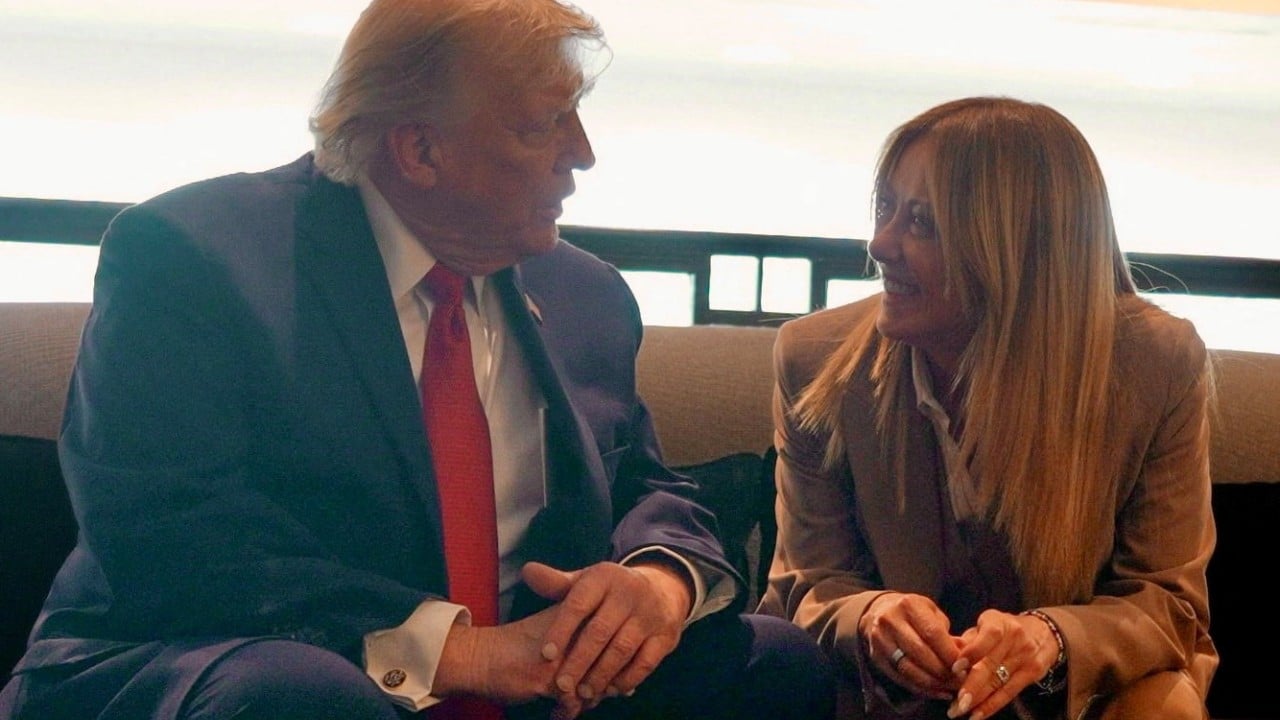
International diplomacy usually dies behind closed doors, wrapped in polite legalese. Not this time. Right now, a massive transatlantic blowout is happening in plain sight because Donald Trump claimed Italian Prime Minister Giorgia Meloni begged him for a photo.
Italy isn't taking the slight lying down. In a fierce display of national pride, Italian Foreign Minister Antonio Tajani completely scrapped his high-profile diplomatic trip to Washington and Miami. He called Trump's words serious and offensive to the entire country. Meloni herself dropped a blistering video response on social media, telling the world that neither she nor Italy ever beg.
This isn't just a petty playground squabble over a camera flash. It's the spectacular public implosion of a political alliance that once positioned Meloni as Trump’s primary bridge to Europe.
The Photo Claim That Flipped the Table
The spark that lit this diplomatic bonfire came from an interview broadcast on Italy's La7 network. Speaking about his interactions with Meloni at the G7 summit in Évian-les-Bains, France, Trump decided to boast about his leverage.
According to the network's translation, Trump claimed that Meloni wanted a picture with him so badly that she essentially pleaded for it. He said he didn't have to do it, but agreed because he felt sorry for her.
It took less than a morning for the Italian government to close ranks and hit back. Meloni’s recorded video rebuttal was swift and unusually blunt for a Western head of state addressing the American president.
"Donald Trump's statements are completely fabricated. I am frankly astonished. I don't know why the president of the United States behaves this way toward his own allies. After all, this isn't the first time this has happened."
Meloni didn't stop at defending her dignity. She went straight for Trump's geopolitical track record, pointing out a massive contradiction in how he handles global power dynamics. She noted it’s a shame he doesn't show the same aggressive resolve toward actual enemies of the West, accusing him of being much more accommodating to hostile foreign dictators.
The Real Cost of Canceling Tajani’s US Trip
When a foreign minister pulls out of a scheduled international visit at the eleventh hour, it signals a major institutional fracture. Tajani wasn't just heading to Washington for a casual dinner. He was locked in to join US Secretary of State Marco Rubio at a major business, investment, and scientific forum in Miami.
The agenda was packed with critical items:
- Securing supply chains for critical minerals.
- Solidifying economic security agreements between Rome and Washington.
- Coordinating joint Western strategies on trade and defense.
By walking away, Italy is proving it values sovereign respect over economic proximity. Tajani made his stance clear on social media, stating that Trump's words offended the honor of the entire Italian nation.
Even Italy's broader political landscape—historically fractured and argumentative—united behind the prime minister. Right-wing allies like Matteo Salvini declared that an attack on Meloni is an attack on all of Italy. Meanwhile, left-wing opposition figures like Giuseppe Conte agreed that the country shouldn't endure public humiliation, even if they blamed Meloni for getting too close to the MAGA movement in the first place.
The Deeper Fractures Behind the Drama
To understand why a comment about a photo caused an explosion of this scale, you have to look past the G7 couch where Trump and Meloni were recently filmed chatting. This relationship has been rotting from the inside for months.
When Trump won his second mandate, Meloni was riding high. She was the only European Union head of state to attend his 2025 inauguration. They shared common ground on strict immigration policies and conservative social values.
Then reality hit. The breaking point wasn't a photo; it was the US-Israel war in Iran.
Meloni explicitly condemned the conflict as illegal, a stance that drew immense public backing in Europe where soaring fuel prices and economic fallout from the war hit households hard. When Pope Leo XIV publicly opposed the conflict, Trump lashed out at the pontiff. Meloni chose to stand with the Vatican and European consensus rather than rubber-stamp Washington's military campaign.
Trump didn't forget the defiance. In April, he used an interview with Corriere della Sera to attack Meloni, claiming she lacked courage. Meloni stayed quiet then to preserve the alliance. This week, she clearly decided she'd had enough of the public broadsides.
What This Means for Transatlantic Politics
The fallout from this spat reaches far beyond Rome. Meloni wanted to act as the essential translator between Brussels and a volatile White House. That strategy is now in tatters.
Italian Defense Minister Guido Crosetto summed up the frustration by noting that these kinds of rhetorical playground games do zero good for the US, Italy, or the broader Western alliance. Justice Minister Carlo Nordio went even further, invoking the thousands of American soldiers buried in Italy from World War II, stating their sacrifice didn't deserve such a painful blow to fraternal ties.
For Meloni, however, standing up to Trump might actually be a winning domestic strategy. Political analysts in Rome point out that public opinion toward the American administration has chilled significantly due to global economic instability. By drawing a hard line, Meloni sheds the accusation that she's merely a European vassal for Washington.
Next Steps for the US-Italy Alliance
Don't expect an immediate apology from the White House; that's simply not how this administration operates. If you're tracking how this diplomatic rift heals, watch these specific indicators over the next few weeks:
- The Rubio-Tajani Channel: Look for whether Secretary of State Marco Rubio attempts a quiet, backdoor cleanup with Tajani to reschedule the critical minerals and economic security talks without a formal White House statement.
- G7 Working Groups: Watch the lower-level diplomatic staff. If joint bilateral committees on trade and defense security start stalling or delaying meetings, the damage has moved from rhetorical to structural.
- European Alignment: See if other European leaders bolster Meloni's position. If France or Germany echo her complaints about Washington treating allies worse than adversaries, we are looking at a much wider Western European pivot away from US coordination.

,webp/026/046/677/v2/2560x1440.208.webp)