Ankara just dropped a financial bombshell at the 2026 NATO summit. President Recep Tayyip Erdogan announced that Türkiye is injecting an extra 24 billion dollars into its domestic air defense project, known as the Steel Dome (Çelik Kubbe). If you think this is just another routine military upgrade, you are missing the bigger picture. This is a massive geopolitical gamble. Türkiye is effectively building an iron-clad insurance policy against modern airborne threats while sending a loud, clear message to its Western allies.
For years, Ankara found itself caught in a diplomatic squeeze. They wanted the American Patriot system, but political friction stalled the deal. They bought Russian S-400 batteries instead, which got them booted from the F-35 fighter jet program and hit with US sanctions. Now, the Turkish government is done waiting on foreign suppliers. They are funding their own security umbrella to protect their airspace from everything like low-altitude kamikaze drones to high-altitude ballistic missiles.
The massive cash injection shows a major shift in how middle-tier powers protect themselves. By pouring billions into domestic factories instead of foreign arms contracts, Türkiye is attempting to break free from Western defense supply chains entirely.
The Architecture of the Steel Dome
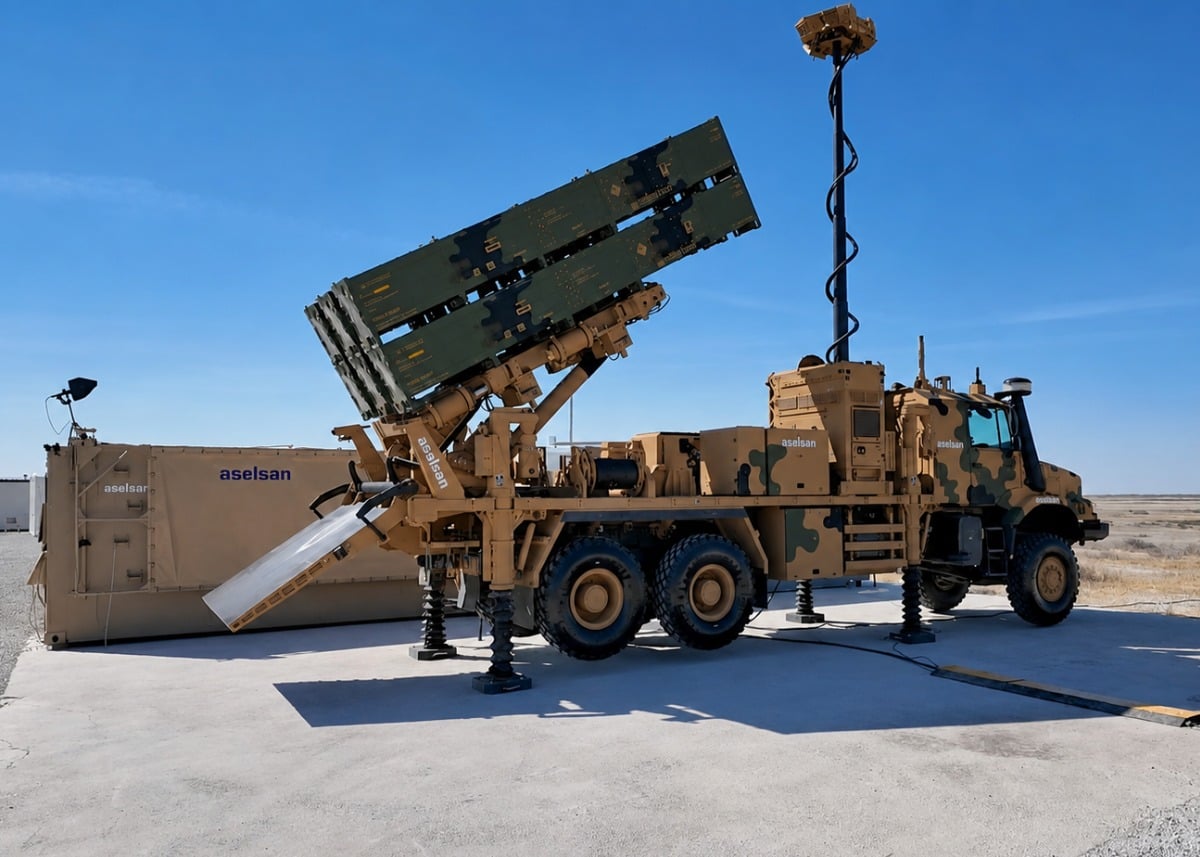
Building an effective air shield requires more than just buying a few missile launchers. It takes a deeply layered network of radars, sensors, and interceptors that can talk to each other in real time. The Steel Dome is designed to create a unified defensive network out of standalone systems built by Turkish defense giants like Aselsan and Roketsan.
The entire framework operates on a four-tiered system. At the very bottom, low-altitude defenses handle immediate, close-in threats. This is where systems like the KORKUT twin 35mm self-propelled anti-aircraft gun and the SUNGUR short-range missile system come into play. They target low-flying drones, mortars, and helicopters. Drones have completely rewritten the rules of modern combat, as seen in recent regional conflicts, making these low-altitude layers vital.
Moving up the ladder, the medium-range defense relies heavily on the HİSAR missile family. The HİSAR-A+ and HİSAR-O RF variants intercept cruise missiles, fighter jets, and air-to-surface weapons. They act as the mid-tier gatekeepers, preventing anything from slipping through to critical infrastructure.
The top layer is the SİPER system. This is Türkiye’s answer to the American Patriot and Russian S-400. The SİPER Block-1 is already capable of striking targets beyond 100 kilometers. Local engineers are actively working on Block-2 and Block-3 variants to push that range past 150 and 180 kilometers. The goal is simple. They want to intercept ballistic missiles before they even enter domestic airspace.
What ties all these layers together is an artificial intelligence-driven command and control system. Instead of individual radar units operating in silos, every sensor shares data instantly. If a radar station in the east spots an incoming cruise missile, a launcher in the central region can fire the interceptor automatically.
The NATO Summit Standoff in Ankara
Erdogan did not choose the 2026 NATO summit in Ankara by accident to announce this 24 billion dollar budget extension. He used the platform to highlight a glaring contradiction within the alliance. While Washington and Brussels constantly pressure member states to increase defense spending toward a 5% GDP target by 2030, those same capitals often block arms sales to Türkiye.
The Turkish leader openly demanded that NATO allies lift all restrictions and embargoes on defense cooperation. Ankara is tired of being kept at arm's length from European initiatives while maintaining Europe's largest standing land army.
Consider the political friction. Türkiye wants to participate in shared European security projects, yet political disagreements mean it gets frozen out. By showing up to the summit with a fully funded, multi-billion-dollar domestic missile shield project, Türkiye proved it can build its own shield. They are positioning the Steel Dome not just as a national security asset, but as an exportable package for other nations that want an alternative to American or Russian hardware.
Industrial Independence Over Foreign Imports
The true scale of this investment reflects a massive transformation of the Turkish industrial base. Decades ago, the country imported nearly all its military equipment. Today, they are among the world's top ten defense exporters. The 24 billion dollars is going straight into local engineering labs, satellite production, and domestic factories.
During the summit, details emerged about parallel investments that feed directly into the Steel Dome network. The Turkish Armed Forces are putting over 350 million dollars into low-orbit satellites and advanced military communications networks manufactured by Aselsan. This provides the early warning radar data that the missile shield needs to function. They are also backing this up with high-resolution observation satellites developed by the national institute TÜBİTAK.
This creates a self-sustaining cycle. When the state spends billions domestically, it employs thousands of local engineers, funds local research, and refines technology that can then be sold globally. Aselsan has already hinted that the Steel Dome components are fully ready for export to other allied nations.
Why Fixed Tables Miss the Real Progress
Military analysts often look for clean comparison charts to see how the Steel Dome stacks up against Israel's Iron Dome or the American Patriot system. But trying to fit this project into a perfect spreadsheet misses how fluid defense manufacturing actually is.
Instead of a static list of specifications, think of the project as an evolving ecosystem. The initial 47 critical components delivered by Aselsan are just the baseline. The real test is software integration. Merging a KORKUT anti-aircraft gun with a SİPER long-range missile requires massive data processing. The system must filter out civilian aircraft, migratory birds, and electronic clutter, then prioritize threats based on speed and trajectory.
The strategy also includes offensive ground-based precision strike systems. Türkiye teamed up with nations like France, Italy, and the UK on a joint precision strike project, while simultaneously purchasing a massive fleet of domestic ATMACA land-based cruise missiles from Roketsan. A missile shield is never purely defensive. It works best when paired with long-range strike capabilities that can neutralize an enemy's launchers before they even fire.
Navigating the Challenges Ahead
No defense program of this size is a guaranteed success. The Steel Dome faces significant headwinds, primarily economic and technical.
Türkiye's domestic economy has faced turbulent inflation and currency fluctuations over the last few years. Allocating an extra 24 billion dollars to a single defense initiative strains public finances. Critics argue that these funds could be used to stabilize domestic economic vulnerabilities.
On the technical side, building high-altitude ballistic missile interceptors is incredibly difficult. While Roketsan has mastered short and medium-range rocket tech, creating a reliable kinetic kill vehicle that can hit a hypersonic or ballistic missile in the upper atmosphere requires micro-precision electronics. Türkiye still relies on some imported microchips and high-end components. If Western allies tighten sanctions or export controls on dual-use tech, it could delay the development of SİPER Block-2 and Block-3.
What This Means for Global Defense Tracking
If you are tracking international defense policy, the takeaway here is clear. The era of total Western dominance over high-end air defense systems is fracturing.
Countries that find themselves subject to political whims from Washington or Berlin are watching Türkiye closely. If Ankara successfully integrates the Steel Dome over the next three years, they will provide a blueprint for strategic autonomy. You don't have to bow to foreign policy demands just to buy an air defense system anymore.
To stay ahead of how this affects global security markets, keep a close eye on upcoming live-fire tests of the SİPER system. Watch how Türkiye navigates its space program, specifically the low-orbit satellite launches. Those satellites will determine whether the Steel Dome actually has the early-warning capabilities required to stop next-generation missile threats. Look out for defense export contracts signed between Ankara and countries in the Middle East, Central Asia, or North Africa. Those sales will fund the next phase of this massive military expansion.