Cultural heritage sites rarely make international headline news unless explosives or politicians get involved. Both happened this week in South Korea.
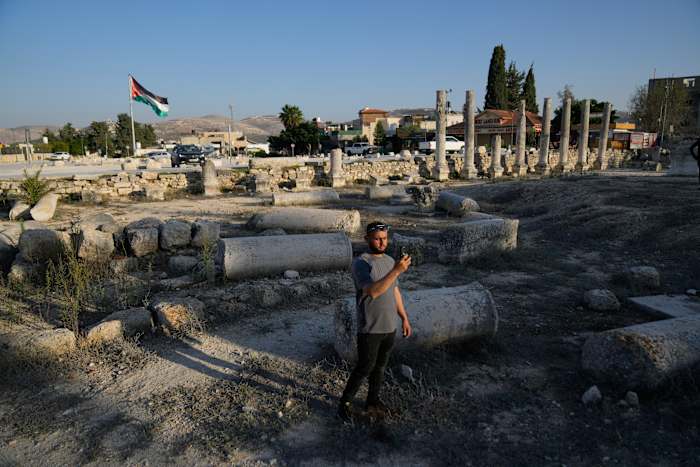
At a high-stakes gathering in Busan, the UNESCO World Heritage Committee took a definitive vote on Friday. They inscribed an ancient hilltop site in the West Bank alongside five historical castles in southern Lebanon directly onto the UNESCO World Heritage List. Because both regions are active conflict zones, the committee simultaneously placed them on the List of World Heritage in Danger.
The decision didn't happen in a vacuum. It ignited immediate diplomatic backlash. Israel's Foreign Ministry vehemently protested the designations, accusing the UN cultural body of politicizing historic preservation and ignoring security realities on the ground.
If you're trying to figure out why a handful of stone ruins in the Middle East sparked such a fierce battle thousands of miles away in South Korea, you aren't alone. Heritage preservation sounds simple on paper. In practice, it's a proxy war over identity, sovereignty, and historical narrative.
What Just Happened in Busan
The annual meeting of the UNESCO World Heritage Committee is usually a dry affair where delegates argue over buffer zones and tourist management plans. Not this time.
Under emergency voting procedures, committee members approved two major nominations submitted by Palestinian and Lebanese representatives:
- Sebastia: An ancient town about six miles northwest of Nablus in the West Bank.
- The Castles of Mount Amel: A network of five historical fortifications in southern Lebanon, including the famous Beaufort Castle.
By granting both nominations World Heritage status—and tagging them as endangered—UNESCO signaled that these sites face existential risks from military conflict, neglect, and urban pressure.
It's a bold move. It's also one that exposed deep diplomatic fault lines.
Sebastia and the Battle Over Biblical History
To understand the intense friction surrounding Sebastia, you have to look at its ground layer.
Sebastia isn't just an ordinary ruin. It's a massive archaeological sandwich spanning thousands of years. Historians identify it as ancient Samaria, which served as the capital of the biblical Kingdom of Israel in the Iron Age. Later, Herod the Great rebuilt the city on a grand scale, renaming it Sebaste to honor the Roman Emperor Augustus.
Over the centuries, Roman colonnades gave way to Byzantine churches and Islamic shrines. Christian and Muslim traditions identify Sebastia as the burial site of John the Baptist.
"Sebastia contains layers from the Iron Age, Roman, Byzantine, and Islamic periods. It is one of the most multi-layered cultural sites in the Levant." — UNESCO nomination records.
The Palestinian delegation first submitted Sebastia for inclusion back in 2012. They argued that official UN recognition was urgently needed to halt site degradation and prevent unauthorized archaeological digs or land development.
Israel saw the nomination differently. Israeli officials argued that designating Sebastia as a Palestinian heritage site erases the deep Jewish connection to ancient Samaria. The Israeli Foreign Ministry released a sharp statement calling the emergency vote a "weaponization of cultural heritage" and a political attempt to alter history.
The geography makes things even messier. Sebastia sits in an area of the West Bank where jurisdictional boundaries are fiercely contested. Access, protection duties, and excavation permits have been locked in administrative stalemate for decades.
The Mount Amel Castles and the Beaufort Castle Dispute
While the debate over Sebastia centered on ancient history, the drama surrounding southern Lebanon focused on recent warfare.
The UNESCO nomination covers five fortifications scattered across Lebanon's Mount Amel region. Together, these structures trace nearly 900 years of military engineering. They blend architectural styles from Crusader, Ayyubid, Mamluk, and local Ottoman periods.
The crown jewel—and the flashpoint—is Beaufort Castle. Perched on a high ridge overlooking the Litani River, Beaufort offers a commanding view of southern Lebanon and northern Israel. That strategic vantage point has made it a prized military asset since the 12th century.
Israel raised furious objections to listing Beaufort Castle.
Israeli diplomats asserted that militant groups like Hezbollah turned the historical structure into an active combat facility, digging tunnels underneath the ruins and launching rocket attacks from the surrounding area. From Israel's point of view, awarding international protective status to an active military stronghold creates a dangerous shield for non-state armed groups.
Lebanese authorities and UNESCO representatives declined to comment directly on military intelligence claims, sticking strictly to the cultural merit of the architectural masonry.
This isn't Lebanon's only site in trouble. Just days prior to the Friday vote, the UNESCO committee placed the ancient Phoenician port city of Tyre on the List of World Heritage in Danger due to nearby artillery and airstrike threats.
Why UNESCO Decisions Keep Sparking Diplomatic Wars
You might wonder why countries spend so much diplomatic capital arguing over a cultural list. After all, UNESCO doesn't have an army. It can't deploy peacekeepers to protect ancient walls.
Words and designations matter because they carry immense legal and political weight.
International Legal Protections
When a site makes the World Heritage List, signatory nations to the 1972 World Heritage Convention commit to protecting it. If a site is added to the List of World Heritage in Danger, it triggers special monitoring protocols and opens up emergency international funding channels. During armed conflict, hitting a recognized World Heritage site can be prosecuted as a war crime under international law.
Sovereignty and Narrative
Whoever controls the narrative surrounding a historical site influences modern territorial arguments. When UNESCO accepts a nomination submitted by Palestine, it implicitly validates Palestinian administrative oversight over that cultural history. That is precisely why Israel withdrew from UNESCO back in 2019, alleging persistent anti-Israel bias within the agency.
Comparing the High Profile Middle Eastern Sites
To see how these new inscriptions fit into the broader regional picture, look at how key cultural sites in the area compare in terms of historical roots and current operational status.
- Sebastia (West Bank): Iron Age, Roman, Byzantine, and Islamic periods. Inscribed in 2026 under emergency criteria and listed as Endangered.
- Mount Amel Castles (Lebanon): Crusader, Ayyubid, Mamluk, and local Islamic fortification architecture spanning 900 years. Inscribed in 2026 under emergency criteria and listed as Endangered.
- Old City of Hebron (West Bank): Mamluk and Ottoman architectural character surrounding the Cave of the Patriarchs. Inscribed in 2017 under Palestinian nomination and marked as Endangered.
- Ancient City of Tyre (Lebanon): Phoenician port with extensive Roman and Byzantine archaeological ruins. Inscribed in 1984; placed on the Danger List in 2026 due to regional hostilities.
Can International Listing Actually Save These Ruins?
It's fair to ask whether a UNESCO title makes any difference on the ground.
The track record is mixed.
In places like Syria and Yemen, listing sites as endangered brought international attention and post-conflict funding, but it couldn't stop artillery shells or illegal looting while fighting raged. In contrast, emergency listing in places like Angkor in Cambodia helped mobilize millions of dollars in technical assistance that successfully stabilized fragile stone temples after decades of civil strife.
For Sebastia and the Mount Amel castles, emergency status acts as an international red light. It forces the international community to keep eyes on these locations. But without stable local agreements, physical conservation remains an uphill battle.
Practical Steps to Track World Heritage In Danger Decisions
If you follow international relations, archaeology, or cultural preservation, staying updated on UNESCO's Danger List gives you early warning signs of escalating geopolitical tension.
Here is how you can monitor these decisions in real time:
- Follow the UNESCO World Heritage Center State of Conservation Reports: UNESCO regularly updates public monitoring reports detailing the exact condition of sites listed on the Danger List.
- Review Meeting Transcripts from the World Heritage Committee: Annual sessions, such as the Busan summit, publish formal decision documents detailing voting results and country statements.
- Cross-reference Cultural Heritage Protection Databases: Non-governmental organizations like the Cultural Heritage Monitoring Lab use high-resolution satellite imagery to verify physical site damage in conflict zones independent of political claims.
- Track Satellite Imagery Updates: Organizations like UNOSAT provide public damage assessments for archaeological sites located in active combat zones.
Where Cultural Preservation Goes From Here
The vote in Busan highlights a harsh modern reality: history isn't static, and stone ruins are rarely neutral ground.
By inscribing Sebastia and the Mount Amel castles onto the World Heritage List under emergency conditions, UNESCO took a clear stand on protecting global history from military destruction. At the same time, the deep objections from Israel remind us that defining who owns that history remains one of the most volatile political issues in the modern world.
Keep an eye on the official UNESCO State of Conservation reports over the coming months to see how physical access and international funding unfold for these vulnerable sites.