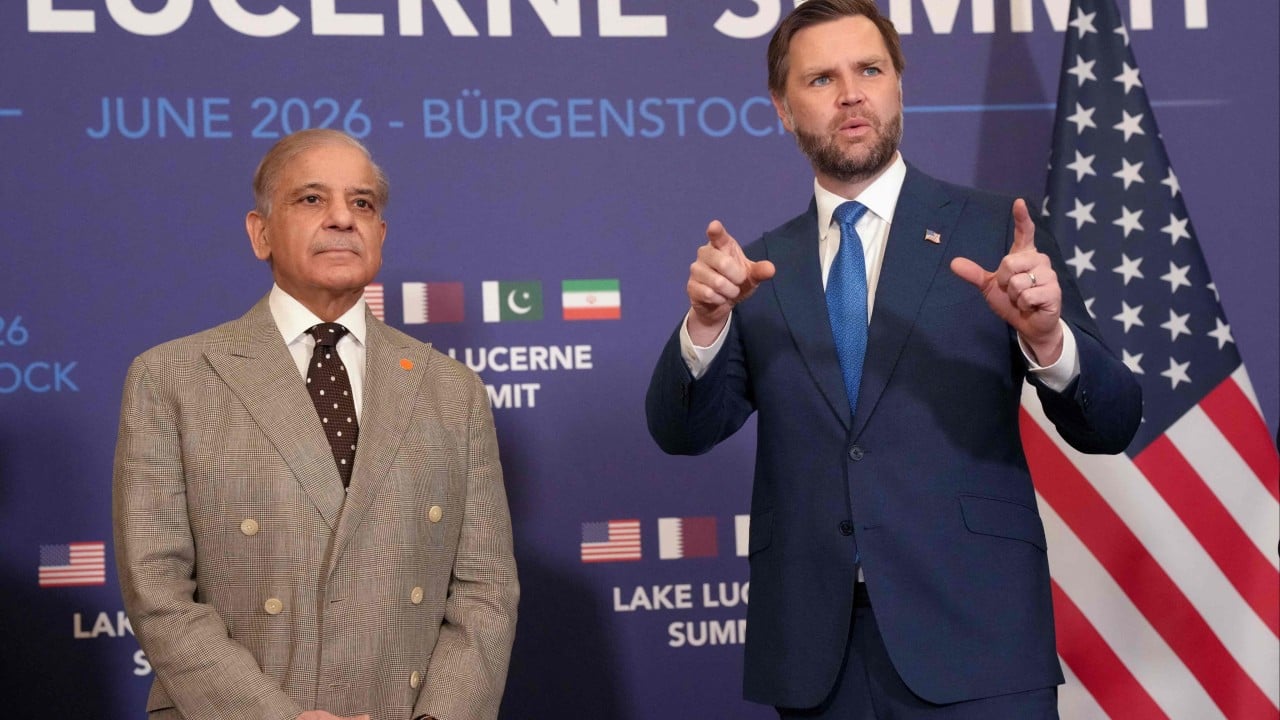
The scenic Bürgenstock resort in Switzerland is supposed to be a backdrop for historic diplomacy, but the high-stakes negotiations kicked off on June 21, 2026, under a heavy cloud of reality. US Vice President JD Vance and Iranian parliamentary speaker Mohammad Bagher Qalibaf have both landed on Swiss soil. They have exactly 60 days to transform a fragile memorandum of understanding into a permanent peace treaty to end a brutal three-month war.
Don't let the luxury alpine setting fool you. The ground beneath these talks is shaking. Just hours before the delegations sat down, Tehran claimed it re-closed the strategic Strait of Hormuz, citing ongoing Israeli military strikes in southern Lebanon. The Pentagon fired back instantly, denying that Iran has any control over the waterway and noting that millions of barrels of oil are still moving.
This messy start exposes the fatal flaw of the entire peace process. Washington and Tehran are trying to draft a complex blueprint for regional stability, but the forces actually driving the violence on the ground aren't even at the table.
The Unspoken Trade-offs of the 60-Day Clock
The interim deal signed by President Donald Trump and Iranian President Masoud Pezeshkian looks like a classic diplomatic swap on paper. The US lifted its naval blockade of Iranian ports, allowed Tehran to resume free oil sales, and agreed to unfreeze billions of dollars in overseas assets. In return, Iran agreed to dilute its stockpile of highly enriched uranium—the very material targeted by US and Israeli airstrikes last summer—and open up its nuclear facilities to inspection.
It sounds clean, but the domestic political blowback in Washington is already severe. Hardline Republicans are tearing into the administration, pointing out that Trump just handed Iran massive economic lifelines before securing a single permanent concession. Critics in Congress are openly asking if a three-month war that cost thousands of lives was worth a deal that essentially returns the US-Iran nuclear dynamic to square one.
On the other side, the view from Tehran is equally grim. Decimated by months of kinetic bombardment, hyperinflation, and structural economic collapse, regular Iranians aren't celebrating the sanctions relief. There is a deep, widespread skepticism that any paper agreement signed in Europe will translate into actual stability back home.
The Israel-Hezbollah Wildcard
The biggest threat to these technical talks isn't what happens inside the Bürgenstock conference rooms. It's what's happening along the Blue Line in Lebanon.
The US-Iran framework technically mandates a cessation of hostilities across all regional fronts. The problem is that Israel is not a signatory to this deal. Prime Minister Benjamin Netanyahu has made it clear that Israeli forces will not withdraw from southern Lebanon until Hezbollah is completely neutralized. Simultaneously, Hezbollah refuses to stop its rocket fire until Israeli troops leave.
The consequences of this disconnect are already turning lethal. Fresh clashes in Lebanon killed 47 people and four Israeli tank crew members, an escalation that delayed the start of the Swiss summit by 48 hours. JD Vance may tell reporters at Joint Base Andrews that "things are actually getting better," but the reality is that a single miscalculated missile strike in Lebanon could cause the Iranian delegation to pack their bags and fly back to Tehran.
Who is Running the Shop in Switzerland
The sheer size and composition of the delegations show just how complicated the next two months will be. This isn't just a meeting of diplomats; it's an assembly of money men, military strategists, and international brokers.
- The US Team: While JD Vance is providing the high-level political coverage, the actual heavy lifting is being managed by special envoy Steve Witkoff and Jared Kushner. Their presence signals that Washington wants to treat this less like a traditional State Department exercise and more like a hard-nosed transaction.
- The Iranian Team: Led by Qalibaf and Foreign Minister Abbas Araghchi, the delegation includes top officials from the Central Bank of Iran and the Ministry of Petroleum. They are here to collect the financial rewards of the interim agreement as quickly as possible.
- The Mediators: Pakistan's Prime Minister Shehbaz Sharif and Field Marshal Asim Munir are on the ground alongside Qatari diplomats. They are acting as the vital buffer between two sides that still deeply distrust each other.
What Happens Next
The immediate focus for the technical teams over the coming days will center on verification. The US wants ironclad, verifiable proof that Iran is actively diluting its near-weapons-grade uranium. Iran wants guarantees that its oil tankers can clear international waters without facing sudden seizures or renewed sanctions.
If you are tracking the global economic fallout of this conflict, don't watch the press conferences in Lucerne. Watch the daily transit numbers through the Strait of Hormuz and the scale of Israeli operations in Lebanon. Those are the real indicators of whether this 60-day window will lead to a lasting regional settlement or a fast track right back to open war.