Most foreign policy experts look to ancient Greece when they want to explain why global powers fight. They obsess over the Peloponnesian War, talking about how a rising power scares an established one until they inevitably clash. But looking only at European history leaves a massive blind spot. If you want to understand where our current multi-polar world is heading, you need to look at the wars of ancient China.
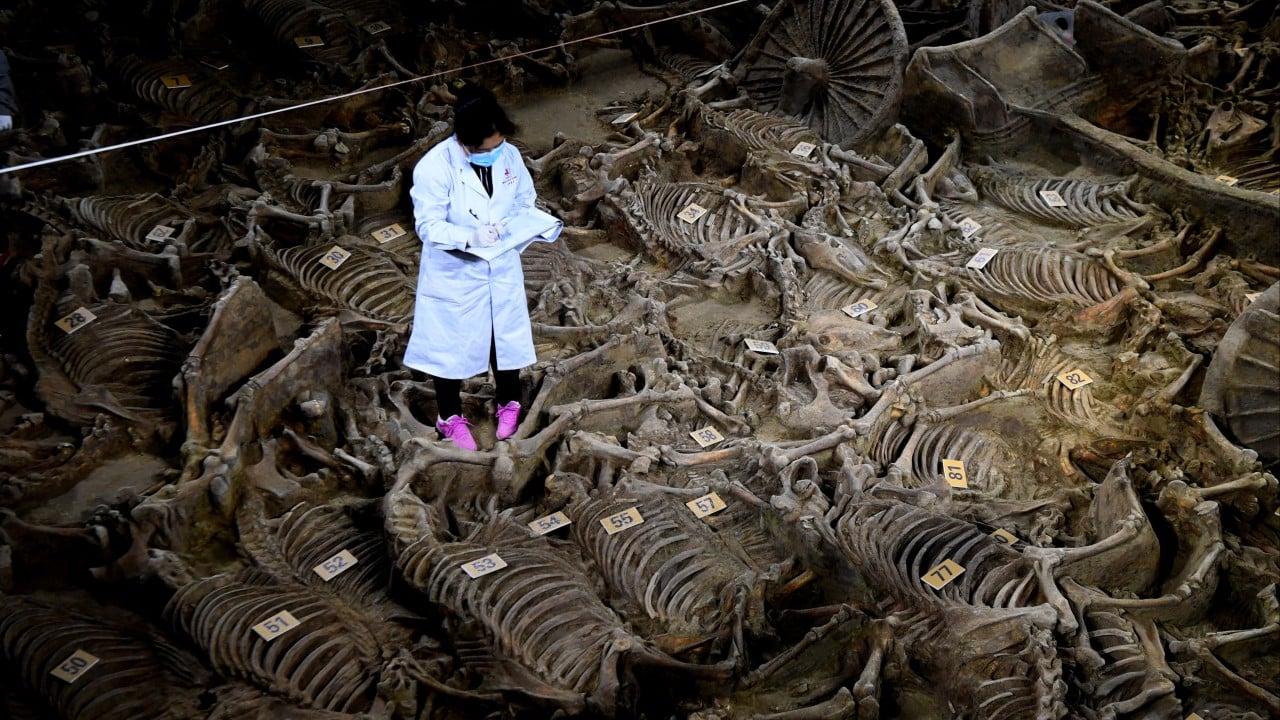
Long before China became a unified empire, it was a fractured network of competing states. The centuries spanning the Spring and Autumn period (770–473 BC) and the Warring States period (475–221 BC) were basically a massive, multi-hundred-year laboratory experiment in international relations. Hundreds of states fought, traded, made alliances, and broke them. It's an era that shows exactly what happens when a system shifts between a balance of power and absolute hegemony.
Western international relations theory tells us that a balance of power is natural and stable. It says states will naturally form alliances to prevent any single nation from dominating everyone else. The wars of ancient China prove the exact opposite. They show that a multi-state balance is highly fragile, temporary, and almost always slides toward total domination by one superpower.
The Illusion of Stability in the Spring and Autumn Period
During the Spring and Autumn period, China had hundreds of small political units. They all theoretically answered to the Zhou dynasty king, but his actual power had vanished. Instead, these states operated in an anarchic system remarkably similar to modern global politics.
To keep the peace, the system relied on a figure known as the Ba, or the hegemon. The hegemon wasn't an emperor who ruled everyone directly. Instead, it was the most powerful state leader who formed a league of states, promised to protect weaker members, and enforced international norms. When Duke Huan of Qi became the first recognized hegemon in the 7th century BC, his slogan was "Revere the king and expel the barbarians." He used his military might to stabilize the system, settle border disputes, and fend off outside threats.
This looked like a brilliant balance of power. If one state got too aggressive, the hegemon intervened. If the hegemon got too weak, another state took its place, like the state of Jin or Chu.
But this setup hid a fatal flaw. The system relied entirely on the self-restraint of the hegemon and the willingness of smaller states to play along. Peace didn't last because every state was secretly trying to build up its own wealth and military capacity. They weren't trying to maintain a permanent balance; they were waiting for their turn to run the show.
When Balancing Fails and Total War Takes Over
By the time the system shifted into the Warring States period, the number of states had shrunk from hundreds down to just seven main contenders. The diplomatic norms of the earlier era—the polite treaties, the shared rituals, the aristocratic restraint in battle—completely evaporated.
This is where Western theories about the balance of power really fall apart. In theory, the remaining six states should have successfully allied with each other to stop the most aggressive and powerful state, Qin, from conquering them all. They tried. They formed coalitions known as vertical alliances to block Qin's eastward expansion.
Qin beat them anyway by using horizontal alliances—cutting deals with states further away to isolate and destroy its immediate neighbors one by one. Qin didn't care about maintaining a balance. It cared about total elimination.
The strategy worked because the other states couldn't trust each other long enough to maintain a unified front. Every time Qin offered a piece of land or a peace treaty to one state, that state would abandon the alliance to save itself, leaving its neighbors to be swallowed. This teaches us a brutal lesson about international politics. Alliances built on a balance of power are only as strong as each member's immediate self-interest. The moment a superpower offers a better short-term deal, the balance crumbles.
Why Might Makes Right Usually Wins the Long Game
Ancient Chinese thinkers watched this chaos unfold and reached very different conclusions than later European philosophers. While European thinkers like Immanuel Kant dreamed of a "perpetual peace" maintained by international laws and balances, Chinese strategists realized that fragmentation meant endless bloodshed.
Legalist thinkers like Shang Yang and Han Feizi argued that expecting rulers to behave morally or respect balances was a fantasy. They focused entirely on hard power, state centralization, and absolute control. They restructured the Qin state to maximize agricultural output and military conscription. Every single part of society was geared toward winning wars.
The states that tried to stick to traditional ideas of balance, virtue, and defensive alliances were systematically wiped out. The wars of ancient China demonstrate that in an anarchic system with no overarching authority, a state focused entirely on absolute dominance will eventually defeat states that are merely trying to survive and keep the peace. Qin's victory in 221 BC wasn't an accident; it was the logical conclusion of a system where balancing mechanisms failed.
Moving Past Western Assumptions of International Relations
Modern global politics feels highly volatile because we are watching the decay of the American unipolar order. For decades, the United States acted a lot like the ancient Chinese hegemon, enforcing global trade rules, maintaining a network of alliances, and intervening to keep a specific version of order.
Now, we see a shift toward a multi-polar system with multiple centers of gravity. Many commentators think this return to a balance of power will create a more stable, democratic world order.
The history of ancient China suggests that's wishful thinking. A multi-polar world with shifting alliances is inherently unstable. It creates intense security dilemmas where every nation's defensive move looks like an offensive threat to its neighbor. Just like the Warring States period, a multi-polar system creates a massive incentive for powers to look for permanent advantages rather than accepting a static balance.
What to Do Next to Navigate a Fragile Global Order
You can't change the structural forces of history, but you can change how you plan for them. Whether you're running a multinational business, managing global investments, or analyzing geopolitical risks, relying on the idea that the global balance of power will naturally stabilize itself is dangerous.
First, stop assuming that international institutions and treaties will hold during an intense rivalry. Much like the ceremonial oaths sworn by ancient Chinese dukes, modern international agreements get tossed aside the moment a superpower decides they no longer serve its national security. Base your risk assessments on hard capabilities—supply chain control, manufacturing capacity, and resource security—rather than diplomatic rhetoric.
Second, prepare for a world of fragmented, transactional alliances. The era of permanent, values-based blocs is giving way to shifting coalitions. Nations will increasingly behave like the states of Chu, Qi, and Yan, cutting side deals with rival superpowers to secure their own immediate survival. If your strategic planning assumes unified global blocks, diversify your operations immediately to handle sudden diplomatic realignments.
The lesson from ancient China is simple. Peace maintained by a balance of power is a brief pause between conflicts, and a fragmented system always pushes toward a struggle for absolute dominance. Relying on stability that history shows is inherently unstable is a quick way to get caught off guard.