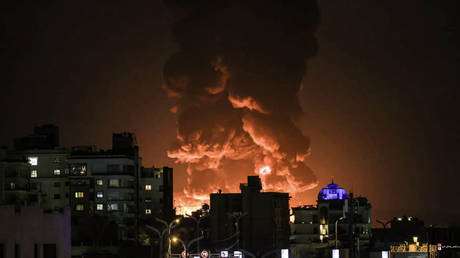
You're told that the future of combat belongs to the side with the most advanced algorithms, the costliest stealth fighters, and the smartest networks. It sounds great on paper. But then you look at actual combat zones in Europe and the Middle East, and the theory falls apart.
Instead of a hyper-efficient, sterile automated battlefield, we're seeing an ugly, grinding reality. It's a massive contradiction. We spend billions developing high-tech assets only to watch them get neutralized by cheap, off-the-shelf commercial tech. A drone that costs less than a smartphone can take down a tank worth millions.
This is the central friction of modern combat. The rush toward digitization hasn't eliminated the chaos of war. It's actually made it more unpredictable.
The Mirage of Digital Dominance
For decades, Western military doctrine chased a specific concept: complete situational awareness. The idea was simple. If you can hook up every soldier, vehicle, and satellite to the same network, you remove the fog of war.
It didn't work out that way. What defense planners forgot is that networks are fragile. They rely on bandwidth, clear signals, and uninterrupted power grids. When a modern force collides with an adversary capable of heavy electronic warfare, those high-tech links snap.
Take the conflict in Ukraine. Western forces trained for years on the assumption that they'd always have access to GPS, secure satellite communications, and air superiority. Once the jamming started, those assumptions went out the window. Soldiers found themselves stripped of their digital maps, forced to rely on old-school paper and compasses.
When you over-engineer a military, you create single points of failure. If your billion-dollar system can't talk to the command center because a cheap jammer is running nearby, you don't have a modern army. You have very expensive scrap metal.
How Cheap Drones Upended the Billion Dollar Arsenal
The math of modern warfare is completely broken. Look at the economics of defense. A standard air defense missile used by NATO forces can easily cost anywhere from $1 million to $4 million. The target it's shooting down? A hobbyist drone or a slow-flying loitering munition that costs about $20,000.
You don't need a degree in economics to see where this leads. You run out of money and missiles long before the enemy runs out of cheap plastic drones.
Cost of 1 Advanced Air Defense Missile:  $2,000,000+
Cost of 1 Attack Drone:                 $20,000
Economic asymmetry ratio:                100 to 1
This economic asymmetry is changing how forces have to protect themselves. Armor plating on tanks is no longer just about stopping a heavy anti-tank missile coming from the front. Now, crews are welding crude steel cages onto the tops of their vehicles to keep small commercial quadcopters from dropping a grenade right through the hatch. It's a bizarre mix of medieval-style blacksmithing and digital age hardware.
The Return of the Analogue Grind
We were promised contactless operations. The theory was that long-range precision strikes would destroy an enemy's will to fight before ground troops ever saw each other.
The reality? War remains fundamentally analogue, violent, and exhausting. Once the precision weapons are spent—which happens much faster than manufacturing plants can replace them—the conflict devolves into a war of attrition.
- Ammunition consumption: Forces routinely fire tens of thousands of artillery shells a day, exposing the limits of just-in-time defense supply chains.
- Fortifications: Miles of deep trenches, concrete bunkers, and vast minefields have returned to define the frontline, mirroring the battlefields of 1915 more than the sci-fi visions of 2026.
- Physical endurance: No matter how many smart sensors you attach to a soldier, they still have to carry eighty pounds of gear through freezing mud.
High tech hasn't replaced the need for mass. You still need numbers. You still need factories that can pump out millions of basic artillery rounds, steel plating, and simple trucks. The obsession with buying a few incredibly complex, fragile weapons platforms has left modern militaries vulnerable to adversaries who favor raw scale and simplicity.
Moving Past the Tech Fetish
If you want to understand where conflict is actually heading, look at the integration of commercial technology rather than top-secret defense projects. The most effective innovations right now aren't coming from traditional defense contractors. They're coming from programmers writing software updates in their basements to bypass electronic jamming, or teams using commercial 3D printers to build tail fins for mortar bombs.
The lesson here isn't that technology is useless. It's that over-reliance on fragile, over-designed technology is a trap.
To survive the next major conflict, defense planners need to shift their strategy. Stop focusing exclusively on building the most complex machine possible. Start focusing on resilience, mass, and adaptability. Build systems that are cheap enough to lose, simple enough to repair in the field, and independent enough to function when the network inevitably goes dark.