History often remembers the grandeur of national parks while erasing the people who built the local economies long before government maps were ever drawn. If you dig into the origins of Kentucky's famous subterranean wonder, you find a narrative defined by displacement. In 1934, Black cave guide and entrepreneur Matt Bransford sold his 14-room hotel and land for a meager $3,000, a fraction of its true value, as the federal government steamrolled through the region to create Mammoth Cave National Park.
Most visitors today stare at the dramatic limestone arches and listen to modern rangers talk about geological formations, completely missing the human cost of conservation. The story of Matt and Zemmie Bransford isn't just a localized footnote about real estate. It exposes how systemic displacement reshaped generations of African American families who had deep roots in the tourism industry underground.
The Rise of Black Entrepreneurship Underground
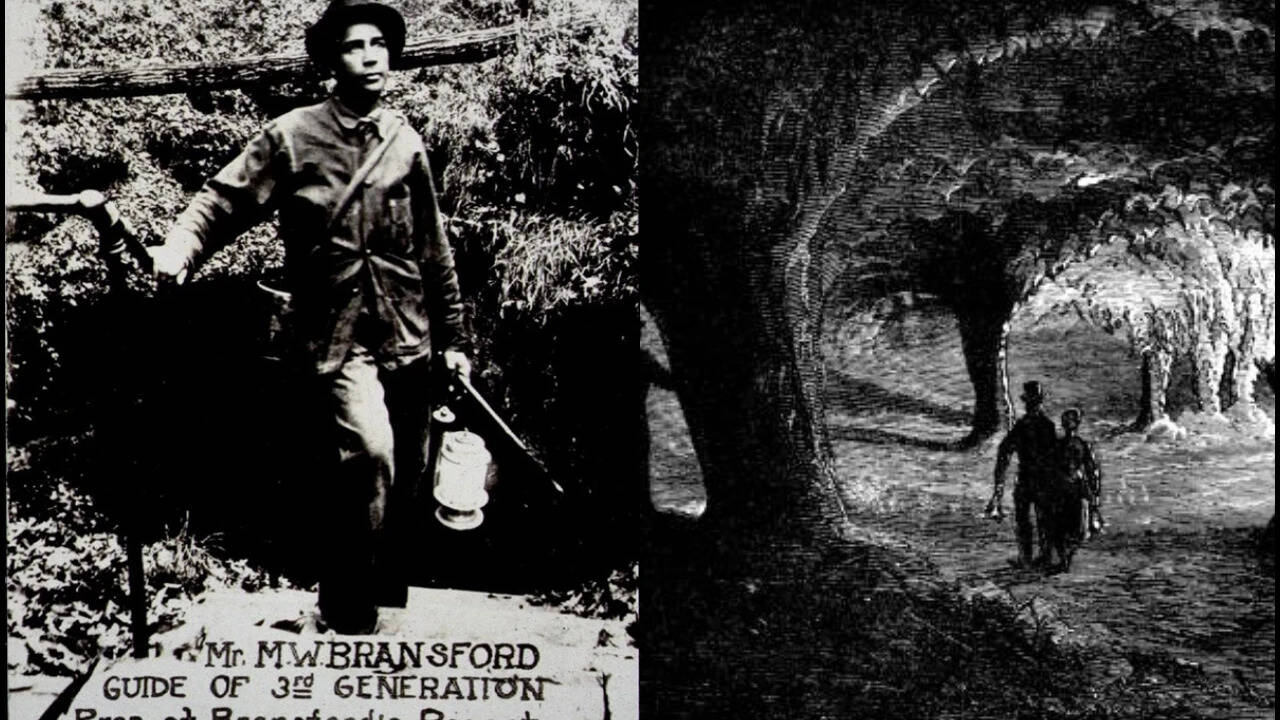
To understand why that $3,000 price tag stung so badly, you have to look at what the Bransford family built. Generations earlier, ancestors like Materson "Mat" Bransford worked the winding, pitch-black passages as enslaved guides, mapping routes and leading wealthy international travelers through chambers that few humans had ever witnessed. They earned international renown for their expertise long before emancipation.
After gaining their freedom, the family stayed anchored to the land. Matt and his wife Zemmie carved out a brilliant space for themselves by opening a two-story, 14-room hotel on Flint Ridge to serve Black travelers. During an era of brutal Jim Crow segregation, the Bransford Summer Resort gave African American tourists a rare chance to experience the wonder of the caves with comfort and dignity. Matt also led specialized tours for Black visitors, creating an independent economic ecosystem that thrived right under the nose of a changing tourism landscape.
The National Park Land Grab
That independence didn't fit the blueprint of the Kentucky National Park Commission. During the late 1920s and 1930s, ambitious plans kicked into gear to acquire thousands of acres from roughly 600 landowners to establish a unified public park.
Local families faced intense pressure. The acquisition process used aggressive land-buying tactics, and private enterprise was systematically squeezed out. For Black landowners and operators like the Bransfords, the pressure carried an extra layer of exclusion. Black guides who had spent nearly a century building the reputation of Mammoth Cave suddenly found themselves stripped of their traditional livelihoods.
When Matt and Zemmie finally relinquished their hotel and property in 1934 for $3,000, they weren't participating in a fair free-market transaction. They were bowing to an unstoppable institutional force backed by federal and state momentum. The family packed up, moved roughly twenty miles away, and left behind an entire legacy built on stone, sweat, and hospitality.
Why This History Matters Today
For decades, the contributions of the Bransford family were quietly swept under the rug. Official park histories focused heavily on white entrepreneurs and sanitized the complex human drama of the region. It wasn't until descendants like Jerry Bransford—a fifth-generation guide—and dedicated park historians started piecing together old photographs, deeds, and oral histories that the full picture came to light.
When you visit Mammoth Cave today, look past the gift shops and paved trails. Think about the families who turned a subterranean labyrinth into a world-class destination, only to be forced off their ancestral soil for pennies on the dollar. Real history is rarely neat, and acknowledging these hard truths is the only way to understand how our public lands actually came to be.