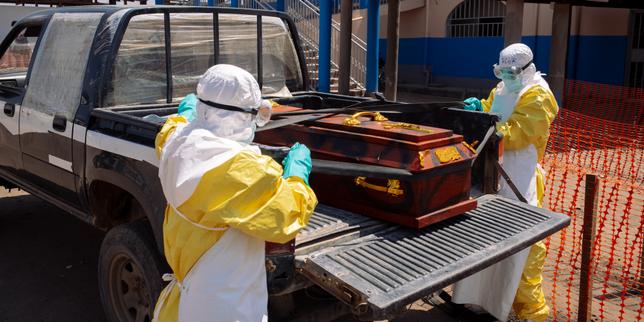
The warning signs were there, but the world looked away. Now, we're facing a disaster that's moving faster than the teams trying to stop it.
Just two months after the Democratic Republic of Congo (DRC) officially declared a new outbreak of Ebola, the virus has already infected more than 2,000 people and claimed over 700 lives. Let that sink in. Two months. This isn't just another flare-up in a region used to dealing with pathogens. According to Médecins Sans Frontières (MSF), the epidemic is expanding at a "rate without precedent".
If you think this is just a local health crisis, you're dead wrong. The current situation in the northeast province of Ituri—the absolute epicenter of the crisis, holding about 90% of the cases—is a perfect storm of logistical nightmare, conflict, and a rare viral strain.
The Bundibugyo Strain is Changing the Playbook
What makes this outbreak particularly terrifying isn't just the sheer speed of transmission, but the genetic blueprint of the enemy. This is the Bundibugyo ebolavirus strain, not the more common Zaire strain that caused the massive West African epidemic a decade ago or the major DRC outbreaks of recent years.
Why does this matter? Because the highly effective vaccines we spent billions developing for the Zaire strain don't work against Bundibugyo. There is no widely distributed, approved vaccine for this strain. While an experimental clinical trial called EBO-PEP has just launched in the DRC and neighboring Uganda to protect high-risk contacts, we are basically fighting this blind, relying on old-school barrier isolation, contact tracing, and hoping patients seek help early.
The Bundibugyo strain has a lower fatality rate than the Zaire strain—roughly 30% compared to 60-90%—but that lower lethality is actually a curse in disguise. When a virus doesn't kill you instantly, you walk around. You travel. You visit family. You jump on a motorcycle taxi. Because people don't look deathly ill immediately, the virus slips through checkpoints and security cordons unnoticed.
Why We're Running Behind the Virus
The international medical community is trying to catch up, but they're losing ground daily. Trish Newport, MSF's emergency program manager, put it bluntly: "Each delay costs lives. We continue to run after the epidemic instead of keeping a step ahead of it".
To understand why this is happening, you have to look at the brutal ground reality in Ituri. It's not a matter of doctors not working hard enough. It's about a total system collapse under the weight of several critical issues:
- Logistical Paralysis: Take Mongbwalu, a key health zone. There are only two functioning ambulances to transfer critically ill patients to the local MSF treatment center. If you've got suspected Ebola, waiting hours for a vehicle to show up is practically a death sentence—and it guarantees you'll infect those around you in the meantime.
- The Conflict Factor: Northeast DRC is plagued by active armed groups. Healthcare workers can't simply drive into villages to trace contacts or transport biological samples safely. Delayed sample transport means delayed diagnoses, leading to massive backlogs in testing.
- A Fragile Health System: Local medical staff are exhausted, under-equipped, and underpaid. To make matters worse, doctors and nurses in some areas have threatened strikes over unpaid risk premiums. When frontline workers are forced to strike during an active epidemic, the virus wins.
The Cross-Border Nightmare
Ebola doesn't care about national borders. The geographic spread of this outbreak has already reached five provinces in the DRC, and cases have spilled into neighboring Uganda.
While Uganda has managed to limit sustained local transmission so far by isolating imported cases, the potential for a massive regional disaster is incredibly high. The region is highly interconnected by trade, migration, and refugees fleeing local conflicts.
The public health response has put strict travel rules in place. For instance, Bunia airport remains closed to commercial flights, and the DRC government announced a mandatory 21-day quarantine for anyone trying to leave the outbreak-affected zones. But let's be honest: in a region where informal border crossings are the norm, physical blockades and paperwork can only do so much.
What Needs to Happen Next
We can't keep applying outdated strategies to a fast-moving, non-vaccine-preventable outbreak. Stopping the Bundibugyo epidemic requires a massive, immediate shift in resource allocation.
First, the international community needs to pour funding into the EBO-PEP clinical trials to accelerate potential preventative treatments. Waiting for a full-scale catastrophe to finish research is a failed strategy we've seen play out too many times.
Second, the logistics must be decentralized. Relying on a couple of broken-down ambulances in isolated towns like Mongbwalu is unacceptable. We need localized isolation units, rapid diagnostic tests that don't require shipping samples across provinces, and direct support for local healthcare workers so they don't have to strike for their basic livelihood.
If the global health community doesn't wake up and flood Ituri with coordinated operational support, we aren't just looking at a bad outbreak. We are looking at a regional crisis that will take years to contain.